Release Time:2025-12-02
The vibratory belt conveyor might not be the star of industrial conversations at first glance, but it’s quietly transforming how materials move across manufacturing floors, warehouses, and even humanitarian supply chains. In a fast-paced world where efficiency and reliability can make or break entire operations, understanding the ins and outs of this conveyor system offers surprising global benefits. Think about it: smoother logistics mean fewer bottlenecks, better safety, and ultimately—more sustainable, cost-effective production.
As global trade and industrialization grow, material handling solutions like vibratory belt conveyors are not just convenience—they’re essential. This article explores what these devices are, why they're becoming indispensable, and how they fit into a modern global context shaped by technological advances and environmental concerns.
Across continents, manufacturing plants, mining operations, and logistics centers wrestle with one challenge: moving irregular, fragile, or bulky loads without damage or delay. According to the International Organization for Standardization (ISO), optimizing material transport systems could reduce industrial waste by as much as 15% worldwide—a huge figure in both environmental and economic terms.
Vibratory belt conveyors address this head-on. UN reports also highlight how infrastructure modernization supports developing economies by streamlining supply chains. Yet many traditional conveyor belts fall short under tough conditions—spillages, energy inefficiencies, or maintenance headaches. Enter a solution that harnesses controlled, fine vibrations to gently propel goods while minimizing wear. It sounds technical, but the impact is anything but.
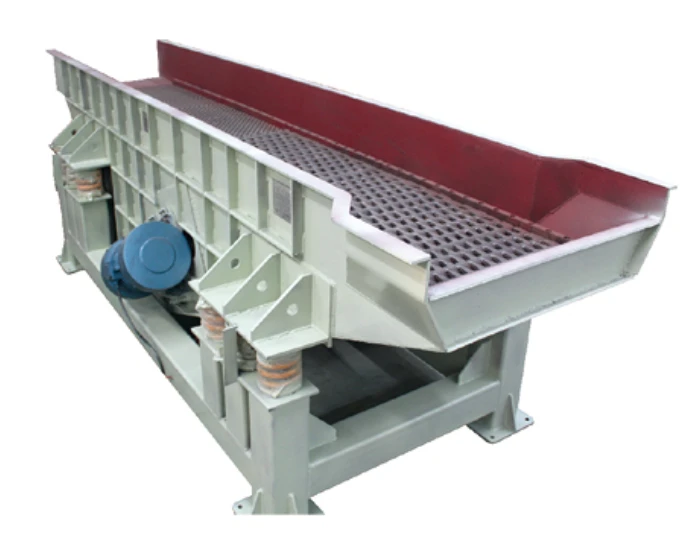
Simply put, a vibratory belt conveyor combines the reliable transport of a belt system with subtle, rhythmic vibrations to move materials smoothly. Unlike typical conveyors that rely on friction and pulling motion alone, the vibration energizes the belt surface, reducing load slippage and helping materials settle evenly. Imagine a gentle nudge that helps a pile of grain or fragile packages slide along steadily, no spills, no jams.
This conveyor type fills a niche between heavy-duty industrial needs and delicate handling tasks. Humanitarian agencies even tap these systems to move relief supplies in disaster zones where rough terrain or shifting loads could impede normal conveyors.
The belts must withstand continuous vibration without tearing or excessive wear. Synthetic rubber blends, sometimes reinforced with fabric, are common. This balance of toughness and flexibility keeps operations smooth.
Small but mighty, these motors generate controlled oscillations that vary in frequency and amplitude depending on the application. They’re often adjustable to fine-tune transport speed and vibration intensity.
Since vibrations can be a double-edged sword, inducing stress on structural parts, frames are designed from heavy-gauge steel, and bearings are sealed to resist dust and debris.
Drives must synchronize belt movement with vibration, avoiding unnecessary energy consumption. Variable-frequency drives are a popular choice for their flexibility.
Operators benefit from intuitive panels that allow real-time adjustments and monitoring—a must in dynamic industrial settings.
Mini takeaway: The vibratory belt conveyor’s design strikes a delicate engineering balance—robustness where needed and gentle handling where it counts.
From the heavy-duty mines of Australia to food processing plants in Europe and nonprofits managing supply chains in Africa, vibratory belt conveyors show surprising range. Here are a few snapshots:
Oddly enough, some agricultural cooperatives in South America use vibratory conveyors to move bulk grains more efficiently during harvest seasons, reducing losses and improving storage.
| Feature | Typical Values | Remarks |
|---|---|---|
| Belt Width | 300–1500 mm | Adjustable depending on load size |
| Vibration Frequency | 50–120 Hz | Variable control |
| Belt Material | Rubber composite with fabric reinforcement | Durable, flexible |
| Load Capacity | Up to 5 tons per hour | Depends on length and speed |
| Power Supply | 220–480 V, 3-phase | Variable frequency drives common |
| Vendor | Customization Options | Warranty | Global Support | Average Lead Time |
|---|---|---|---|---|
| Yonghong Conveyor Co. | High – belt widths, vibration control | 24 months | Worldwide (30+ countries) | 6–8 weeks |
| TransTech Industries | Medium – standard models mostly | 18 months | North America & Europe | 4–6 weeks |
| Global Convey Solutions | Low – limited belt sizes | 12 months | Asia and Middle East | 5–7 weeks |
Beyond the technical specs, there’s a comfort in the gentle hum of a vibratory conveyor running smoothly. It’s not just about speed; it’s reliability that keeps entire plants humming without costly downtime. Oddly, those small vibrations also keep dust down—an overlooked health benefit in dusty industrial environments.
These factors combine to build trust—between operators, managers, and customers—that’s hard to quantify but vital to long-term success.
You might have sensed this is an evolving field. Manufacturers invest in smarter, more eco-friendly components: motors powered by green electricity, belts made from biodegradable composites, and embedded sensors that monitor wear in real-time to predict maintenance needs before a breakdown.
Automation is also nudging vibratory conveyors into Industry 4.0, linking them with digital dashboards and AI to optimize system performance continuously. I noticed recently a shift toward modular designs making installation quicker and adjustments easier — a real game-changer for fast-paced industrial setups.
No system is perfect. Vibratory belt conveyors sometimes struggle with very fine powders that cling excessively or very large loads that dampen vibration effects. In dusty environments, motor seals can wear faster than expected.
Innovation helps here: coatings that reduce static cling, vibration damping materials built into frames, and upgraded sealing technologies. Some engineers also experiment with hybrid systems—combining gentle air jets with vibration to enhance movement.
Absolutely. Their vibration levels and belt materials can be tailored to handle fragile foods like pastries or fruits. Material-grade rubber and sanitary designs help meet hygiene standards.
They tend to consume less power because vibrations reduce the need for excessive belt tension, lowering mechanical resistance. When combined with variable frequency drives, energy savings can reach 15–20%.
With proper training and modular replacement parts, yes. Plus, many vendors offer remote monitoring support to troubleshoot issues before on-site visits are necessary.
Generally, yes, but there are limits. For extremely heavy bulk materials, reinforced frames and belts are necessary, sometimes combined with additional feeding systems.
Companies like Yonghong Conveyor stand out with worldwide support, customizable options, and solid warranties—important factors for international buyers.
In an era where production speed, sustainability, and safety are intertwined, the vibratory belt conveyor emerges as a quiet hero. It’s not just hardware; it’s a thoughtful approach to moving materials that respects fragile loads, people, and the planet. If your operational challenges involve tricky conveyance tasks or you simply seek to upgrade old systems, it’s worth exploring what vibratory tech can do—especially from reliable vendors like Yonghong Conveyor.
Want to find out more or request a quote? Visit our website today and get the conversation started.
A small industrial revolution often begins with one vibrating belt...