Release Time:2025-12-02
Gravity casting machines might not be the flashiest topic at the water cooler, but their influence on global manufacturing is profound. Simply put, these machines harness gravity to pour molten metal into molds, allowing for precise, efficient parts production that spans industries and continents. As manufacturing strives for sustainability and cost-efficiency, knowing what gravity casting machines bring to the table is more than just useful — it's essential.
Globally, gravity casting processes contribute to producing billions of metal parts yearly, from automotive components to aerospace fittings, even art sculptures. Ignoring this technology is like turning your back on the foundation of modern metal fabrication.
Industrial output continues an upward trend, with the World Bank reporting metal manufacturing as a backbone of $40 trillion global manufacturing output (2023). Yet within this expansion lurk challenges: rising energy costs, demand for sustainable materials, and shifting supply chains.
Enter gravity casting machines. They effectively reduce waste compared to some high-pressure alternatives and can adapt to a variety of alloys, from aluminum to iron, supporting circular economy principles. Oddly enough, they also find uses in remote zones where high-end, automated machines are impractical.
Though some newer casting methods tout speed advantages, gravity casting machines remain a staple for reliable, high-quality output, especially where sustainability and cost-efficiency converge.
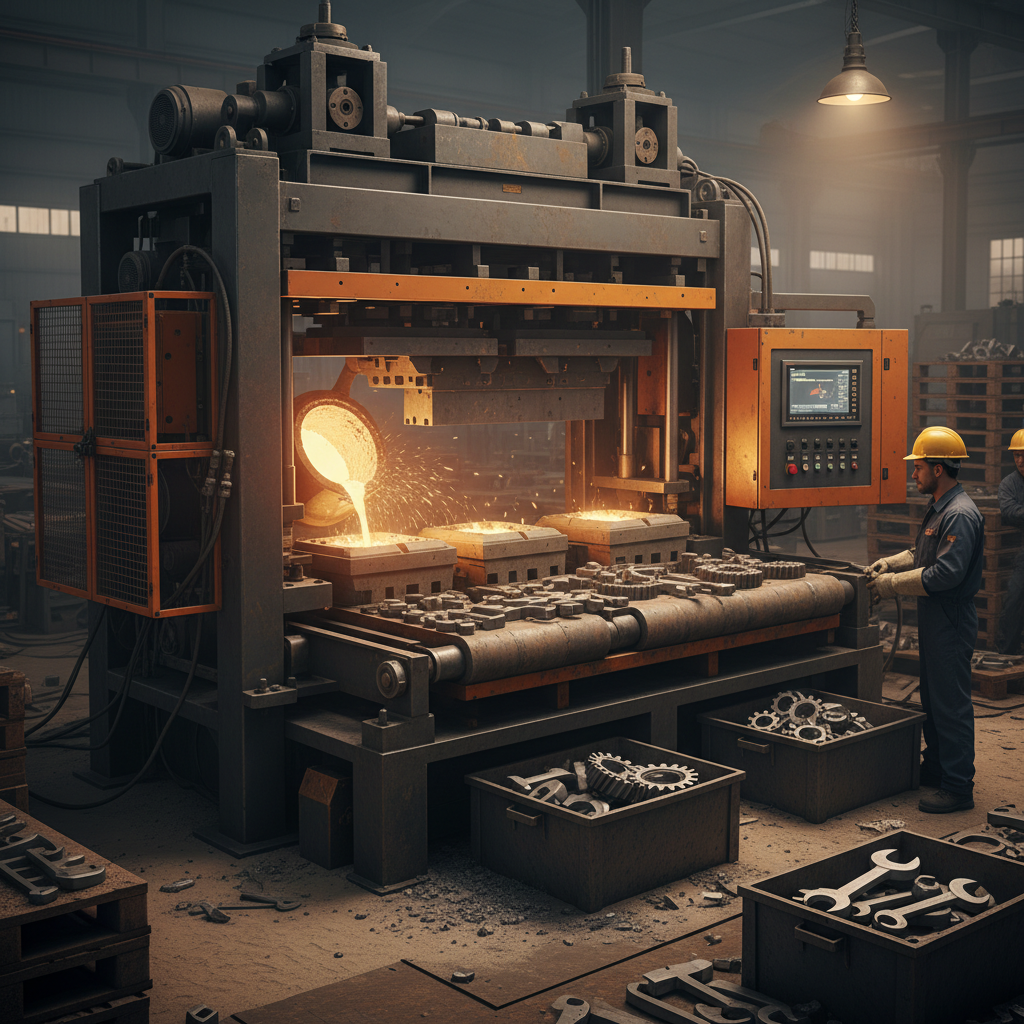
At its core, a gravity casting machine is an industrial setup that uses the natural force of gravity to pour molten metal into molds. Unlike pressure casting, no extra force pushes the metal, making the method simpler, more energy-conservative, and forgiving with material flow.
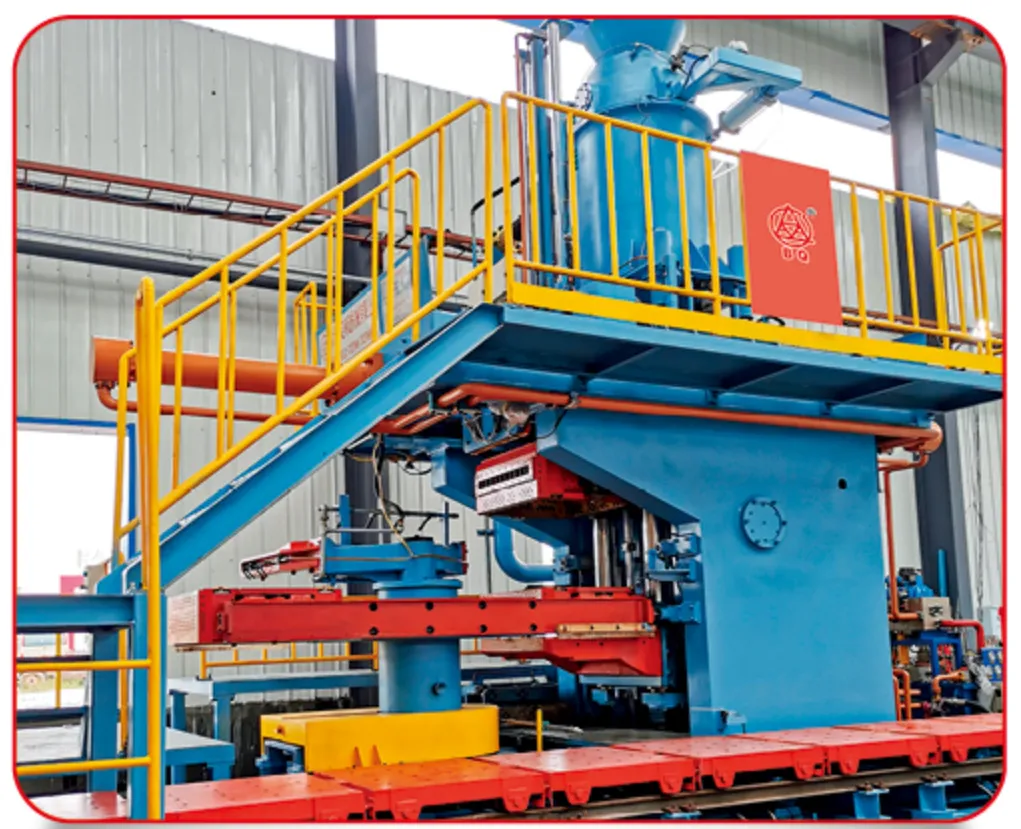
This machine often involves a furnace to melt the metal, a ladling system, and a well-designed mold placement and cooling mechanism. Modern iterations integrate electronic controls, but the principle remains wonderfully straightforward.
From humanitarian needs — such as fabricating durable, affordable parts for water pumps in developing countries — to sectors as complex as aerospace, gravity casting machines provide a way to shape metal while respecting resource constraints.
The molds are often ceramic or sand-based, shaped precisely to allow metal to flow evenly. Good design minimizes defects like porosity, ensuring the final product holds up under stress.
Whether induction or crucible-based, furnaces must maintain consistent temperatures — no one wants cold spots that ruin a casting. Engineers often emphasize temperature control to avoid metal oxidation.
Some gravity casting machines have manual ladling, but many automate pouring channels to improve repeatability. This part defines pour rate and stability, which directly impact product quality.
After the metal flows, how fast it cools matters. Controlled cooling helps reduce internal stresses and improves mechanical properties, thus affecting durability.
While basic machines run on gravity alone, advanced units include PLCs and sensors to monitor temperature, flow, and time — this brings a modern twist to an old-school method.
What’s striking is how these components mesh into a system that’s surprisingly low-tech yet very effective. Engineers swear by this balance between simplicity and performance.
They're everywhere. In Southeast Asia, small factories rely on gravity casting for automotive and motorcycle parts. European aerospace suppliers trust them for low-volume, high-complexity aluminum components. In sub-Saharan Africa, NGOs use cast metal to create affordable tools and machinery parts.
One memorable case: a water pump manufacturer in rural India adopted gravity casting machines to produce affordable, durable parts onsite, drastically cutting lead times and shipping costs. This approach boosted not just the local economy but also water access reliability.
Industrial regions in China and Eastern Europe benefit too — their gravity casting machines handle high-volume production runs where the method’s material-efficiency shines.
Emotionally, it’s a way to bring dignity to craftsmanship — the metal flows under nature’s own force, shaping tools and parts that improve lives.
| Feature | Specification |
|---|---|
| Casting Capacity | Up to 200 kg per batch |
| Melting Method | Induction Furnace |
| Temperature Range | Up to 1600°C |
| Control System | PLC with temperature and flow sensors |
| Power Requirement | 35 kW (approx.) |
| Automation Level | Semi-automatic |
| Vendor | Price Range | Typical Capacity | Technology Highlights | Customer Support |
|---|---|---|---|---|
| Yonghong Machinery | $50,000 - $120,000 | Up to 250 kg/batch | Advanced PLC control, energy-efficient melting | 24/7 Remote & Onsite |
| Industrial Casting Co. | $40,000 - $100,000 | Up to 180 kg/batch | Robust design, manual ladling option | Business hours only |
| Metallurgy Dynamics | $70,000 - $150,000 | Up to 300 kg/batch | Full automation, AI-assisted defect detection | Custom SLA contracts |
Automation and digital monitoring are shaping tomorrow’s gravity casting machines. Think AI-driven melt quality sensors that predict faults before they happen or adaptive cooling technologies that adjust on the fly.
Also, green energy integration is on the rise — induction furnaces powered by renewable grids are cutting the CO2 footprint dramatically. Materials engineers are experimenting with bio-based mold binders and recycled alloys, pushing sustainability further.
Frankly, it feels like gravity casting machines are quietly evolving to meet 21st-century demands — without losing their charm for simplicity and dependability.
Of course, gravity casting isn’t flawless. Limitations around dimensional accuracy and porosity can frustrate quality-conscious manufacturers.
But innovation is closing gaps: vacuum-assisted filling reduces gas entrapment; 3D-printed molds offer complex geometries with rapid turnaround; hybrid designs blend gravity pouring with controlled pressure elements.
Operators also embrace improved simulation software, enabling virtual prototyping to optimize mold design and cooling paths before even melting a gram of metal.
A: Automotive, aerospace, defense, and even artisanal manufacturing find gravity casting valuable. It suits both low and medium-volume production where cost and quality balance matter.
A: Generally, they consume 20-30% less energy than high-pressure die casting systems, mainly because gravity does the work instead of hydraulics.
A: Yes, many setups are compatible with recycled alloys, supporting circular manufacturing and reducing environmental impact.
A: Absolutely. Modern machines integrate PLCs and sensors for improved control, monitoring melt quality, temperature, and pour rates — a big step up from manual ladling.
A: Consider production volume, alloy types, required precision, and cost constraints. If you value energy savings and material flexibility over ultra-high-speed production, it’s worth a serious look.
Gravity casting machines blend time-tested methods with modern tech, delivering affordable, reliable metal casting that’s increasingly eco-friendly and adaptable. They serve a quiet but essential role across global industries, promising long-term value and sustainability.
If you’re curious to see how gravity casting machines could revolutionize your manufacturing workflow, why not explore options like those from gravity casting machine specialists? Sometimes the simplest technologies provide the most enduring solutions.
Gravity casting is that charming, durable tool in the metal fabricator’s arsenal that’s quietly evolving but never disappearing. It’s worth understanding — not just for engineers, but for anyone interested in how the stuff around us is made.