Release Time:2025-10-30
In the relentless pursuit of efficiency, precision, and cost-effectiveness, the modern foundry industry stands at a pivotal juncture. Traditional manual and semi-automatic moulding processes, while foundational for centuries, are increasingly challenged by mounting labour costs, stringent environmental regulations, escalating quality demands, and the pervasive need for higher production rates. These pressures necessitate a paradigm shift towards advanced automation. The advent and continuous evolution of the automatic moulding machine for foundry operations represent not just an upgrade, but a transformative leap. This technology is designed to address these complex challenges head-on, delivering unparalleled consistency, significantly enhanced productivity, and a tangible reduction in operational overheads. Foundries that embrace this level of automation are reporting substantial improvements across key performance indicators. For instance, studies by industry bodies indicate that the integration of fully automatic moulding lines can lead to a 35-50% reduction in manual labour requirements for the moulding process alone, freeing up skilled personnel for more complex tasks. Furthermore, the inherent repeatability of automated systems slashes defect rates, with some facilities documenting a drop in casting rejections by as much as 20-30% within the first year of implementation. This translates directly into material savings, reduced energy consumption for remelting, and a faster throughput of saleable castings. The strategic investment in an automatic moulding machine is no longer a luxury but a fundamental requirement for maintaining competitiveness and driving sustainable growth in today’s demanding global market.
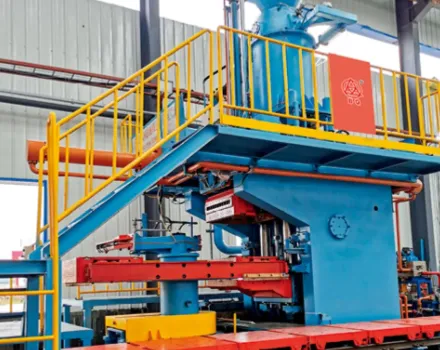
Modern automatic moulding systems are engineering marvels, integrating sophisticated mechanics, advanced hydraulics, intelligent controls, and robust construction to deliver superior performance. One of their foremost technical advantages lies in their unparalleled consistency. Unlike manual processes where mould quality can vary significantly due to operator fatigue or skill differences, an automatic machine ensures identical compaction, density, and pattern draw with every cycle. This repeatability is achieved through precisely controlled sand filling and compaction mechanisms, often involving high-pressure squeezing, simultaneous jolt-squeeze action, or innovative air-flow compaction technologies that ensure uniform sand distribution around complex patterns. The result is a consistently high-quality mould, reducing defects like sand drops, scabs, and dimensional inaccuracies in the final casting.
Another critical advantage is their incredible speed and cycle time. Advanced machines are designed for rapid pattern changeovers, often utilizing shuttle systems or quick-change tooling that minimizes downtime between production runs. Combined with optimized process sequences controlled by programmable logic controllers (PLCs), these machines can achieve significantly higher moulds-per-hour rates compared to their manual counterparts. For example, modern flaskless moulding machines can produce up to 200-300 moulds per hour, a rate unattainable by even the most skilled manual teams. This speed is further augmented by integrated sand preparation and delivery systems that supply sand continuously and precisely, eliminating bottlenecks. Moreover, these systems incorporate advanced diagnostic capabilities, predictive maintenance features, and real-time data monitoring. Operators can track crucial parameters such as compaction pressure, pattern temperature, sand moisture content, and cycle times, allowing for immediate adjustments and proactive problem-solving. This level of technical sophistication not only boosts production but also extends the lifespan of tooling and machine components, minimizing maintenance costs and maximizing uptime.
The impact of integrating automatic moulding machines into foundry operations extends far beyond mere anecdotal improvements; it’s a story told through compelling data. Foundries that have made this strategic investment consistently report substantial, measurable gains across numerous operational metrics. For instance, the elimination of human variability in the moulding process typically leads to a dramatic reduction in casting defects. One large automotive component foundry reported a 15% decrease in overall rejection rates within six months of commissioning their new automatic line, translating to millions in annual material and energy savings from reduced scrap and remelting. This specific reduction was attributed to the precise and consistent sand compaction and pattern draw achieved by the automated system, virtually eliminating issues like core shifts and sand wash.
Productivity increases are perhaps the most immediately striking data point. Many facilities experience an immediate boost in their moulds-per-hour output. For instance, a medium-sized general engineering foundry increased its daily output of small to medium-sized castings by an astounding 60% after replacing two manual lines with a single high-speed automatic moulding machine. This allowed them to accept larger orders and reduce lead times, directly impacting revenue growth. Furthermore, labour costs, a significant expenditure in any foundry, see substantial reductions. One case study from a foundry producing agricultural parts demonstrated a 45% decrease in direct labour costs associated with moulding, as the highly automated machine required only a handful of operators for supervision and maintenance, reallocating dozens of manual labourers to other value-added tasks. Energy efficiency is another often-overlooked benefit; consistent mould quality means less metal remelted, and modern machines are often designed with energy-saving components, contributing to an overall 5-10% reduction in specific energy consumption per tonne of good casting. These quantifiable benefits underscore the critical role that automatic moulding technology plays in optimizing foundry profitability and sustainability.
Choosing the right automatic moulding machine is a critical decision that hinges on a foundry's specific production requirements, budget, and future growth plans. The market offers a diverse range of machines, primarily categorized by their moulding method and flask type: vertical flaskless, horizontal flaskless, and flasked machines. Each type has its own set of advantages for different casting geometries, production volumes, and sand systems. Vertical flaskless machines, known for their high speed and minimal sand consumption, are ideal for large-volume production of small to medium-sized castings. Horizontal flaskless machines offer more flexibility for intricate core settings and larger castings, albeit at slightly lower speeds. Flasked machines, while requiring more floor space and sand, provide the ultimate flexibility for very large, heavy, or complex castings, often incorporating sophisticated pattern plate change systems. Key parameters for comparison include cycle time, maximum mould dimensions, sand compaction pressure, energy efficiency, and the level of automation offered by the control system.
When evaluating manufacturers, it’s imperative to consider their technological prowess, after-sales support, spare parts availability, and reputation for reliability. Below is a comparative table illustrating hypothetical performance metrics for different types of automatic moulding machines from leading (hypothetical) manufacturers, to highlight the diverse options available in the market. This data is illustrative and would vary significantly based on specific models and configurations:
|
Feature |
Manufacturer A (Vertical Flaskless) |
Manufacturer B (Horizontal Flaskless) |
Manufacturer C (Flasked, High Pressure) |
|
Moulds/Hour (Avg.) |
250-320 |
120-180 |
60-100 |
|
Max Mould Size (mm) |
600x480 |
900x700 |
1200x1000 |
|
Sand Compaction (bar) |
15-20 (Squeeze) |
12-18 (Jolt-Squeeze) |
18-25 (High Pressure) |
|
Pattern Change Time |
<1 minute (Automatic) |
1-2 minutes (Semi-Automatic) |
2-4 minutes (Automatic with Crane) |
|
Energy Consumption (kWh/tonne) |
1.8-2.5 |
2.2-3.0 |
2.8-3.5 |
|
Core Setting Flexibility |
Limited (Robotic option) |
High (Manual & Robotic) |
Very High (Manual & Robotic) |
|
Automation Level |
Fully Automated (PLC, HMI) |
High (PLC, HMI, Diagnostics) |
High (PLC, HMI, Predictive Maint.) |
|
Typical Investment Range |
$$$ |
$$$ - $$$$ |
$$$$ - $$$$$ |
This comparison highlights that each manufacturer and machine type offers a unique balance of speed, flexibility, and cost. A thorough analysis of specific production needs, existing infrastructure, and long-term goals is essential to make an informed decision that will optimize a foundry’s operations and return on investment.
The true power of modern automatic moulding machines for foundries often lies in their capacity for extensive customization and seamless integration into existing or newly designed production lines. Off-the-shelf solutions rarely fit every foundry's unique operational footprint, material specifications, or desired output. Therefore, leading manufacturers offer a modular approach, allowing for significant tailoring to meet precise requirements. Customization can begin with the fundamental machine size, accommodating specific flask dimensions or mould blocks required for particular casting families. This ensures optimal utilization of pattern plates and maximizes casting yield per mould, which is crucial for profitability.
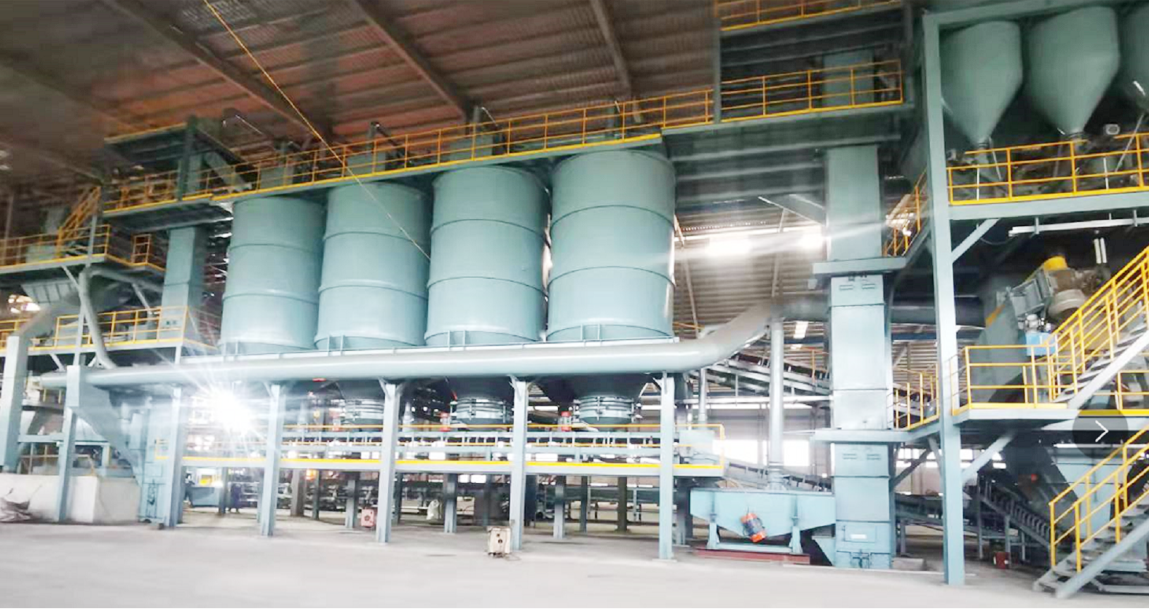
Further customization extends to the sand preparation and delivery system, where integration with existing sand plants—whether green sand, no-bake, or resin-bonded—is paramount. This includes tailored conveyor systems, sand storage hoppers, and precise sand temperature and moisture control units to ensure ideal mouldability. For foundries producing specialized alloys, such as those with high chrome content or requiring specific surface finishes, the machine can be equipped with enhanced sand compaction methods or specialized coating application systems. Core setting is another area ripe for customization; while some machines rely on manual core placement for flexibility, others can be integrated with robotic core setters for high-speed, repetitive tasks, vastly improving cycle times and reducing human error.
Moreover, the control systems themselves are highly configurable. Human-Machine Interfaces (HMIs) can be customized with foundry-specific data displays, maintenance schedules, and diagnostic alerts, often integrated with a foundry's existing Manufacturing Execution System (MES) or Enterprise Resource Planning (ERP) software. This level of data integration provides real-time insights into production status, raw material consumption, and overall equipment effectiveness (OEE). Safety features, such as tailored guarding, emergency stop protocols, and light curtains, are also customizable to meet specific regional regulations and internal safety standards. By working closely with equipment suppliers, foundries can design a comprehensive automatic moulding solution that not only meets their immediate production needs but also offers the scalability and adaptability required for future growth and diversification into new markets or casting types. This bespoke approach ensures maximum efficiency, minimizes integration headaches, and ultimately delivers a higher return on investment.
The versatility and efficiency of automatic moulding machines have made them indispensable across a spectrum of industries, transforming how diverse components are manufactured. From the high-volume demands of the automotive sector to the robust requirements of heavy machinery, these machines consistently deliver quality, speed, and cost-effectiveness. In the automotive industry, for example, automatic moulding lines are the backbone for producing critical components such as engine blocks, cylinder heads, brake calipers, and exhaust manifolds. A prominent European automotive foundry transitioned from a semi-automatic line to a high-pressure vertical flaskless system for their brake disc production. This resulted in an impressive 30% increase in production capacity and a significant reduction in fettling time due to the superior surface finish and dimensional accuracy achieved by the automated moulds. The consistent quality ensured by the automatic process also reduced warranty claims related to casting defects, solidifying their reputation as a reliable supplier.
Beyond automotive, the agricultural equipment sector heavily relies on these machines for producing durable components like tractor parts, ploughshares, and hydraulic housings. A North American agricultural equipment manufacturer upgraded their moulding facility to an automatic horizontal flaskless machine specifically designed for larger, more complex castings. This enabled them to cast intricate hydraulic valve bodies with complex internal passages with unprecedented precision, reducing the need for costly post-machining operations by 18%. The improved dimensional stability of the castings directly contributed to enhanced performance and longevity of their final products. Similarly, in the general engineering and construction sectors, automatic moulding machines are used for producing pump bodies, valve components, pipe fittings, and structural brackets. A foundry specializing in industrial pump components implemented an automated flasked moulding line, allowing them to handle a wider range of casting sizes and designs, including those requiring extensive core setting. This flexibility, coupled with a 25% reduction in cycle time for their most popular pump housing, empowered them to expand their product offerings and capture a larger market share. These real-world examples unequivocally demonstrate that the strategic deployment of automatic moulding technology translates into tangible competitive advantages, operational excellence, and sustained business growth across various industrial landscapes.
As the global manufacturing landscape continues to evolve, characterized by increasing demands for sustainability, efficiency, and customized production, the role of advanced automation within foundries becomes ever more critical. Investing in a state-of-the-art automatic moulding machine for foundry operations is not merely an upgrade of equipment; it is a strategic decision to future-proof an entire production facility. These machines are at the forefront of foundry innovation, integrating features like artificial intelligence for predictive maintenance, advanced sensors for real-time process optimization, and enhanced connectivity for seamless integration into Industry 4.0 frameworks. This means foundries can anticipate potential equipment failures before they occur, optimize energy consumption dynamically, and manage their production lines remotely, achieving unprecedented levels of operational control and resilience.
The long-term benefits extend far beyond immediate productivity gains. By consistently producing high-quality castings with minimal waste, automatic moulding systems contribute significantly to environmental sustainability, reducing the carbon footprint of foundry operations. They enable foundries to remain competitive in a market where precision, rapid prototyping, and flexible batch production are increasingly valued. Furthermore, the automation of repetitive and physically demanding tasks improves workplace safety and allows skilled personnel to focus on higher-value activities such as process development, quality control, and customer interaction. The continuous advancements in sand compaction technologies, core setting automation, and integrated robotics ensure that these machines will adapt to future challenges, including the production of lighter, stronger, and more complex geometries. Embracing an automatic moulding machine for foundry operations is, therefore, an investment in sustained growth, technological leadership, and a more robust, efficient, and environmentally responsible future for the casting industry. It empowers foundries to meet the demands of tomorrow, today.