The sand mould casting process is a cornerstone of modern manufacturing, particularly within the ferrous metals industry. Globally, it remains the most widely used casting method due to its versatility, cost-effectiveness, and ability to create complex geometries. This process allows for the production of a vast range of components, from engine blocks and machine tool beds to intricate artistic pieces, serving as a foundational technology for numerous industries including automotive, aerospace, and construction. Understanding the nuances of sand mould casting is crucial for engineers, designers, and manufacturers seeking efficient and reliable production solutions.
The demand for cast metal components continues to rise alongside industrial expansion and infrastructure development worldwide. According to the World Steel Association, global steel production reached over 1.8 billion tonnes in 2023, a significant portion of which relies on casting techniques, with sand casting being dominant. However, the industry faces challenges like environmental concerns relating to sand usage and emissions, and a need for increased automation to maintain competitiveness. This highlights the importance of optimizing the sand mould casting process for sustainability and efficiency.
The sand mould casting process, at its heart, is a method of shaping molten metal by pouring it into a sand mould, which is a negative impression of the desired component. It’s a relatively simple process conceptually, but achieving high-quality castings requires meticulous control over several variables. This method is vital in producing components where complex shapes or large sizes are needed, often serving as an economic alternative to other, more specialized casting techniques. Its continued relevance stems from its adaptability and capacity to handle diverse production volumes.
The Significance of Sand Mould Casting
The sand mould casting process remains a crucial manufacturing technique due to its versatility and ability to produce complex geometries. It’s a fundamentally scalable process, capable of handling both small-batch production runs and high-volume manufacturing. This adaptability makes it ideal for a wide range of industries, including automotive, aerospace, and heavy machinery. The cost-effectiveness of sand casting also contributes to its continued dominance, making it accessible to businesses of all sizes.
The impact of the sand mould casting process extends beyond simple component creation. It allows for the utilization of diverse metal alloys, and enables rapid prototyping and iterative design improvements. The relatively low tooling costs associated with sand casting – compared to processes like die casting – also facilitate greater design flexibility and quicker turnaround times. This makes the sand mould casting process invaluable for product development and customization.
Global Industry Context & Challenges
Sand mould casting is a truly global process, with significant production centers in China, India, the United States, and Europe. China currently leads in global casting production, accounting for a substantial percentage of worldwide output. However, increased competition and stringent environmental regulations are driving a shift towards more sustainable and technologically advanced casting practices in all regions. The industry is navigating challenges related to skilled labor shortages and the need for increased automation to maintain cost competitiveness.
A key challenge facing the sand mould casting process is the environmental impact of sand usage. Traditional sand casting requires substantial amounts of silica sand, and the disposal of spent sand presents logistical and environmental concerns. Efforts are underway to develop alternative sand materials, such as olivine sand and recycled materials, and to improve sand reclamation and recycling technologies. Furthermore, reducing energy consumption and emissions during the melting and pouring stages are crucial areas of focus.
The global market for cast metal products is projected to continue growing, driven by expanding infrastructure projects, automotive production, and demand for industrial machinery. However, this growth is contingent upon the industry’s ability to address environmental concerns, adopt innovative technologies, and improve overall efficiency. The successful implementation of these strategies will determine the future sustainability and competitiveness of the sand mould casting process.
Defining the Sand Mould Casting Process
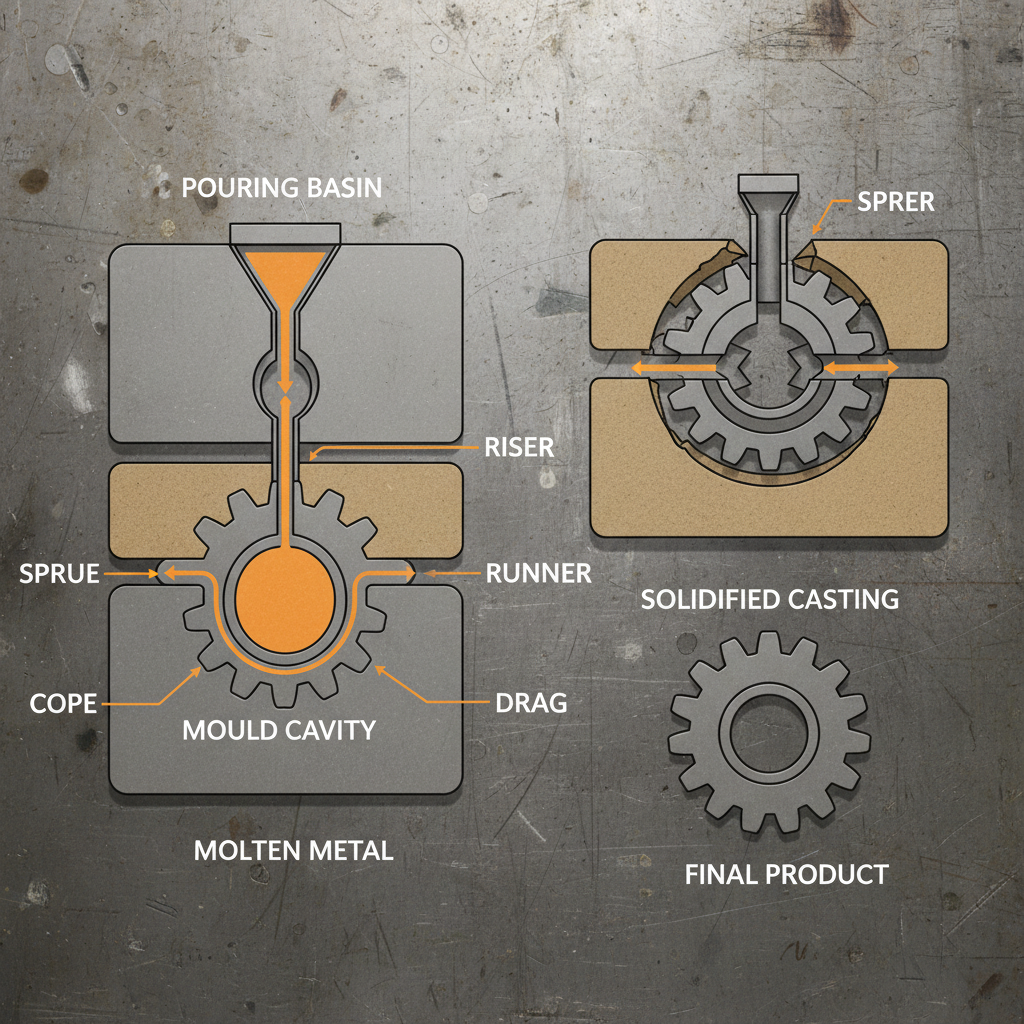
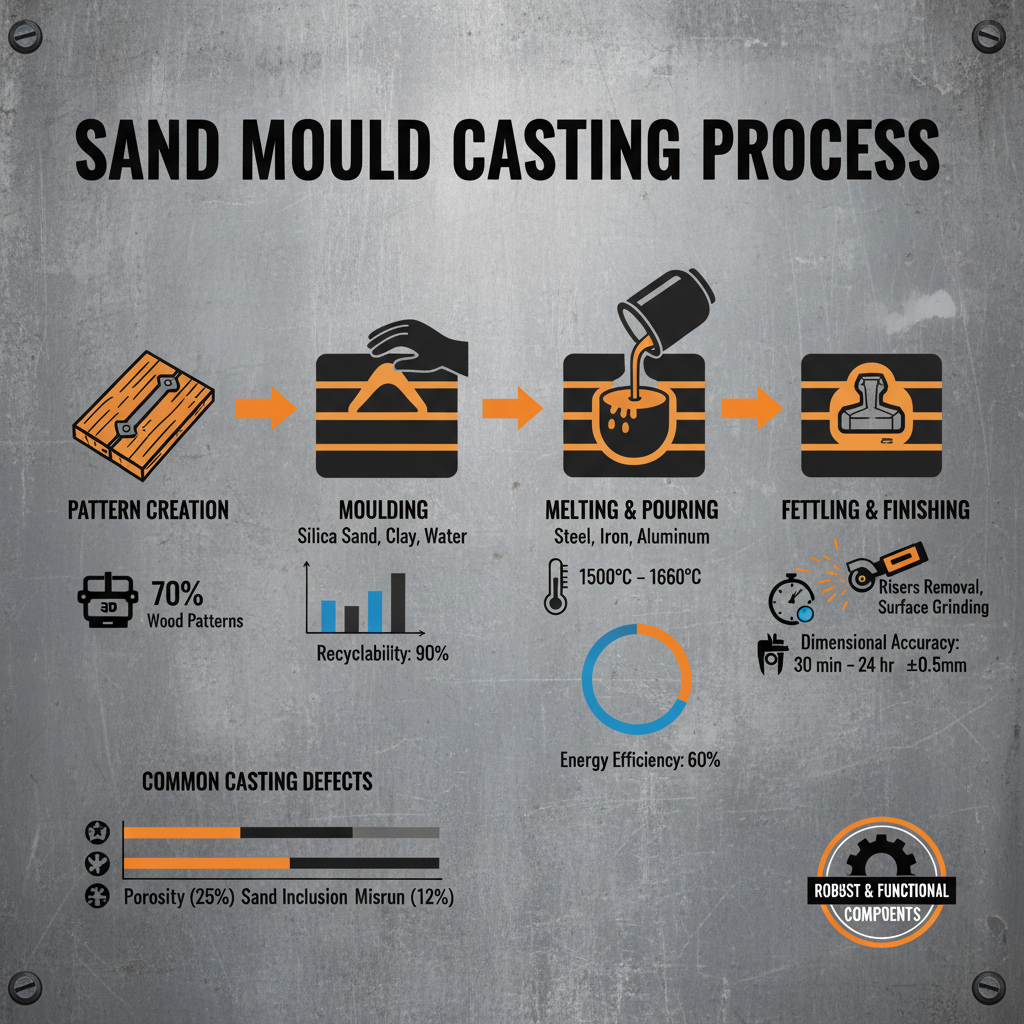
The sand mould casting process begins with the creation of a pattern, which is a replica of the desired final component. This pattern is used to form a cavity within a sand mixture, typically composed of silica sand, clay, and a binder. The sand mixture is packed around the pattern, creating a mould consisting of two halves. After the pattern is removed, the mould halves are joined together, creating a complete cavity into which molten metal will be poured.
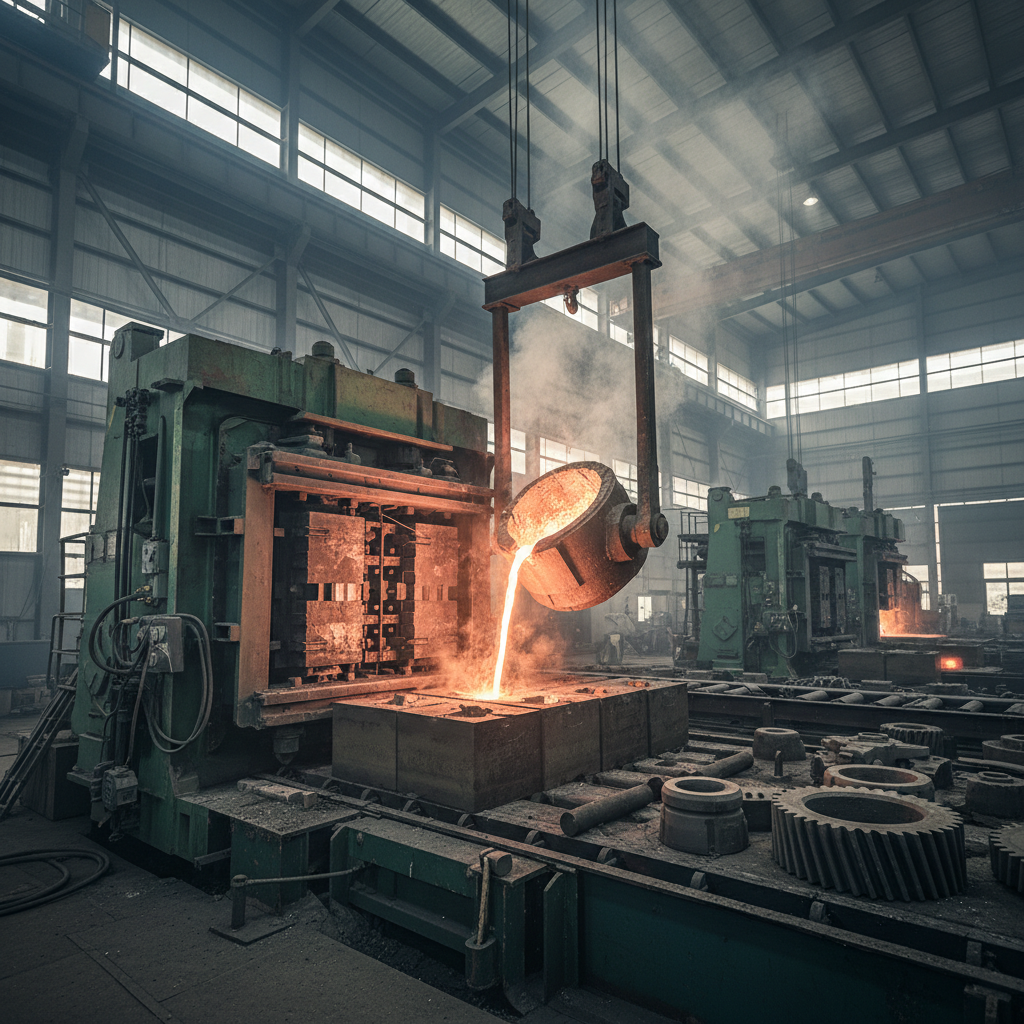
Once the molten metal is poured into the sand mould, it solidifies and cools. After cooling, the sand mould is broken away to reveal the cast component. The casting is then subjected to post-processing operations such as cleaning, fettling (removing excess material), and finishing to achieve the desired dimensions and surface quality. This relatively straightforward process makes sand casting a remarkably adaptable and widely used manufacturing method.
The sand mould casting process is particularly well-suited for producing large and complex parts that would be difficult or expensive to manufacture using other methods. It can accommodate a wide range of metal alloys, including iron, steel, aluminum, and bronze, making it a versatile option for diverse applications. The process allows for both ferrous and non-ferrous metal casting, further extending its utility within the manufacturing sector.
Key Factors Influencing Casting Quality
Achieving high-quality castings through the sand mould casting process depends on careful control of several key factors. Firstly, the composition and properties of the sand mixture are critical. Factors such as grain size, clay content, and moisture levels influence the mould’s permeability, strength, and ability to accurately replicate the pattern. Secondly, the melting and pouring parameters – including temperature, pouring rate, and turbulence – significantly impact the metal’s fluidity and solidification behavior.
Another crucial factor is the design of the gating system, which controls the flow of molten metal into the mould cavity. A well-designed gating system ensures uniform filling, minimizes turbulence, and prevents the formation of defects like gas porosity and incomplete filling. Furthermore, the cooling rate of the casting affects its microstructure and mechanical properties. Controlled cooling is essential for minimizing shrinkage stresses and achieving the desired material characteristics.
Sand Mould Casting Process Quality Metrics
Applications Across Diverse Sectors
The sand mould casting process is employed across a wide spectrum of industries. In the automotive sector, it’s used to produce engine blocks, cylinder heads, and transmission housings. The aerospace industry relies on sand casting for creating complex turbine components and structural parts. Heavy machinery manufacturers utilize sand casting to produce large and robust components such as gears, pumps, and valve bodies.
Furthermore, the sand mould casting process finds applications in the construction industry for producing pipes, fittings, and architectural elements. In the agricultural sector, it’s used to manufacture tractor parts and irrigation system components. Even in art and sculpture, sand casting is utilized to create intricate metal artworks. This versatility demonstrates the enduring importance of the sand mould casting process across diverse economic sectors.
Advantages & Long-Term Value Proposition
The primary advantage of the sand mould casting process is its cost-effectiveness, particularly for low-to-medium production volumes. The relatively low tooling costs and material flexibility make it an attractive option for a wide range of applications. It also offers excellent design freedom, allowing for the creation of complex shapes and geometries that would be difficult or impossible to achieve with other manufacturing methods.
Beyond cost and design flexibility, sand casting provides a reliable and proven manufacturing process with a long track record of success. Its ability to handle a wide variety of metal alloys ensures adaptability to diverse material requirements. This contributes to a strong long-term value proposition for businesses seeking dependable and versatile casting solutions.
The continuous improvement of sand reclamation technologies and the development of environmentally friendly sand materials are further enhancing the sustainability and long-term viability of the sand mould casting process, making it an increasingly attractive choice for responsible manufacturers.
Future Trends & Emerging Technologies
The future of the sand mould casting process is being shaped by several emerging trends. Automation and robotics are playing an increasingly significant role, improving efficiency, reducing labor costs, and enhancing casting quality. 3D printing of sand moulds – also known as additive manufacturing – is gaining traction, enabling rapid prototyping and the creation of complex geometries with minimal tooling.
The adoption of Industry 4.0 principles, including data analytics and machine learning, is also transforming sand casting operations. These technologies enable real-time monitoring of process parameters, predictive maintenance, and optimized process control. Furthermore, research into alternative sand materials – such as olivine sand and recycled aggregates – is driving sustainability efforts and reducing environmental impact.
Digital twins – virtual replicas of physical casting processes – are also emerging as powerful tools for optimizing designs, predicting performance, and identifying potential defects before they occur. These advancements will ensure the sand mould casting process remains a competitive and innovative manufacturing technique for years to come.
Summary of Challenges and Mitigation Strategies in Sand Mould Casting
| Challenge |
Impact on sand mould casting process |
Mitigation Strategy |
Implementation Difficulty (1-5) |
| Sand Supply & Cost |
Fluctuating prices and limited availability can disrupt production. |
Explore alternative sand sources and implement efficient reclamation systems. |
3 |
| Environmental Regulations |
Stringent rules on emissions and waste disposal increase operational costs. |
Invest in filtration systems and adopt sustainable sand management practices. |
4 |
| Skilled Labor Shortage |
Lack of qualified personnel hampers quality control and innovation. |
Implement training programs and attract young talent to the industry. |
4 |
| Defect Detection |
Identifying and addressing casting defects is time-consuming and costly. |
Integrate automated inspection systems using X-ray or ultrasonic technologies. |
3 |
| Process Control |
Maintaining consistent process parameters is crucial for casting quality. |
Implement closed-loop control systems with real-time monitoring and adjustments. |
5 |
| Energy Consumption |
Melting and pouring processes are energy intensive, contributing to high costs. |
Optimize furnace efficiency and explore alternative heating methods like induction melting. |
2 |
FAQS
Sand mould casting offers significant advantages in terms of cost-effectiveness, design flexibility, and scalability. It’s particularly well-suited for producing large, complex parts without the high tooling costs associated with processes like die casting. The wide range of alloys that can be cast using this method also makes it a versatile option for diverse applications. Its lower initial investment makes it accessible to a broader range of manufacturers.
Minimizing defects requires meticulous control over several factors. These include the composition and preparation of the sand mixture, accurate melting and pouring temperatures, optimal gating system design, and controlled cooling rates. Implementing robust quality control procedures, including regular inspection and analysis of castings, is also crucial for identifying and addressing potential issues. Automation and process monitoring can further enhance defect prevention.
The primary environmental concern is the consumption and disposal of silica sand. Mitigation strategies include utilizing alternative sand materials like olivine sand, implementing efficient sand reclamation and recycling systems, and minimizing sand waste. Reducing energy consumption during melting and pouring, and controlling emissions are also crucial. Investing in filtration systems and adopting sustainable manufacturing practices can significantly reduce the environmental impact.
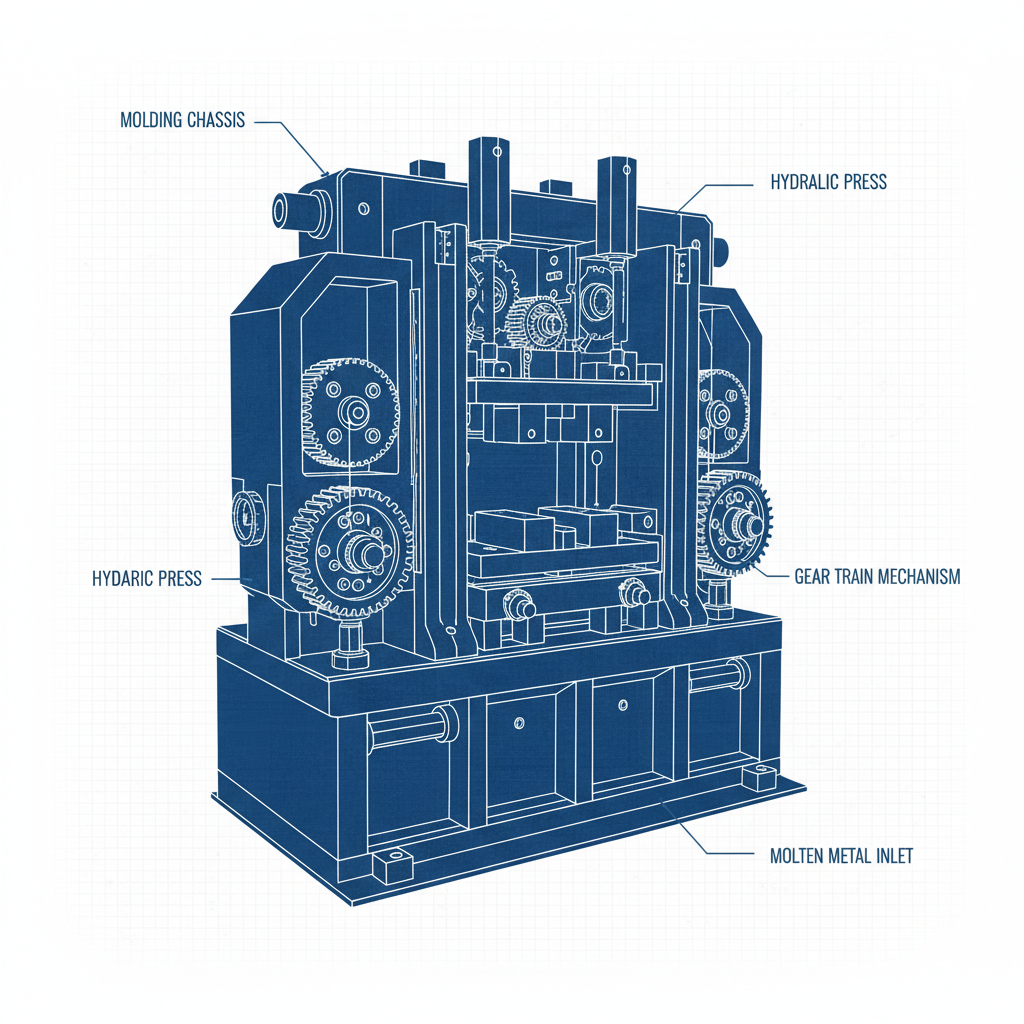
Automation is revolutionizing sand casting by improving efficiency, reducing labor costs, and enhancing casting quality. Automated moulding machines, pouring systems, and inspection technologies are becoming increasingly prevalent. Robotics are also being used for tasks such as fettling and finishing. This allows for more consistent process control, reduced human error, and increased production capacity.
3D printing, or additive manufacturing, is used to create sand moulds directly, eliminating the need for traditional patterns. This allows for rapid prototyping, the production of complex geometries, and the creation of customized castings with minimal tooling costs. 3D-printed sand moulds are particularly advantageous for low-volume production runs and intricate designs.
Data analytics can be used to monitor and optimize various aspects of the sand mould casting process. Real-time data from sensors can be analyzed to identify trends, predict potential defects, and improve process control. Machine learning algorithms can be used to optimize process parameters, reduce waste, and enhance casting quality. Data-driven insights enable informed decision-making and continuous improvement.
Conclusion
The sand mould casting process remains a fundamental and versatile manufacturing technique, integral to a vast array of industries. Its cost-effectiveness, design flexibility, and scalability continue to drive its widespread adoption globally. By understanding the key factors influencing casting quality and embracing emerging technologies such as automation, 3D printing, and data analytics, manufacturers can further enhance the efficiency, sustainability, and competitiveness of this essential process.
Looking ahead, the future of sand mould casting lies in embracing sustainable practices, minimizing environmental impact, and leveraging the power of digital transformation. Continuous investment in research and development, coupled with a commitment to skilled workforce training, will ensure the sand mould casting process remains a vital component of the global manufacturing landscape. For more information on how we can help optimize your casting processes, visit our website: sand mould casting process.