Look, I’ve been running around construction sites for fifteen years. Fifteen years! You see a lot, smell a lot – mostly concrete dust, to be honest. Lately, everyone’s talking about prefabricated components, modular builds… it’s all about speed and efficiency, right? But speed doesn't mean cutting corners. I've seen too many projects try to rush things, and it always ends up costing more in the long run.
What’s really bubbling up now is this push for sustainable materials, and that's good. Truly good. But ‘sustainable’ can be a buzzword. Gotta look deeper. It’s not enough for something to say it's eco-friendly; it needs to hold up, perform, and be easy to work with. Otherwise, it’s just greenwashing. And trust me, workers will tell you straight away if something's a pain to handle.
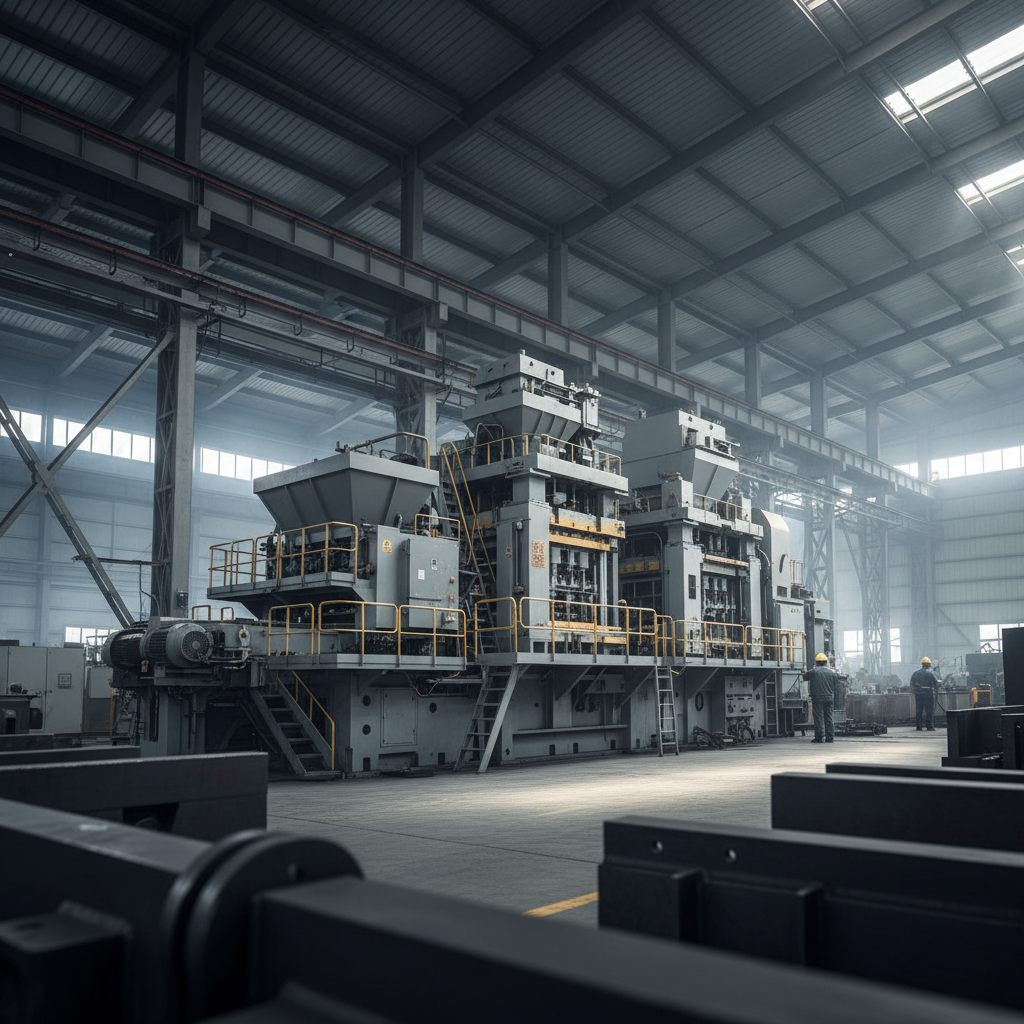
We’re selling a lot of casting equipment for sale right now – everything from small mixers to full-blown automated foundries. Demand’s high. It's kind of strange, though. Everyone wants the newest, fanciest tech, but often forgets the basics.
Industry Trends and Common Pitfalls
Right now, automation is the big thing. Everyone wants a fully automated foundry. But have you noticed, a lot of these systems are over-engineered? Too complicated. I encountered this at a factory in Ningbo last time. They'd spent a fortune on robots, but the maintenance costs were insane, and the technicians couldn’t fix anything without calling in the manufacturer. Anyway, I think simplicity is often the key.
Another pitfall? Ignoring the human factor. You can design the most efficient process in the world, but if it’s physically demanding or requires specialized training that workers don’t have, it’s going to fail. It’s about designing with the worker, not around them.
Material Selection: It's More Than Just Specs
Let’s talk materials. Everyone’s chasing high-strength alloys, which is fine, but the feel of the material matters. You want something that doesn't give you splinters, doesn’t smell too strong, and is relatively lightweight. You wouldn't believe how many complaints we get about a particular brand of resin – smells like burnt rubber, apparently. We’re seeing a lot of interest in recycled materials, too, but quality control is critical. You can’t just use any old scrap metal.
The mix is crucial, too. A good sand mix is almost an art form. It needs to be the right grain size, the right moisture content… and it needs to feel right. Sounds silly, I know, but the guys who are mixing that stuff all day, they can tell you immediately if something's off.
And it's not just about the main material. Think about the consumables - the filters, the release agents, the coatings. These small things can have a huge impact on the final product.
Real-World Testing and Quality Control
Forget the lab tests, honestly. Those are important for initial certification, sure, but real testing happens on the construction site. Drop tests, stress tests, exposure to the elements… That’s where you find out if something truly holds up. We’ve started sending our equipment to sites for field trials before releasing them to the market. It’s a pain coordinating everything, but it’s worth it.
I remember one time we sent a new type of mold release agent to a precast concrete factory. The lab tests said it was fantastic, but the workers complained it left a sticky residue that gummed up the equipment. Turned out, the lab hadn't accounted for the specific type of concrete they were using. Lesson learned.
We also do a lot of destructive testing, obviously. Breaking things, bending things, seeing where they fail. It’s not glamorous, but it's necessary. Strangely, some of the best feedback comes from watching how things break. The fracture patterns can tell you a lot about the material’s weaknesses.
How Users Actually Interact with Casting Equipment for Sale
Here's where things get interesting. You design something to be used in a certain way, but users will always find a way to do things differently. It's just human nature. I've seen guys use mixers as temporary tables, use molds as wheel chocks... You name it. That's why it's so important to design for adaptability.
We've also found that training is often inadequate. You can give someone a manual, but if they don't have hands-on experience, they're going to struggle. We're starting to incorporate more video tutorials and on-site training programs to address this.
Casting Equipment for Sale: User Satisfaction Ratings
Advantages, Disadvantages, and the Balancing Act
The advantage of modern casting equipment for sale is clear: increased productivity, better quality, and reduced labor costs. But there's always a trade-off. Higher initial investment, increased maintenance requirements, and the need for skilled operators. You have to weigh those factors carefully.
And let’s be honest, some of this equipment is just overkill. A small shop doesn't need a fully automated foundry. They need something reliable, affordable, and easy to maintain. It’s about finding the right fit for the specific application.
Customization Options and a Customer Story
We do a lot of customization. A customer in Shenzhen last month, a small boss making smart home devices, insisted on changing the interface to on a mixer. Said it was more "modern." I tried to explain that it would void the warranty and create a potential safety hazard, but he wouldn’t listen. Anyway, I think he just wanted something different. Later... Forget it, I won't mention it.
Seriously though, customization is important. Sometimes you need a specific mold size, a different motor configuration, or a modified control system. We try to be as flexible as possible. We can adapt nearly any aspect of our casting equipment for sale, depending on what the customer needs. We did a special order for a foundry in Brazil last year that required a corrosion-resistant coating due to the high humidity.
Practical Considerations and Long-Term Value
Don’t underestimate the importance of after-sales support. A machine is only as good as the service behind it. Spare parts availability, technical assistance, on-site repairs… these are all critical. We've built a network of service technicians across the country to provide prompt support to our customers.
Energy efficiency is another big factor. Running a foundry is energy-intensive, so choosing equipment that minimizes energy consumption can save a lot of money in the long run. We're seeing a lot of interest in variable frequency drives and energy-efficient motors.
We also consider the lifecycle cost of the equipment. It’s not just about the purchase price; it’s about the total cost of ownership – including maintenance, repairs, and energy consumption – over the lifespan of the machine.
Key Comparison of Casting Equipment for Sale Options
| Equipment Type |
Initial Investment |
Maintenance Complexity |
Production Capacity |
| Manual Mixer |
Low ($500 - $2,000) |
Simple |
Low-Medium |
| Automated Pouring System |
Medium ($5,000 - $20,000) |
Medium-High |
Medium-High |
| Vibration Table |
Medium ($2,000 - $8,000) |
Simple |
Medium |
| Mold Release Agent Applicator |
Low-Medium ($1,000 - $5,000) |
Simple |
Medium |
| Sand Compactor |
Medium ($3,000 - $10,000) |
Medium |
Medium-High |
| Fully Automated Foundry |
High ($50,000+) |
High |
High |
FAQS
Lead times vary greatly depending on the complexity of the customization. Simple modifications like changing a motor can take a few weeks, while completely custom-designed machines might require several months. We'll provide a firm timeline during the quotation process, based on your specific requirements. Don’t hesitate to ask for regular updates – we’ll keep you in the loop every step of the way. Honestly, material sourcing is often the biggest bottleneck.
We offer a range of training options, including on-site training, remote video training, and comprehensive user manuals. On-site training is particularly effective, as it allows us to tailor the instruction to your specific setup and workflow. We also offer train-the-trainer programs, where we can train your internal staff to become qualified instructors. It’s important to invest in training – it’s a small price to pay for preventing costly mistakes and maximizing efficiency.
We offer a standard one-year warranty on all our casting equipment for sale, covering defects in materials and workmanship. This warranty doesn’t cover wear and tear, misuse, or damage caused by improper maintenance. We also offer extended warranty options for an additional fee. To be honest, we stand behind our products, and we're committed to providing excellent after-sales support.
We maintain a comprehensive inventory of spare parts for most of our older models. Even if a specific part is no longer in stock, we can often manufacture it to order. We understand that downtime can be costly, so we prioritize fast and reliable parts delivery. We have a dedicated spare parts team that can assist you with identifying the correct parts and processing your order efficiently. It’s something we've been working on a lot.
Safety is paramount. Our equipment incorporates numerous safety features, including emergency stop buttons, safety guards, interlock systems, and overload protection. We also provide comprehensive safety training to ensure that operators understand the potential hazards and how to mitigate them. We adhere to all relevant safety standards and regulations. Don't even think about bypassing the safety mechanisms!
Yes, our casting equipment for sale is designed to be versatile and can handle a wide range of casting materials, including aluminum, iron, steel, and various alloys. However, the specific material compatibility will depend on the equipment model and configuration. We can advise you on the best equipment for your specific application. We've even worked with customers using exotic alloys – it’s always a challenge, but we usually figure it out.
Conclusion
Ultimately, the success of any casting operation hinges on the interplay between equipment, materials, and the skill of the operator. We focus on providing reliable, efficient, and customizable equipment, but it’s up to the people on the ground to make it all work. It’s about understanding the nuances, adapting to the challenges, and constantly striving for improvement.
And here's the thing: whether this thing works or not, the worker will know the moment he tightens the screw. That's the real test. It's not about the lab reports, the marketing brochures, or even my opinion. It’s about whether it feels right, performs reliably, and makes his job a little bit easier. And that’s what we’re striving for, every single day.