Release Time:2025-12-02
If you’ve ever wondered how massive metal parts or intricate components get formed with precision day after day, the horizontal casting machine is likely the unsung hero behind the scenes. These machines are quietly powering the backbone of industries from automotive to aerospace, contributing to economies the world over. Understanding their role isn't just for engineers or machine operators — it’s about appreciating how complex manufacturing keeps evolving and how that evolution impacts global trade, quality standards, and even sustainability efforts.
The world’s industrial output continues to grow, and according to ISO statistics, precision manufacturing forms over 35% of global manufacturing GDP. Horizontal casting machines, which maximize efficiency and product quality, dramatically reduce waste and speed production cycles. In emerging economies, they’re key to upgrading manufacturing plants to meet international standards with minimal environmental footprints. Honestly, it’s one of those silent revolutions you might overlook until you see a component fail in your car or airplane.
Mini takeaway: Horizontal casting machines aren’t just mechanized moulding tools—they’re central to pushing the boundaries of manufacturing globally, improving economies and environmental outcomes alike.
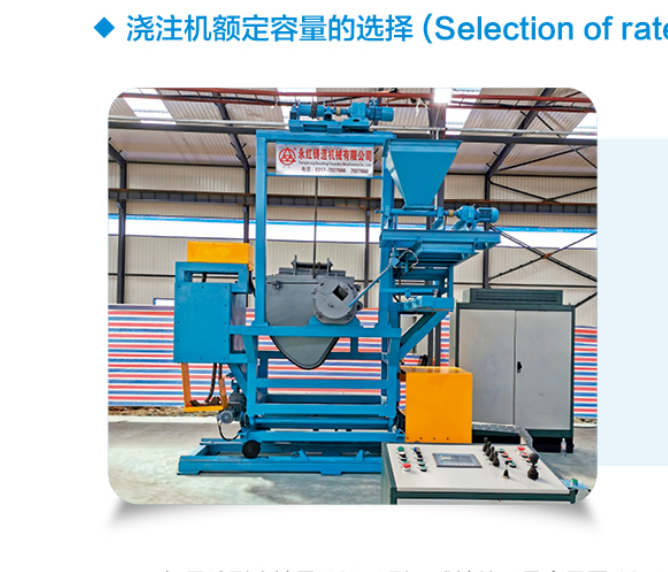
Put simply, a horizontal casting machine is a piece of industrial equipment used to produce metal or alloy components by pouring molten material into a horizontal mould and allowing it to solidify. Unlike vertical casting, where gravity acts downwards through a vertical mould, these machines pour metal horizontally, which means the process can be better controlled in some applications.
They’re essential to modern manufacturing, providing consistent quality in parts that need strict dimensional tolerances — think railroad wheels, turbine blades, or automotive chassis components. In humanitarian contexts, such as rapid infrastructure rebuilding, their reliability and speed enable faster production of large, durable components.
The heart of any horizontal casting machine is its ability to precisely control molten metal flow in a horizontal channel. This involves tight temperature regulation and mould design, which directly impacts material properties and surface finish. Many manufacturers say it’s this wink of exactitude combined with robust build that distinguishes top-tier machines.
Since the molten metal can reach temperatures upwards of 1600°C, machine parts must resist thermal fatigue and corrosion. Advances in heat-resistant alloys and ceramic coatings have pushed durability far beyond what earlier machines could manage.
From small batch custom parts to massive industrial runs, the machines adapt in size and complexity. Some horizontal casters work inline with automated production, making them invaluable for scalable manufacturing.
It’s one thing to produce a part quickly, but another to do so sustainably. Modern horizontal casting machines often integrate energy-saving technologies, linkage to waste heat recovery, and intelligent control systems. This reduces carbon emissions and costs alike—something companies, frankly, can’t ignore anymore.
Like any heavy equipment, downtime kills productivity. Machines designed with modular parts and accessible components minimize maintenance time – boosting overall throughput.
All these factors fit together like a jigsaw, delivering a production powerhouse.
Across continents and industries, horizontal casting machines have transformed how manufacturers approach complexity and scale. In Europe’s aerospace industry, the need for precision turbine blades requires casting technologies that assure repeatability. Meanwhile, Asian automotive hubs rely heavily on horizontal casting to speed production lines and maintain quality — all while working within tight environmental regulations.
In post-disaster zones, where rapid infrastructure rebuilds are critical, portable or locally installed horizontal casting units have produced replacement parts for bridges and machinery. Africa’s emerging mining sector also benefits from such machines delivering heavy-duty components without long delays for imports.
From auto plants in Japan to reconstruction efforts in Mozambique, horizontal casting machines keep industries moving forward faster and greener.
| Specification | Typical Range / Detail | Notes |
|---|---|---|
| Mould Length | 1 to 15 meters | Depends on product size |
| Max Pouring Temperature | ~1600°C | Suitable for steel and alloys |
| Production Output | Up to 600 tons/month | Highly dependent on cycle time |
| Energy Consumption | 2.5 - 4.0 kWh/kg cast | Can vary with upgrades |
| Automation Level | Manual to Fully Automated | Modular add-ons available |
Choosing the right vendor can feel like navigating a maze. Price, support, technology, and delivery timelines all come into play.
| Vendor | Price Range | Technology Level | Lead Time | Support/Service |
|---|---|---|---|---|
| Yonghong Machinery | $$$ - Competitive | High automation options | 6-10 weeks | 24/7 global support |
| GlobalCast Inc. | $$$$ - Premium | Cutting-edge digital integration | 8-12 weeks | On-site training included |
| TechCast Solutions | $$ - Budget | Basic automation, manual controls | 4-6 weeks | Remote support only |
The clear benefits of these machines go beyond just manufacturing speed. Cost efficiency emerges because of reduced material wastage and better yield rates. Sustainability gets a boost from newer designs boasting energy-efficient motors and better heat recycling, aligning with goals set by organizations such as the United Nations Sustainable Development Goals.
On a social front, reliable casting reduces safety hazards from faulty parts, fosters innovation by enabling complex designs, and nurtures trust between manufacturers and consumers. It’s incredible how a well-designed machine impacts not just what’s being made, but how communities and industries prosper.
Emerging technologies like AI-driven process optimization and real-time sensors transform horizontal casting into a smart manufacturing node. Additive manufacturing (3D printing) has also started influencing casting mould designs, allowing more complex, lightweight parts.
Green casting initiatives are pushing the envelope — recycling scrap metal directly in molten form reduces mining pressures. Meanwhile, integration with horizontal casting machine lines enables a digital shift towards Industry 4.0 in factories worldwide.
Despite their advantages, horizontal casting machines face hurdles: maintenance can be costly if machine design is poor, energy consumption remains high in older units, and highly automated models are sometimes less flexible for low-volume custom parts.
Experts recommend modular designs and increased use of predictive maintenance technologies to address downtime. Energy efficiency, meanwhile, is improving as manufacturers adopt AI for process tuning and new insulation materials.
A1: Industries like automotive, aerospace, heavy machinery, and construction all rely heavily on horizontal casting due to its precision and ability to handle large parts with complex shapes.
A2: Horizontal casting often provides better control over molten metal solidification, reducing defects like porosity. It also enables easier integration with automated production lines compared to vertical casting.
A3: Older machines can be, but modern versions use energy-efficient motors, heat recovery systems, and intelligent controls to reduce consumption significantly.
A4: Absolutely. Many manufacturers offer modular setups or easily changeable moulds that adapt the machines for smaller or specialized runs without excessive downtime.
A5: Working with trusted vendors offering global support like horizontal casting machine specialists, ensuring compliance with international quality and environmental standards, will ease import process and guarantee better post-sale services.
In a nutshell, the horizontal casting machine stands as a technological cornerstone for modern manufacturing, linking precision engineering with sustainable growth. Whether you’re upgrading an industrial line or exploring new manufacturing territories, investing time to understand these machines pays measurable dividends — from cost reductions to environmental wins.
Thinking about stepping up your production or exploring new industrial horizons? Do check out horizontal casting machine solutions that can match your aspirations and scale.