Release Time:2025-12-02
In an increasingly interconnected and industrialized world, moving raw materials and finished goods efficiently is a cornerstone of modern logistics and manufacturing. Among the many solutions at our disposal, the oscillating conveyor quietly plays a vital role — optimizing material flow while tackling some tricky challenges. Today, we’re diving into what makes these conveyors tick, why they're so relevant on a global scale, and how understanding their design can boost efficiency, sustainability, and even humanitarian efforts.
Before we get technical, the context is worth setting. According to the United Nations Industrial Development Organization (UNIDO), global manufacturing output continues to grow steadily, valued at trillions annually. With volumes this large, the need for reliable, cost-effective material handling solutions is enormous. Enter the oscillating conveyor. Unlike traditional belt or screw conveyors, the oscillating conveyor offers gentler, more versatile material transport suited to many industries — from agriculture to electronics, and even disaster relief supply chains.
Its ability to move irregular or delicate bulk materials without damage is crucial for reducing waste and ensuring safety — a priority that's only grown amid increasing global supply chain demands. For companies looking to optimize plants or aid organizations needing fast, rugged systems in remote locations, understanding oscillating conveyors makes a world of difference.
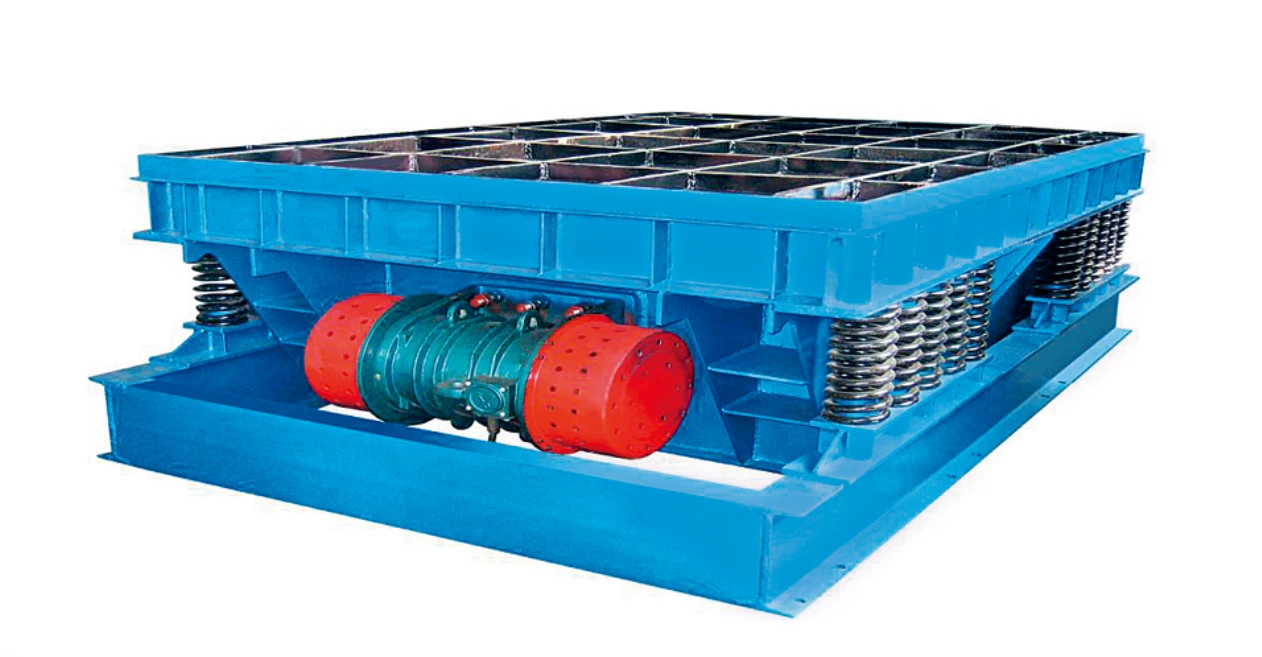
Put simply, an oscillating conveyor moves materials by vibrating a flat or trough-shaped surface back and forth along a horizontal plane. Instead of continuous looping like a belt, the conveyor's deck "shakes" the product forward in small increments. This sort of gentle agitation slices through sticky or bulky materials that might clog other conveyors. It’s almost like shaking a pan of rice to move it slowly toward one edge — only this is a robust industrial device designed for continuous, heavy use.
In industry, oscillating conveyors come in various designs, some with electromagnetic drives, others mechanical. Their specialty? Handling crumbly, coarse, or sensitive bulk loads without breaking or degrading products. Think grain kernels, wood chips, or recycled plastics — layered applications worldwide.
Most oscillating conveyors face tough conditions — abrasive materials, dust, moisture, and constant vibration. Manufacturers commonly select hardened steel decks or food-grade stainless steel for hygiene-focused industries. The secret sauce is balancing weight and strength so conveyors don’t prematurely wear down but also don’t waste energy.
From compact units for assembly lines to massive conveyors moving tons of biomass, scalability is key. Modular designs help operators scale sections up or down and swap beds for specific needs. It’s not uncommon to see oscillating conveyors seamlessly integrated with automated stacking or packaging.
Oscillating conveyors rely on vibration-driven motion rather than motors that spin belts or screws. This translates to roughly 15-30% energy savings in many setups — a boon for companies chasing operational efficiency through green initiatives. They also tend to require minimal maintenance; no belts to replace or rollers to grease.
While vibration might conjure noise concerns, modern designs drastically reduce how loud these systems are — often quieter than belt conveyors. Less noise means better worker comfort too. Plus, many oscillating conveyors incorporate eco-friendly coatings and components that comply with ISO 14001 environmental standards.
Another neat advantage is how easy it is to customize amplitude, frequency, and deck angles — letting operators fine-tune flow precisely. Many units now have variable frequency drives with touchscreen controls, adding flexibility while reducing waste.
So far, it feels like oscillating conveyors hit a sweet spot between adaptability and cost, offering nuanced handling for tricky materials — important across many workflow contexts.
Regions with large agricultural sectors, such as the US Midwest, Brazil, and parts of Southeast Asia, deploy oscillating conveyors extensively for grain sorting and drying. Meanwhile, European auto plants depend on them for intricate parts flow, avoiding damage due to vibration-sensitive electronics. Oddly enough, humanitarian groups find them invaluable too — in distributing food and medical supplies after natural disasters in East Africa or South Asia, the conveyors keep fragile items moving safely even when infrastructure is compromised.
This diversity shows how the oscillating conveyor acts as a global workhorse, tailored to the unique challenges of different environments.
| Specification | Details |
|---|---|
| Conveyor Bed Length | 1m to 12m (customizable) |
| Drive Type | Electromechanical / Electromagnetic |
| Load Capacity | Up to 5 tons/hour |
| Frequency Range | 10 to 50 Hz adjustable |
| Material of Construction | Steel / Stainless Steel with anti-corrosive coating |
| Noise Level |
| Vendor | Best For | Customization | Pricing | Lead Time |
|---|---|---|---|---|
| Yonghong BQ | Bulk material handling, global shipping | Highly customizable | Competitive | 4-6 weeks |
| Vibra-Tech Inc. | Precision electronics parts | Moderate customization | Premium | 6-8 weeks |
| EcoMovers Ltd. | Sustainable materials and eco-coatings | Limited customization | Mid-range | 3-5 weeks |
Automation and IoT integration are the buzzwords everywhere — and oscillating conveyors aren’t immune. We’re seeing smart conveyor systems with embedded sensors that monitor flow rates, temperature, and mechanical wear in real-time. Pair this with AI-driven predictive maintenance, and downtime could become a relic of the past.
Material science is also evolving. New composite materials reduce weight yet improve corrosion resistance, while greener production practices align these conveyors with corporate sustainability goals. Frankly, the next decade will bring oscillating conveyors into a whole new league, making them even more vital in circular economies.
There are hurdles too. The primary concern with oscillating conveyors lies in their sometimes limited throughput compared to continuous belt models. When rapid, high-volume transport is needed, they can feel slow. But many engineers say combining oscillating conveyors with buffer storage or parallel units helps boost capacity.
Another pitfall is the noise from prolonged vibration — although recent advances in damping materials and isolators have largely addressed this. So, it’s a bit of a trade-off. As specialization grows, we can expect modular, hybrid conveyor lines that blend oscillating floors with belts or screw conveyors seamlessly.
A: Oscillating conveyors excel at moving bulk materials like grains, pellets, delicate electronic components, wood chips, and powders that might clog or break on other types. Their gentle back-and-forth vibration gently moves materials without aggressive abrasion.
A: Generally, oscillating conveyors consume 15-30% less energy since they operate through vibration rather than continuous motor-driven belts. This means lower operational costs and reduced carbon emissions, appealing to eco-conscious operations.
A: Absolutely. They vary in material construction, size, drive mechanisms, and vibration frequency. This customization lends itself well to a range of sectors, from heavy industry to food processing.
A: Yes, their simple design, durability, and low maintenance requirements make them ideal for challenging environments where infrastructure is limited. For instance, NGOs deploy them to safely move supplies like food and medicines.
A: Maintenance is typically simpler. No belts or rollers means fewer parts to replace or lubricate. However, regular checks of vibratory components and mounting springs are advised to ensure peak performance.
In a world chasing efficiency, safety, and sustainability, the oscillating conveyor stands out as a modest powerhouse. It’s reliable, adaptable, and increasingly intelligent — serving industries stretching from sprawling agribusinesses to urgent relief operations. If you haven’t yet considered the oscillating conveyor for your application, perhaps today is the day. Curious to explore the best in class? Check out oscillating conveyor offerings from trusted vendors like Yonghong BQ and see what fits your exact needs.
Sometimes, the most effective solutions are those quietly humming in the background, moving your world forward one gentle oscillation at a time.