Release Time:2025-11-28
Warehouse space has always been at a premium, but ask anyone in logistics or supply chain management and they’ll tell you one thing: flat, sprawling layouts are becoming less practical. Enter vertical warehouse storage, an approach that leverages height and optimized shelving to maximize storage capacity without expanding the physical footprint. This shift is hardly just a space saver—it’s a game changer for global supply chains, humanitarian efforts, and industries where efficient inventory management can spell the difference between success and costly delays.
Globally, as urbanization accelerates (the UN reports 68% of the world’s population will live in cities by 2050), the need to “store up” rather than spread out is pushing companies and aid organizations alike to rethink warehouse architecture. Plus, in regions where land is expensive or scarce, stacking vertically isn't just smart—it’s necessary.
Mini takeaway: Vertical warehouse storage is more than a trend — it’s an industrial response to growing spatial, economic, and logistical challenges across the globe.
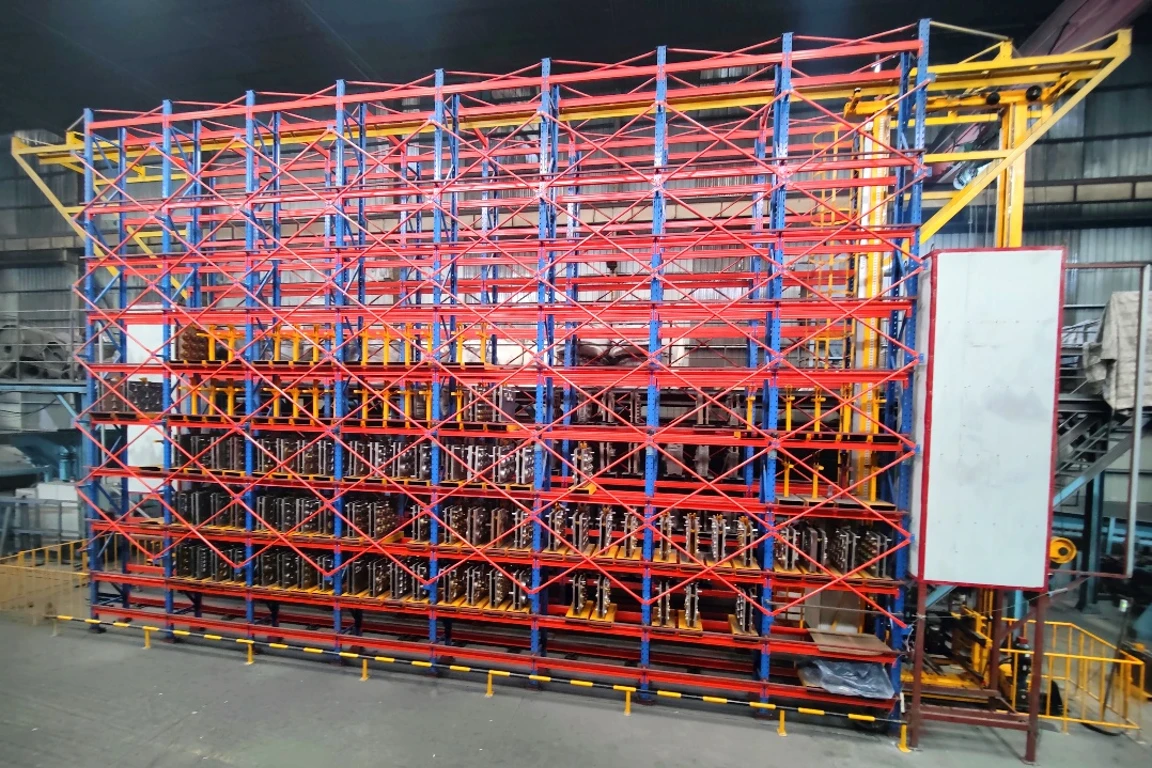
Simply put, vertical warehouse storage refers to storage systems designed to utilize vertical space in warehouses. Instead of spreading goods out horizontally across large floors, items are stored in tall racks or automated vertical lifts, often assisted by cranes, conveyors, or robotic shuttles. This means the storage system can handle more items in less physical space.
It’s closely linked to modern industrial efficiency, bolstering everything from manufacturing to retail distribution — and even humanitarian supply chains. Imagine relief agencies needing to store vast amounts of food, medicine, and equipment in limited spaces near disaster zones. Vertical storage allows them to do more with less, speeding up deployment and ensuring critical supplies are easy to access.
How do you safely stack pallets 30 feet high and higher without worrying about collapse? It’s about steel construction, load-bearing beams, and precise engineering. Durability is key — these frames must resist vibration from forklifts or automated pickers and stand the test of time.
Many vertical warehouse setups now include automated storage/retrieval systems (ASRS). These machines shuttle goods vertically and horizontally with speed and precision, reducing errors and labor costs. Sensors, software, and IoT devices coordinate to track inventory real-time.
Vertical systems aim to reduce aisle widths and maximize floor use. Clever slotting, combined with vertical stacking, means you’re not just piling things high — you’re organizing them so that inventory flows smoothly.
Higher storage introduces risks, naturally. From fall protections and fire suppression systems to ergonomic design enabling safer worker interaction, safety is baked into vertical warehouse storage through regulations and engineering controls.
One of the beauties is that vertical storage can grow or contract based on needs. Modular designs allow warehouses to add or rearrange racks without costly rebuilds, ideal for fast-changing demands.
Even if the initial investment is higher, vertical storage often reduces operating costs over time — less land rent, lower lighting and HVAC expenses, and reduced labor thanks to automation.
Mini takeaway: It’s not just about stacking higher — it’s a coordinated system blending engineering, tech, space design, and safety.
Vertical warehouse storage has found its way into diverse sectors:
Regions with land scarcity — think Japan’s mega-cities or European industrial hubs — find vertical storage especially indispensable. It’s a worldwide nod to smarter, higher, and more efficient warehousing.
On the advantages front, vertical storage offers:
Aside from all the bottom-line reasons, it feels good to see a system that respects space and promotes dignity — whether for workers moving boxes daily or families receiving relief goods.
Technology marches on. Here are some future trends to watch:
Vertical warehouse storage isn’t without hurdles:
| Feature | Description |
|---|---|
| Max Height | Up to 45 meters (150 feet) |
| Load Capacity | Up to 2,000 kg per pallet level |
| Automation | Optional ASRS with robotic shuttles and conveyors |
| Material | Cold-rolled steel with powder-coated finish |
| Fire Safety | Integrated sprinkler system and smoke detection |
| Customization | Modular design for varying widths and heights |
| Feature | Yonghong BQ | Competitor A | Competitor B |
|---|---|---|---|
| Max Height | 45 m / 150 ft | 40 m / 130 ft | 42 m / 140 ft |
| Automation Options | Advanced ASRS & robotics | Basic automated conveyors | Semi-automated lifts |
| Customization | Fully modular with rapid installation | Limited rack sizes | Custom but longer lead times |
| Warranty | 10 years structural | 5 years | 7 years |
| Lead Time | 4-6 weeks | 6-8 weeks | 8-10 weeks |
By using vertical space, warehouses dramatically increase storage density, reducing the need for expansive floor area and long aisle runs. This setup allows faster picking routes, especially when combined with automation, thus speeding order fulfillment and lowering labor costs.
Generally, yes — but the nature of the goods matters. Palletized or uniformly sized products work best, while irregular shapes or hazardous materials may require specialized rack designs. Consulting with experts ensures the system fits your inventory needs.
Structural integrity through quality steel frames, seismic bracing in earthquake zones, integrated fire suppression, and proper staff training are vital. Automated systems often include sensors to prevent collisions or falling objects, enhancing safety.
Absolutely. Although some adaptation is needed — for instance, reinforcing foundations or raising ceilings — many warehouses upgrade to vertical systems incrementally. It’s a cost-effective way to boost capacity without relocating.
Automation allows machines to swiftly move goods vertically and horizontally, optimizing space use and speed. Through software, inventory is tracked in real time, reducing errors and manual handling.
Vertical warehouse storage isn’t just smarter; it’s necessary for meeting today’s logistical challenges — whether urban density, humanitarian crises, or industrial scaling. Its combination of space maximization, techno-smart integration, and safety protocols makes it a clear winner for long-term returns. If you’re looking to boost your storage capabilities and future-proof your warehouse, exploring solutions like those from vertical warehouse storage providers is a great place to start.
Thoughtful, efficient storage surely beats renting more land or scrambling for new sites, especially as global markets tighten and supply chains strain. After all, sometimes the best direction to grow is up.
Mini takeaway: Vertical storage is an investment with clear operational, financial, and social payoffs — and it’s evolving fast.