Your casting is getting easier!
link
Telephone:0312-7027666
0%

Table of Contents

Look, I’ve been elbows-deep in concrete and chasing down suppliers for over fifteen years. I've seen a lot of building methods come and go, and I’ll tell you straight, the green sand molding process is something special. It's not flashy, it's not the newest tech, but it’s reliable, adaptable, and frankly, gets the job done. We’re talking about a technique that’s been around for ages, constantly refined, and still holds its own in a world obsessed with composites and 3D printing. Understanding this process – how it works, what it's good for – is crucial for anyone serious about construction, manufacturing, or really, making things that last.

We’re facing real challenges in building, from material costs to skilled labor shortages. The green sand molding process offers a viable path forward, particularly when you're dealing with complex geometries or needing a robust, cost-effective solution for producing metal components. It’s a cornerstone of foundries worldwide, and directly impacts industries from automotive and aerospace to infrastructure and energy. Ignoring it is like trying to build a house without a foundation – you’re setting yourself up for trouble.

And honestly? It's a skill that needs preserving. I've seen younger engineers come onto sites dismissing it as "old-fashioned." Then they get stuck with a problem a simple sand casting would have solved in an afternoon. This isn't about resisting progress; it’s about knowing your tools, and knowing when the tried and true methods are the best ones.
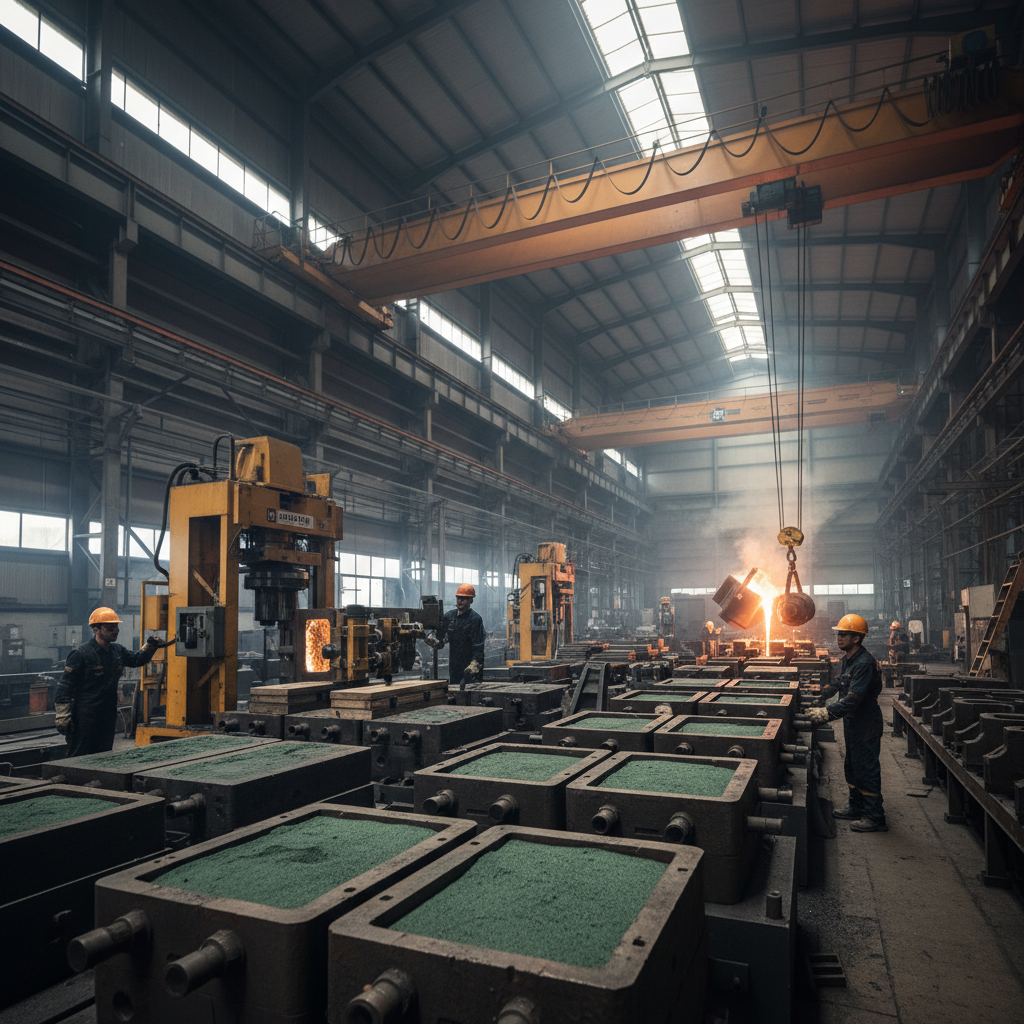
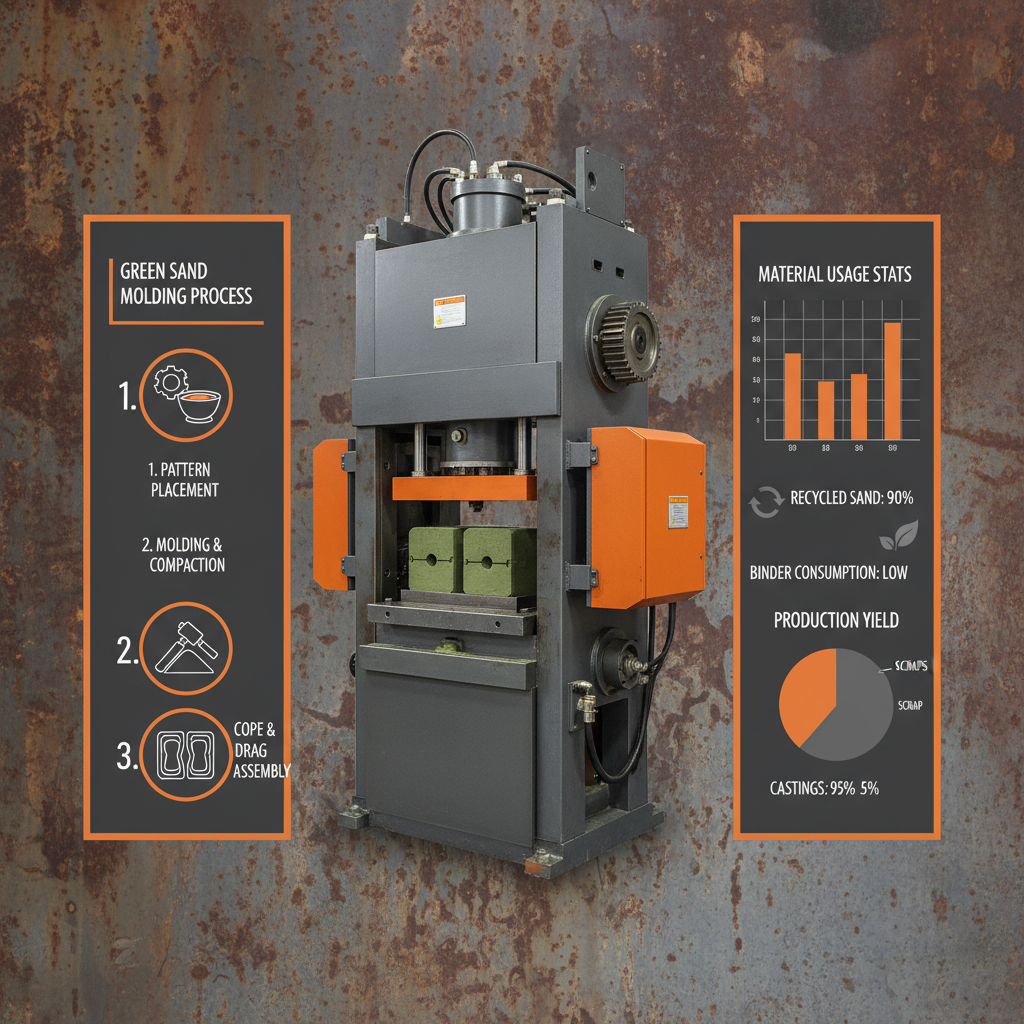
Exploring the Enduring Significance of the Green Sand Molding Process

The Fundamentals of Green Sand Molding Process

Exploring the Enduring Significance of the Green Sand Molding Process

At its heart, the green sand molding process is surprisingly simple. You're taking sand – usually silica sand – mixing it with a binder like clay and water, and packing it around a pattern. That pattern is what defines the shape of the final metal part. The key is getting the sand mix just right – enough strength to hold the shape, but enough give to allow for easy pattern removal. This ‘green’ sand, as it’s called because it’s still moist, is where the process gets its name.

What I’ve learned over the years is that it's not just about the recipe, it's about the feel. Experienced molders can tell by the consistency of the sand whether it’ll work. That’s a skill you can’t teach from a textbook, you learn it by getting your hands dirty. And don’t underestimate the importance of proper compaction. Too little, and your casting will be full of voids. Too much, and you’ll damage the pattern. It's a balancing act.

Historical Context and Global Reach

This isn’t some newfangled technique. People have been casting metal using sand for millennia. Think about ancient bronze statues – most of them were made using variations of this process. It really took off with the Industrial Revolution, becoming the dominant method for mass-producing metal parts. And it hasn't gone away.

Today, the green sand molding process remains incredibly prevalent, especially in countries like China, India, and the United States. According to reports from the World Foundry Organization, green sand molding accounts for the majority of all metal castings produced globally. It’s the workhorse of the industry. The UN Industrial Development Organization (UNIDO) often promotes the use of simplified casting techniques like this in developing countries because it’s relatively low-tech and requires minimal capital investment.

What’s striking is its adaptability. You see it used in massive automotive foundries producing engine blocks, but you also see it in smaller workshops creating bespoke parts for agricultural equipment. It’s a testament to its versatility.

Defining Green Sand Molding: A Core Manufacturing Technique

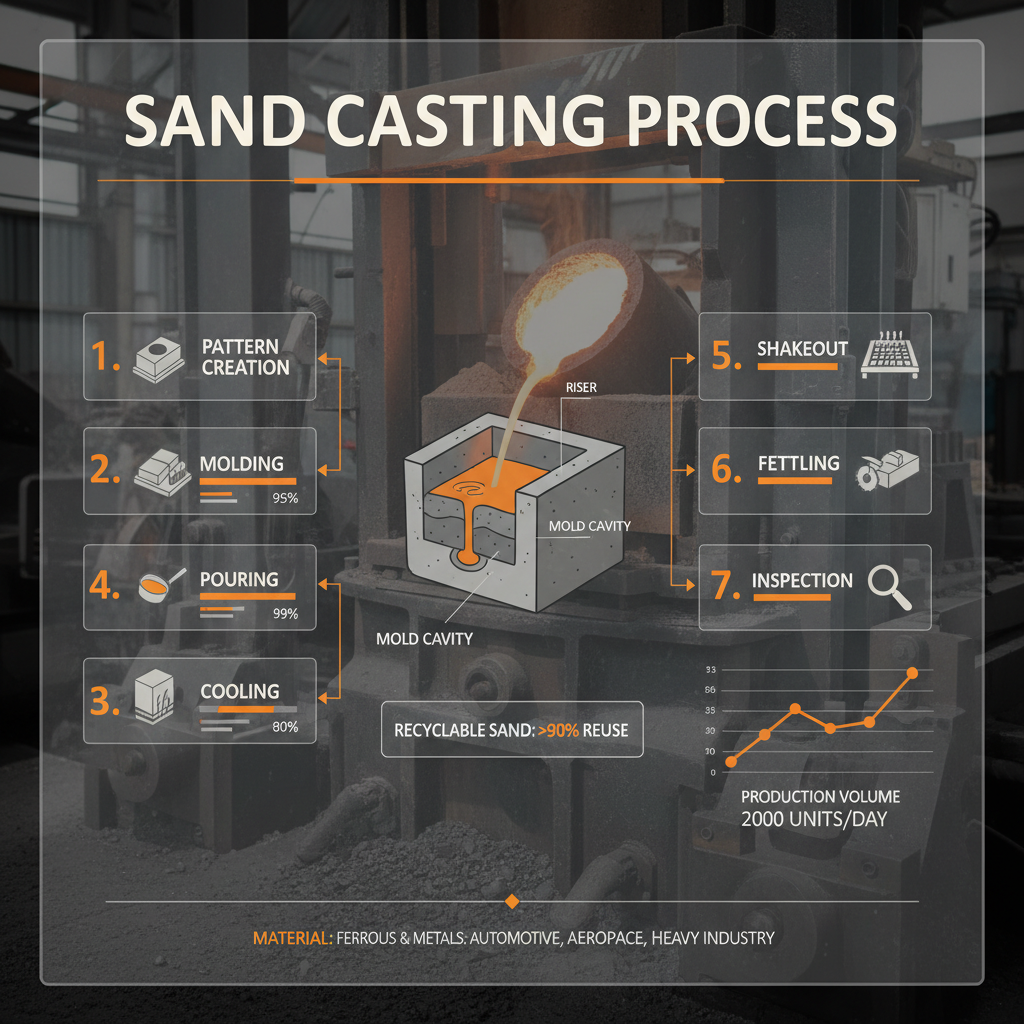
Simply put, green sand molding is a metal casting process that utilizes a sand mixture – containing sand, clay, and water – to form the mold around a pattern. This pattern, which is a replica of the desired final product, is then removed, leaving a cavity into which molten metal is poured. Once the metal solidifies, the sand mold is broken, revealing the cast part.

Its connection to modern industry is profound. It’s not just about making individual parts; it’s about enabling mass production. Think about the sheer volume of metal components that go into everything from cars to washing machines. The green sand molding process allows us to create those parts efficiently and reliably. It’s a critical link in the global supply chain.

And it's not confined to just one industry. You see it playing a role in humanitarian efforts, too. For example, in disaster relief, locally sourced materials and simplified casting techniques are sometimes used to quickly produce replacement parts for essential equipment. It’s about resilience and self-sufficiency.

Key Factors Influencing Green Sand Molding Quality

Now, don’t think it’s just a matter of throwing some sand and metal together. Getting a good casting requires paying attention to a lot of details. I’ve seen guys with years of experience get tripped up by overlooking seemingly small things.

One of the most critical factors is sand composition. The grain size, shape, and mineral content all play a role. Then there's moisture content – too little, and the sand won't hold its shape; too much, and it'll create gas porosity in the casting. Compaction, as I mentioned earlier, is crucial. And finally, pattern design and removal techniques matter a lot.

Green Sand Molding Process Quality Metrics


Global Applications and Industry Impact

You’ll find the green sand molding process being used everywhere. Automotive manufacturers rely on it for engine blocks, cylinder heads, and transmission housings. The agricultural sector uses it for creating durable parts for tractors and harvesting equipment.

The aerospace industry, while increasingly using more advanced techniques, still employs green sand molding for certain components, particularly for prototyping and small-batch production runs. Even in the energy sector, you’ll find it used for producing parts for pumps, valves, and turbines.

Advantages and Long-Term Value Proposition

Let’s be clear: the biggest advantage is cost. It's a comparatively inexpensive process, requiring less specialized equipment than other casting methods. That translates to lower production costs, which is always a good thing.

But it’s not just about money. Green sand molding is also incredibly versatile. You can cast a wide range of metals, from aluminum and iron to bronze and steel. It’s also relatively quick, allowing for faster turnaround times. And, when done right, it produces castings with excellent dimensional accuracy and surface finish.

Future Trends and Ongoing Developments

Things aren't standing still. We’re seeing advancements in sand additives and binder technologies that are improving mold strength and reducing gas porosity. There's a push towards using more sustainable materials, like recycled sand, to reduce the environmental impact.

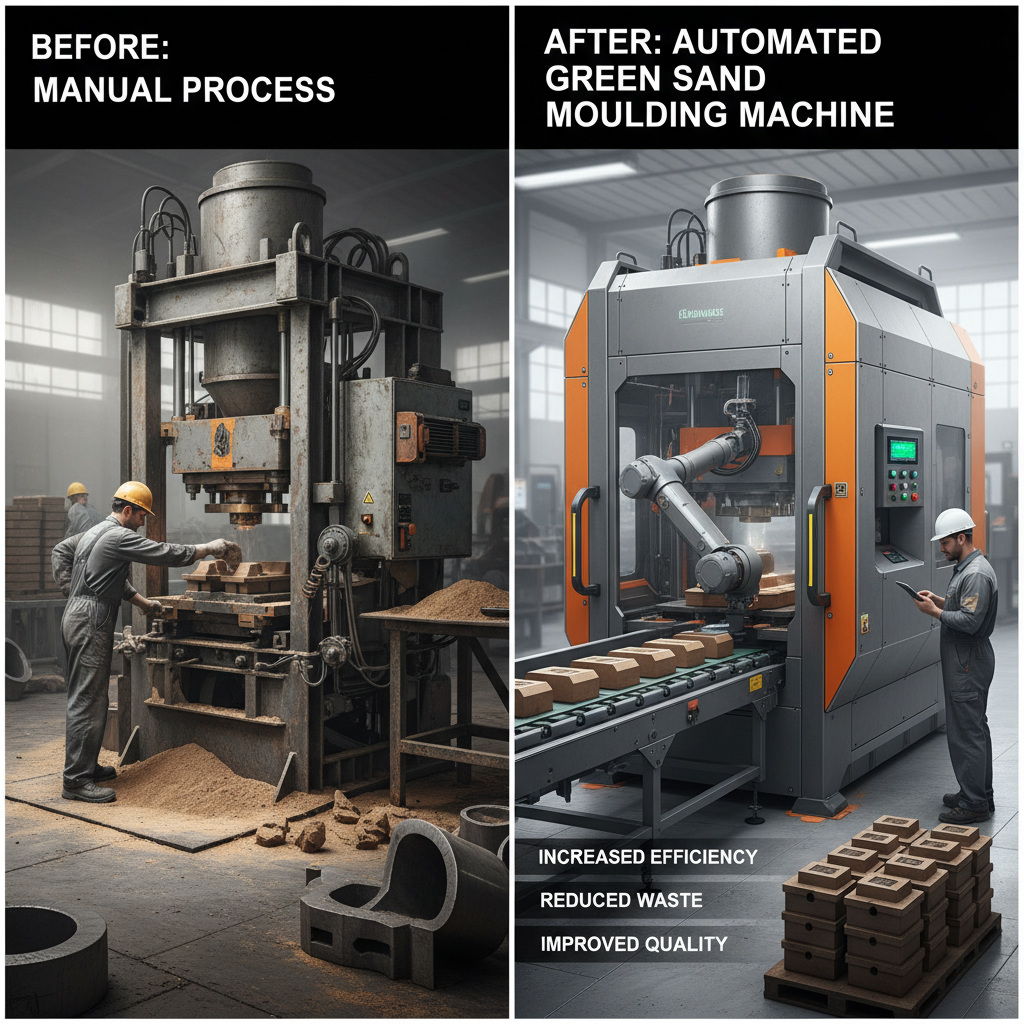
Automation is also playing a bigger role, with robotic systems being used for mold making and core setting. And the integration of digital modeling and simulation tools is allowing engineers to optimize mold designs and predict casting defects before they even pour the metal.

I think we'll also see more focus on process control and data analytics. By monitoring key parameters like sand moisture and compaction force in real-time, we can improve consistency and reduce scrap rates. It’s about bringing the technology up to date, while still preserving the core principles of this tried-and-true method.

Summary of Challenges and Solutions in Green Sand Molding Process

Challenge Impact on Casting Quality Proposed Solution Implementation Cost (Scale 1-10)
Sand Moisture Variation Increased Gas Porosity & Surface Defects Automated Moisture Control System 6
Inconsistent Sand Compaction Dimensional Inaccuracies & Weakness Vibration Monitoring & Control 5
Pattern Wear & Tear Reduced Casting Accuracy Over Time Durable Pattern Materials & Coating 4
Binder Degradation Mold Collapse & Poor Surface Finish Optimized Binder System & Storage 3
Metal Penetration Surface Defects & Dimensional Issues Mold Wash Application & Control 2
Manual Inspection Variability Inconsistent Quality Control Automated Defect Detection System 7

FAQS

What are the primary cost drivers in green sand molding?

The major costs stem from sand replacement (due to degradation), binder consumption, energy for melting metal, and labor. Pattern costs can also add up, especially for complex geometries. Optimizing sand reclamation, binder usage, and process efficiency are key to controlling costs. Don't underestimate the impact of scrap rates – minimizing defects directly impacts your bottom line. Properly maintaining your equipment is also key.

How does the size of the casting impact the green sand molding process?

Larger castings require more robust molds to withstand the pressure of the molten metal. This often means using higher clay content in the sand mix and employing more aggressive compaction techniques. You also need to carefully consider gating and risering to ensure proper metal flow and prevent shrinkage defects. Larger castings also generally take longer to cool, impacting cycle time and overall productivity.

What types of metals are best suited for green sand molding?

Gray iron, ductile iron, and aluminum alloys are the most commonly cast using green sand molding. These materials have good fluidity and relatively low shrinkage rates, making them easier to cast successfully. Steel can be cast, but requires more careful control of mold temperature and metal composition. Materials with high melting points or significant shrinkage can be more challenging and may require alternative casting methods.

How important is sand reclamation in green sand molding?

Sand reclamation is crucial. Sand is a significant cost component, and simply disposing of used sand is environmentally irresponsible and expensive. Reclamation systems remove spent binders and contaminants, allowing you to reuse the sand in subsequent molds. A good reclamation system can reduce sand consumption by as much as 80-90%, significantly lowering your overall costs and minimizing waste.

What are the common defects encountered in green sand molding and how can they be prevented?

Common defects include gas porosity, shrinkage cavities, sand inclusions, and rough surfaces. Gas porosity can be minimized by ensuring proper venting and controlling metal temperature. Shrinkage cavities can be addressed through proper gating and risering design. Sand inclusions are typically caused by inadequate mold compaction. Rough surfaces can result from poor sand quality or improper finishing techniques. Careful process control and thorough inspection are essential for preventing defects.

Can green sand molding be used for high-precision parts?

While not typically the method of choice for extremely high-precision parts, green sand molding can achieve reasonable dimensional accuracy. By using high-quality patterns, controlling mold shrinkage, and employing precision finishing operations, it's possible to produce parts that meet many application requirements. For tighter tolerances, other casting processes like investment casting or die casting are generally preferred.

Conclusion

The green sand molding process is far more than just a relic of the past. It’s a versatile, cost-effective, and remarkably adaptable manufacturing technique that continues to play a vital role in countless industries. Its longevity isn’t accidental – it’s a testament to its inherent strengths and its ability to evolve with the times. Understanding the fundamentals of this process, from sand composition to metal flow, is essential for anyone involved in the design and production of metal components.

Looking ahead, continued advancements in materials, automation, and process control will only enhance the capabilities of green sand molding. It’s not about replacing other casting methods; it’s about recognizing the unique advantages of this process and leveraging those advantages to create efficient, sustainable, and high-quality products. If you’re looking for a reliable and cost-effective way to bring your metal designs to life, don't dismiss the power of good old-fashioned green sand molding. green sand molding process


Michael Davis

Michael Davis

Michael Davis is a Lead Process Engineer at Yonghong, specializing in sand treatment and resin sand technologies. He brings over 12 years of experience to the team, focused on enhancing casting quality and process control. Michael is responsible for researching and implementing innovative sand handling solutions, optimizing mixtures for various
Previous Understanding the Green Sand Process for Modern Metal Casting
Next Understanding Industrial Sand Casting Processes and Global Applications