Release Time:2025-12-02
At first glance, the term mold warehouse might call up images of rows upon rows of molds stacked neatly — and you'd be right. But there's far more beneath the surface. Globally, mold warehouses sit at a crucial crossroads of manufacturing, disaster relief, and sustainable production. Think about it: the ability to store, manage, and distribute molds efficiently impacts everything from automotive parts to emergency housing units.
Increasing industrialization coupled with rising demands for rapid, flexible production methods makes mold storage a key player. Not to mention, in humanitarian settings where quick shelter solutions matter, mold warehouses hold a kind of silent power — enabling swift deployment of necessary infrastructure.
Mini takeaway: Mold warehouses are not just storage spaces; they underpin critical supply chains and responsive solutions worldwide.According to data from the International Organization for Standardization (ISO) and the World Bank, the global manufacturing landscape is shifting toward more modular, just-in-time approaches. This means molds must be stored, tracked, and ready to deploy — sometimes on different continents — at a moment’s notice.
Yet challenges persist. Space constraints, climate control needs, and complex inventory management make mold warehouses far from a simple logistical matter. In some industries, such as medical supplies or aerospace, a slight delay or mold defect can ripple into major setbacks.
Alongside these industrial shifts, humanitarian agencies now rely extensively on prefabricated molds for emergency shelters. For instance, in post-disaster zones, mold warehouses act as nerve centers, waiting to spring into action—for quick housing or relief material production.
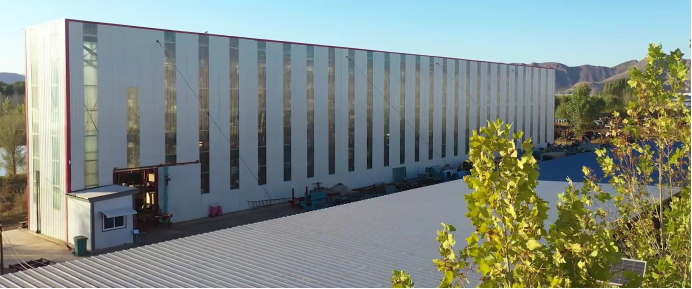
Put simply, a mold warehouse is a specialized facility designed for the storage, maintenance, and distribution of molds used in manufacturing or construction processes. Think injection molds for plastics, concrete molds for rapid housing, or metal casting molds for automotive parts.
Unlike typical warehouses, these spaces must safeguard molds against environmental damage—humidity, dust, or deformation—since their precision directly influences the quality of end products. Often, mold warehouses integrate climate controls, inventory tracking tech, and sometimes even on-site testing stations.
In real-world terms, having a dedicated mold warehouse means smoother production runs, reduced downtime, and quicker responses to fluctuating demands.
Molds can be expensive, delicate, and require a clean environment to stay in prime condition. Warehouses need specialized racks, anti-corrosive coatings, and air filtration systems to ensure longevity. Oddly enough, a minor dust particle can skew production, so mold warehouses often resemble cleanrooms.
No one wants a rigid system when production orders vary wildly. Many warehouses now adopt modular shelving and adaptable layouts to quickly reconfigure storage. This is particularly important for industries moving toward mass customization.
Using RFID tags, barcodes, and digital management software is almost a must. Engineers in a European mold warehouse once told me how their tracking system reduced mold retrieval times by about 40%. Accuracy here prevents costly mistakes downstream.
Temperature and humidity impact mold materials differently—wood versus metal molds, for example. Some warehouses maintain zones with tailored climates to protect diverse inventory simultaneously.
Efficient space use combined with energy-saving tech helps keep operational costs down. This is key given molds’ high capital value and the expense of long-term storage.
Strategic positioning close to manufacturing plants or key transport hubs reduces delays—crucial in industries like automotive or emergency shelter production.
Mini takeaway: The best mold warehouses blend protection, tech, and flexibility to serve diverse industrial needs efficiently.Industries worldwide tap into mold warehouses for diverse needs. In China and Germany, automotive OEMs use vast mold warehouses to support complex just-in-time assembly lines. In the US and Japan, electronics firms emphasize climate-controlled mold storage to ensure high precision parts.
On a different front, NGOs in places like Haiti and the Philippines rely on mold warehouses to store prefabricated concrete molds for rapid shelter deployment after earthquakes or typhoons. The UN’s Office for the Coordination of Humanitarian Affairs (OCHA) praises such setups for boosting response speed.
Mold warehouse solutions have even surfaced in remote mining operations in Australia, where onsite molds accelerate construction of equipment housings or safety barriers without costly imports.
| Feature | Typical Value/Description |
|---|---|
| Storage Capacity | Up to 10,000 molds (varies by size) |
| Temperature Range | 15°C – 25°C (controlled zones available) |
| Humidity Control | 40% – 60% relative humidity |
| Inventory System | RFID + Cloud Management Platform |
| Security | 24/7 Surveillance, Access Control |
| Special Features | Modular Racking, Climate Zoning, Onsite Inspection Stations |
| Provider | Location | Key Strength | Price Range |
|---|---|---|---|
| Yonghong BQ | China | High-tech inventory & rapid deployment | $$ |
| MoldSafe Logistics | Germany | Precision climate control and traceability | $$$ |
| Rapid Mold Storage | USA | Scalable spaces & automation-enabled | $ |
The future feels bright, if a bit tech-heavy. Automation and AI-powered inventory systems promise to cut human error even further. Meanwhile, greener energy sources like solar power and smart HVAC aim to make mold warehouses less carbon-heavy.
Material innovation is another frontier: self-healing coatings or nanotech-based protective layers could revolutionize mold upkeep. Plus, as 3D printing reshapes production, the very molds stored might shift form or function.
Policymakers are also catching on, introducing standards encouraging sustainable practices and international cooperation for humanitarian mold stockpiles. Ultimately, the mold warehouse of 2030 might be less a storage space and more of a dynamic, intelligent hub.
Of course, no system is perfect. Common hurdles include space limitations, high energy costs, and keeping pace with rapidly evolving mold technologies. Then there's the human factor—training staff to handle and maintain sensitive molds correctly.
One solution I’ve seen gaining traction is flexible leasing of storage space paired with modular expansions: this lets firms upscale without massive upfront costs. On the tech side, sensor-driven alerts help flag mold degradation before problems arise.
Lastly, greater partnerships between manufacturers, warehouse operators, and logistics firms create smoother end-to-end workflows, reducing mishaps and boosting trust across the board.
The more you peel back the layers, the clearer it is that mold warehouses quietly drive innovation and efficiency across sectors—from high-tech manufacturing to life-saving disaster response. Investing in these specialized facilities means embracing a future that values precision, speed, sustainability, and human dignity.
If you’re looking to strengthen your operations or disaster readiness, mold warehouse solutions from trusted providers like Yonghong BQ are a solid bet.
In the end, it’s not just about storing molds; it’s about storing possibility and readiness.