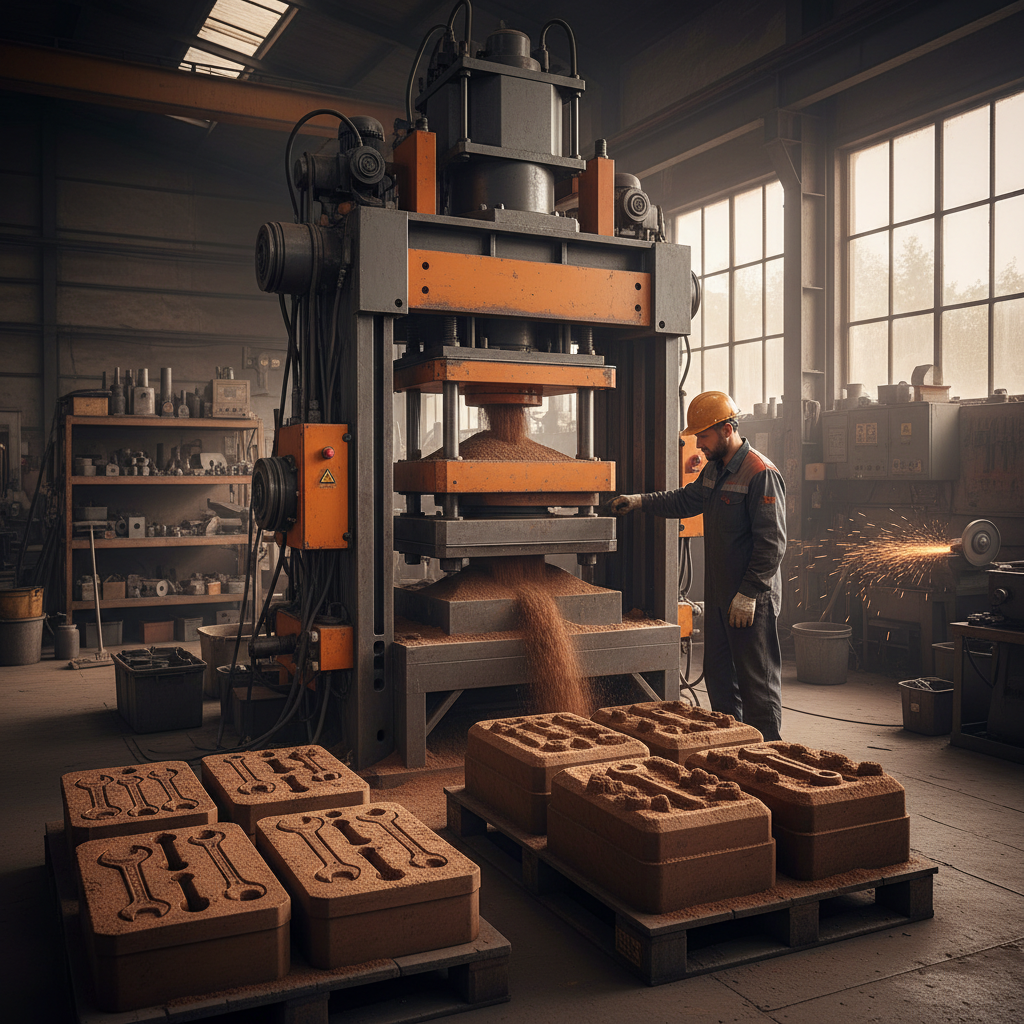
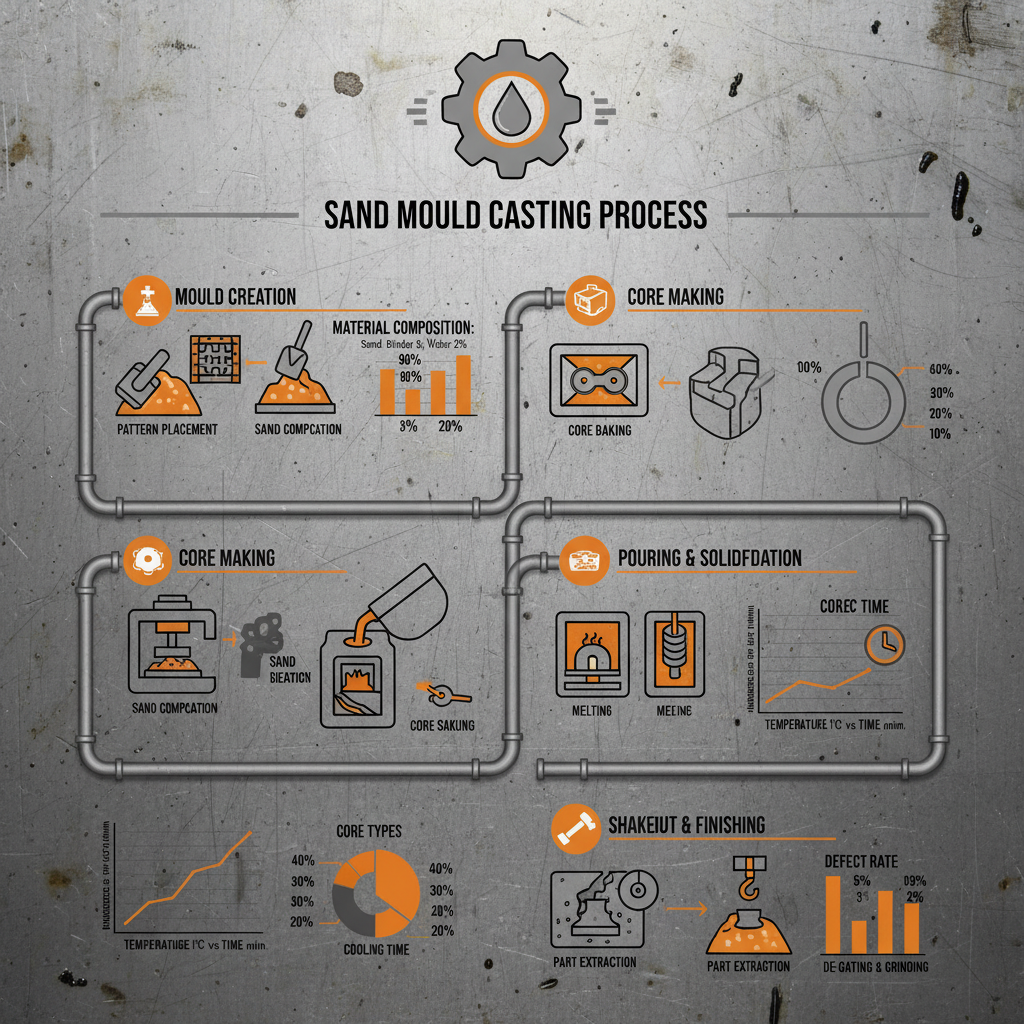
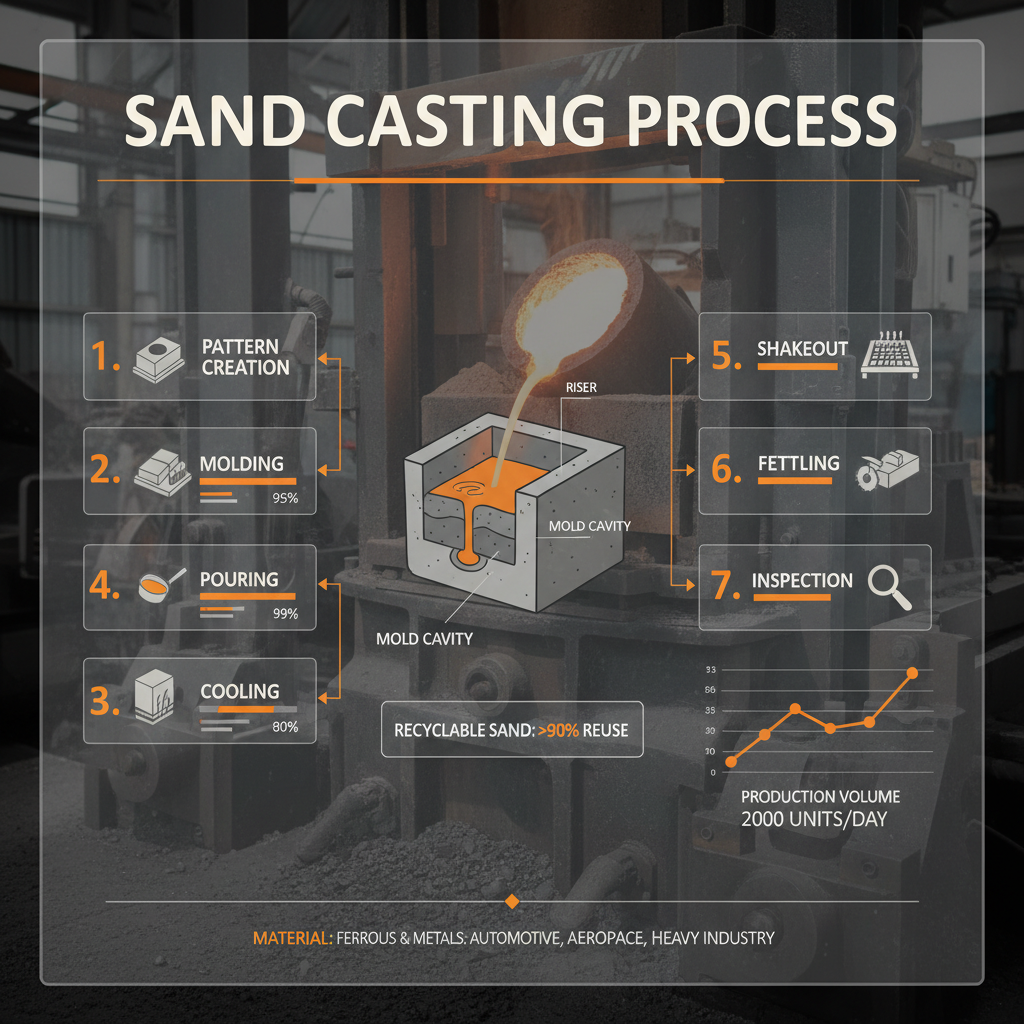
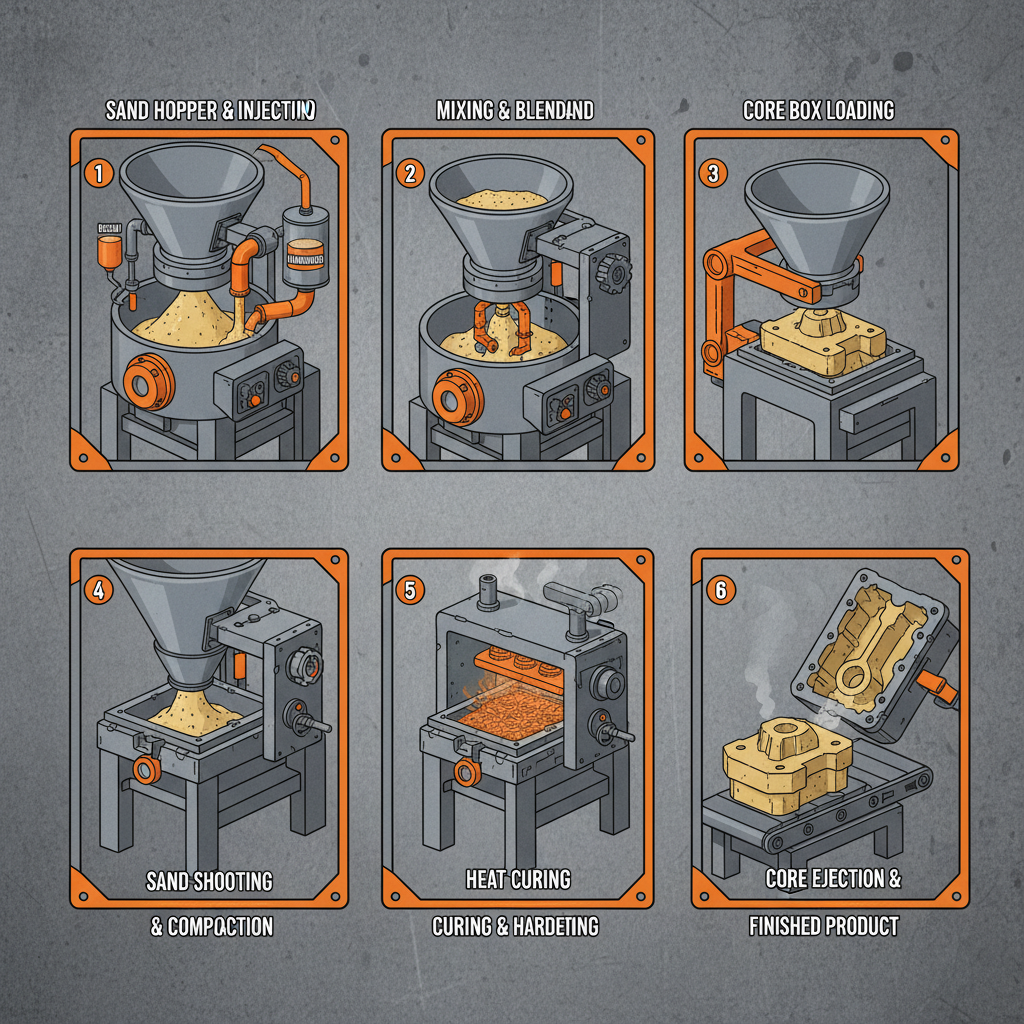
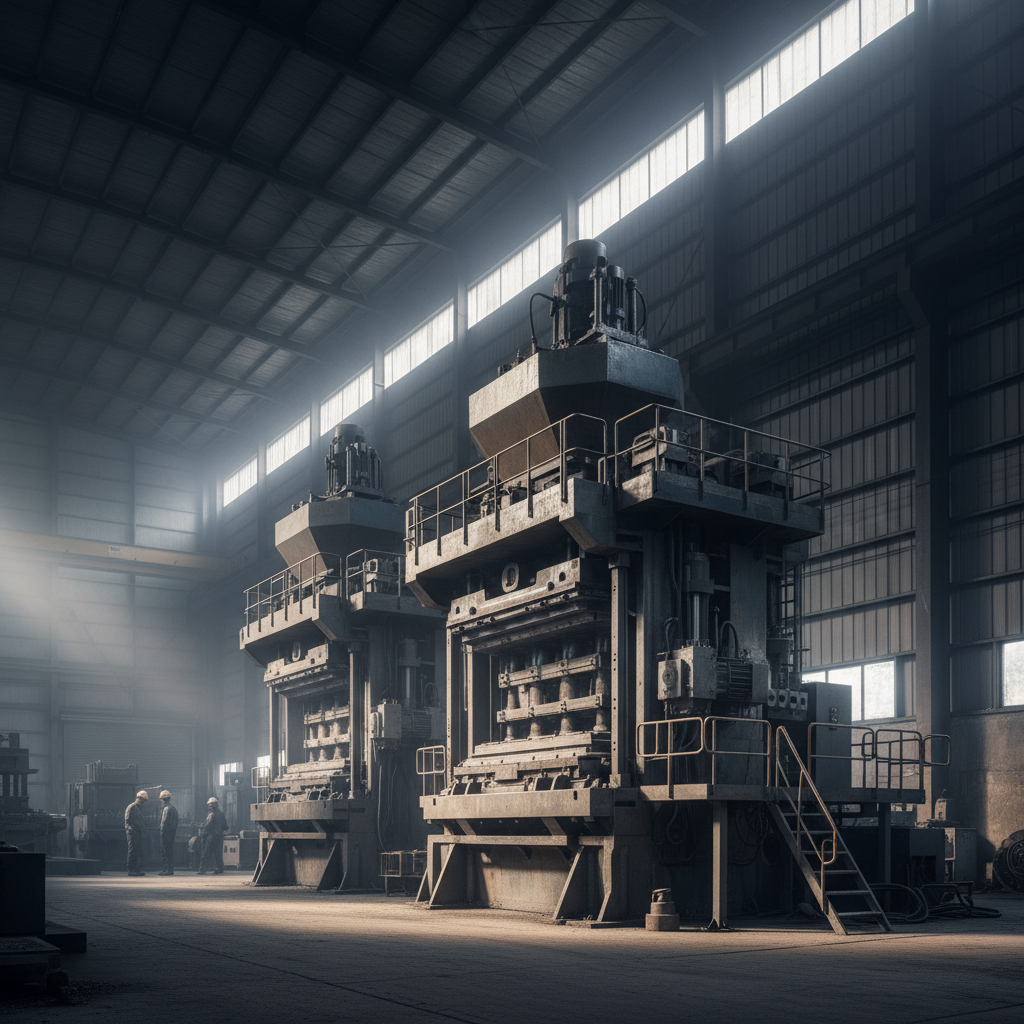
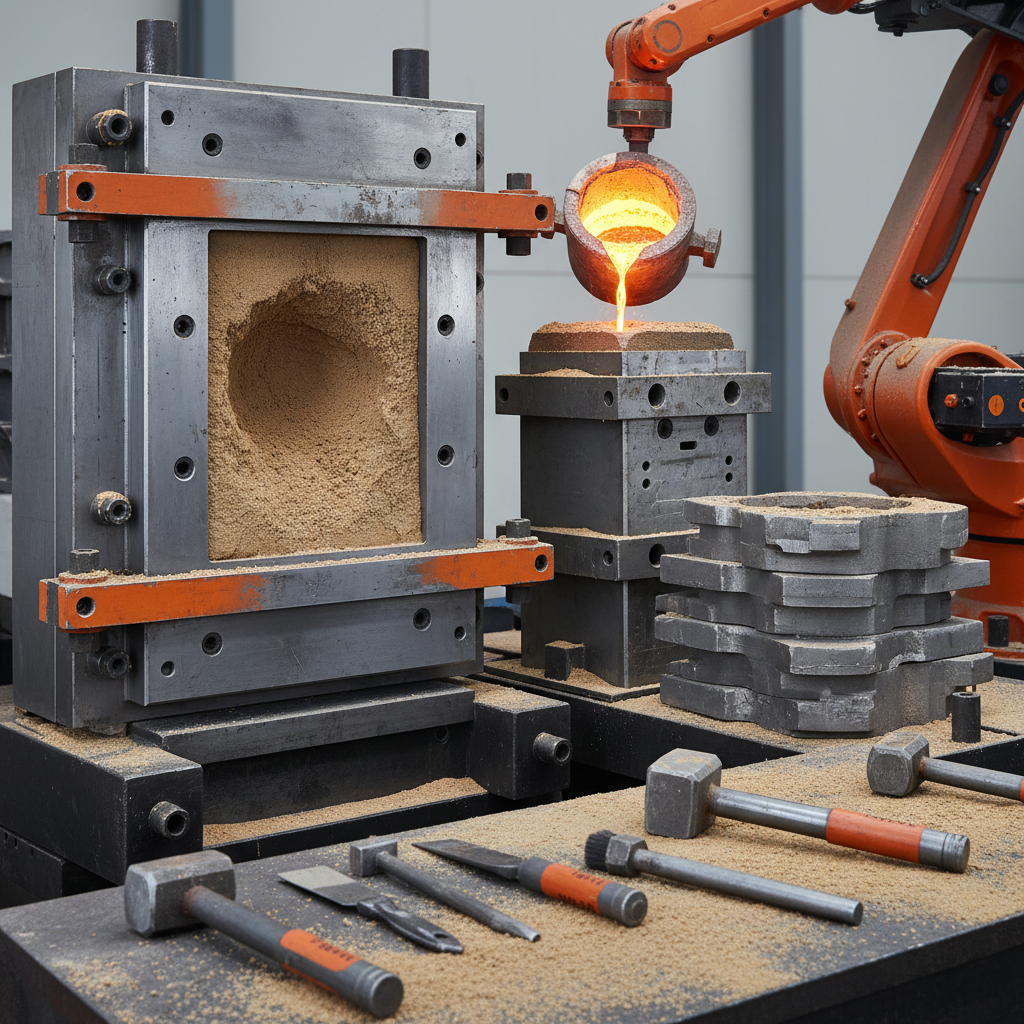
The sand mould making process remains the backbone of the global metallurgical industry, providing an unparalleled balance of flexibility and cost-effectiveness for producing complex metal components. From automotive engine blocks to heavy industrial turbines, the ability to create precise cavities in sand allows engineers to cast shapes that would be impossible or prohibitively expensive using permanent molds.
Understanding the nuances of the sand mould making process is not merely a technical requirement but a strategic advantage in the competitive landscape of ferrous metal casting. By optimizing sand composition and molding techniques, manufacturers can significantly reduce scrap rates, improve surface finish, and enhance the overall structural integrity of the final poured product.
In an era of rapid industrial digitization, the traditional sand mould making process is undergoing a transformation. The integration of automated molding machines and intelligent sand treatment systems is bridging the gap between ancestral craftsmanship and modern precision engineering, ensuring that the industry meets the stringent quality standards of the 21st century.
Global Relevance of the Sand Mould Making Process
On a global scale, the sand mould making process is indispensable for the production of infrastructure and machinery. According to international industrial standards, sand casting accounts for a significant portion of all metal castings worldwide due to its ability to handle extremely high melting temperatures and diverse alloy compositions. In regions with heavy industrialization, such as East Asia and Europe, this process is the primary driver for the production of heavy-duty equipment.
However, the industry faces a critical challenge: the need to reduce environmental impact while increasing throughput. Traditional methods often struggled with sand waste and inconsistent mold strength. The evolution toward more sustainable, chemically bonded sands and automated pouring systems is addressing these pain points, allowing the sand mould making process to remain viable amidst stricter global ISO environmental regulations.
Defining the Sand Mould Making Process in Modern Industry
In simple terms, the sand mould making process is the act of creating a negative cavity in a mixture of sand and binders, which is then filled with molten metal to create a specific part. This "sacrificial" mold is designed to withstand the heat of liquid iron or steel and be broken away once the metal has solidified, leaving behind a raw casting that can be further refined.
Beyond the basic definition, this process is a critical link in the supply chain for humanitarian and infrastructure needs. Whether it is producing heavy-duty pumps for water sanitation projects in developing nations or casting massive engine components for transport logistics, the flexibility of sand molding ensures that custom, large-scale parts can be produced without the astronomical cost of machining from a solid block of metal.
Modern interpretations of the process now incorporate "intelligent warehousing" for sand management and "cloud platforms" for monitoring thermal gradients within the mold. This shift transforms the sand mould making process from a manual trade into a data-driven science, where every variable—from moisture content to compaction pressure—is tracked to ensure zero-defect production.
Key Factors for High-Precision Sand Moulding
The first critical factor in a successful sand mould making process is Permeability. The mold must allow gases generated during the pouring of molten metal to escape freely. If the sand is too densely packed or the grain size is inconsistent, these gases become trapped, leading to "blowholes" or porosity in the final casting, which compromises the part's structural integrity.
Another pillar of the process is Refractoriness. Since the sand mould making process often involves temperatures exceeding 1,500°C, the sand must not melt or fuse with the molten metal. Using high-quality silica sand or specialized chromite sands ensures that the mold maintains its shape under extreme thermal stress, preventing "burn-in" defects and ensuring a smooth surface finish.
Finally, Collapsibility is essential for the long-term health of the casting. As the metal cools, it naturally shrinks; if the mold is too rigid, the metal may crack during contraction (hot tearing). A well-engineered sand mould making process ensures that the binder breaks down at the correct moment, allowing the mold to yield to the shrinking metal without inducing internal stress.
Efficiency Metrics in Sand Mould Making Process Methods
Different methodologies within the sand mould making process offer varying levels of precision and speed. While traditional green sand molding is highly cost-effective for mass production, resin-bonded sand molding provides superior dimensional accuracy and strength for larger, more complex components.
To determine the best approach for a specific project, manufacturers evaluate metrics such as cycle time, mold strength, and surface roughness. The following data illustrates how different variations of the process perform across these key industrial KPIs.
Comparative Efficiency of Sand Mould Making Process Methods
Global Industrial Applications and Use Cases
The sand mould making process is applied across a vast array of sectors. In the automotive industry, it is used to cast engine cylinder blocks and transmission housings where complex internal cooling channels are required. In the energy sector, massive wind turbine hubs are often produced using a specialized large-scale sand moulding technique that ensures structural stability over decades of operation.
Beyond mainstream industry, this process is vital in remote industrial zones where the ability to cast replacement parts locally saves months of downtime. For example, in mining operations in the Australian Outback or remote oil fields in the Middle East, the ability to utilize a localized sand mould making process means that critical machinery can be repaired without waiting for international shipments of pre-fabricated parts.
Long-Term Value and Sustainability Benefits
The true value of the sand mould making process lies in its inherent sustainability. Unlike many modern manufacturing processes that generate hazardous chemical waste, sand is a natural material. With the implementation of advanced "Sand treatment" systems, up to 98% of the sand used in a mold can be reclaimed, cleaned, and reused in subsequent cycles, drastically reducing the environmental footprint.
Economically, the process offers an unmatched "cost-to-complexity" ratio. Because the tooling (patterns) for sand casting is significantly cheaper than the dies required for pressure die casting, companies can innovate and iterate designs much faster. This lowers the barrier to entry for new product development and allows for the production of low-volume, high-complexity parts without prohibitive capital expenditure.
Furthermore, the reliability of this process builds trust in the engineering chain. When a part is cast using a controlled sand mould making process, it possesses a monolithic grain structure that often outperforms welded assemblies in terms of fatigue resistance and pressure containment, ensuring the safety and dignity of the workers who operate this heavy machinery.
Future Trends and Automation in Moulding
The future of the sand mould making process is inextricably linked to the "Industry 4.0" movement. We are seeing a shift toward 3D-printed sand cores, where a digital CAD file is converted directly into a sand mold without the need for a physical pattern. This removes the "pattern-making" bottleneck and allows for "generative design," where metal parts are optimized for weight and strength in ways that were previously impossible.
Automation is also redefining the labor dynamics of the foundry. Modern "Molding machines" now utilize AI-driven sensors to monitor sand compaction in real-time, adjusting pressure on the fly to compensate for changes in humidity or sand grain distribution. This ensures that the sand mould making process is no longer dependent on the "gut feeling" of a master molder but on empirical, reproducible data.
Additionally, the integration of "Cloud platforms" allows for the remote monitoring of casting quality. Engineers can now track the cooling curve of a mold from a different continent, ensuring that the thermal properties of the sand mould making process are optimized to prevent shrinkage and internal voids, leading to a new era of globalized quality control.
Analysis of Sand Mould Making Process Technology Maturity
| Methodology |
Automation Level |
Precision Score (1-10) |
Eco-Friendliness |
| Traditional Green Sand |
Low to Medium |
6 |
High (Reusable) |
| Chemical Bonded Sand |
Medium |
8 |
Medium |
| Shell Moulding |
High |
9 |
Medium |
| 3D Sand Printing |
Very High |
10 |
High (Zero Waste) |
| Vacuum Assisted |
High |
8 |
High |
| Automated No-Bake |
High |
8 |
Medium |
FAQS
The primary difference is the mold's permanence. In a sand mould making process, the mold is destroyed to retrieve the part, allowing for huge components and lower initial tooling costs. Die casting uses permanent metal molds, which are much faster for high-volume production but limited in size and significantly more expensive to initiate.
Yes, most industrial foundries use sand reclamation systems. Through mechanical vibration and thermal treatment, the spent sand from the sand mould making process is stripped of binders and impurities, allowing it to be reused multiple times, which reduces material costs and environmental impact.
Porosity is usually caused by poor permeability during the sand mould making process. If the sand is too fine or too compressed, gases cannot escape the mold as the metal pours in, resulting in trapped bubbles. Proper sand grain selection and venting are the primary solutions.
Currently, 3D printed sand is primarily used for rapid prototyping and highly complex, low-volume cores. While it is slower than traditional molding, it eliminates the need for patterns, making the sand mould making process much faster for iterative designs and customized industrial parts.
Accuracy is ensured by using precision-machined patterns and controlled compaction pressures. In the modern sand mould making process, automated molding machines and CNC-cut patterns are used to minimize human error and ensure that every mold is an exact replica of the original design.
Binders (like clay in green sand or chemical resins in no-bake sand) act as the "glue" that holds the sand grains together. Without binders, the mold would collapse under the weight and heat of the molten metal. The choice of binder determines the mold's strength and how easily it can be removed after casting.
Conclusion
The sand mould making process is a masterclass in balancing tradition with innovation. By integrating fundamental principles of material science—such as permeability, refractoriness, and collapsibility—with cutting-edge automation and 3D printing, the industry has ensured that sand casting remains the most versatile method for producing heavy-duty metal components. From reducing waste through advanced sand treatment to enhancing precision via cloud-monitored molding machines, the process continues to evolve to meet global demand.
Looking ahead, the transition toward "Green Foundries" will likely define the next decade of the sand mould making process. We encourage manufacturers to invest in automated reclamation systems and digital twinning to further minimize their carbon footprint while maximizing output. Embracing these technological shifts is not just about efficiency; it is about securing the future of metal casting in a sustainable world. Visit our website for more professional solutions: www.yonghongbq.com