Release Time:2025-12-02
If you’ve ever worked in logistics, manufacturing, or supply chain management, you already know how much space, time, and energy get gobbled up in warehouses. Now, add the pressure of growing e-commerce, just-in-time inventory demands, and shrinking urban real estate. The automated vertical warehouse emerges as a smart, space-saving, and efficient answer to these global challenges. But why does it matter so much worldwide?
From rising urban populations to the constant pressure on industries to reduce costs and carbon footprints, automated vertical warehouses (AVWs) pack vertically rather than sprawling horizontally, maximizing every inch of floor space. They combine robotics, software, and clever design to automate storage and retrieval — saving time, reducing human error, and improving inventory accuracy. Oddly enough, even humanitarian relief efforts and remote industrial operations now lean on this technology for quick, organized access to supplies.
Mini Takeaway: Automated vertical warehouses aren’t just a fancy upgrade — they address core global trends like urban density, sustainability, and the need for speed in supply chains.
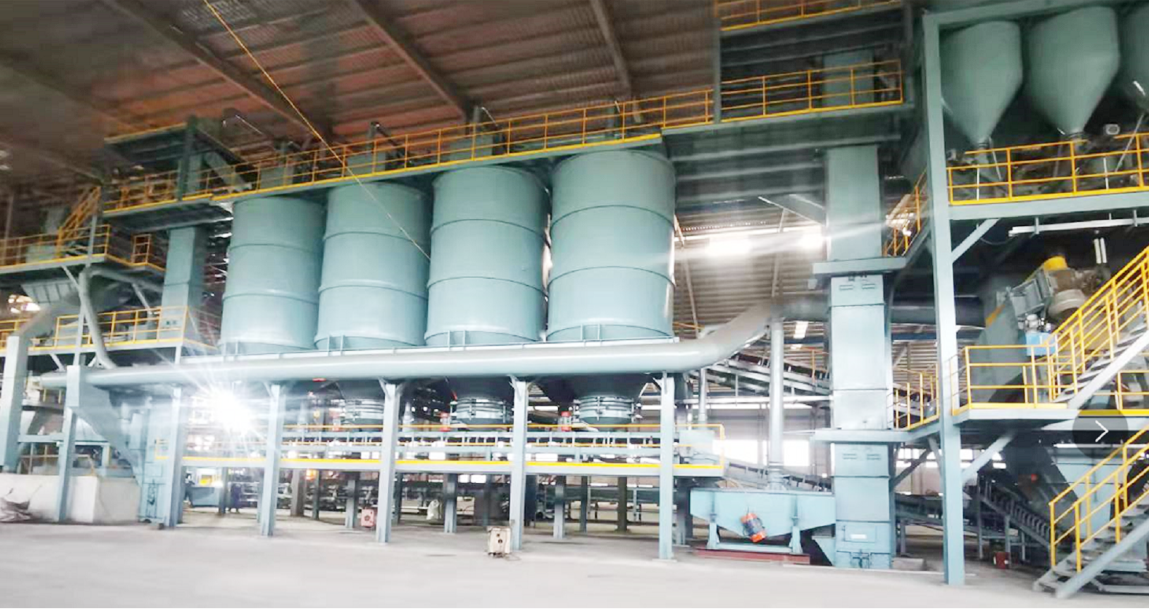
At its essence, an automated vertical warehouse is a multi-level storage system that stores goods in racks stacked upward, with computer-controlled systems handling the retrieval and storage. Think of it as a giant, vertical vending machine for pallets, boxes, or goods. Unlike traditional warehouses that spread out across acres, these systems go up, saving precious floor space — often critical in dense urban or industrial zones.
They combine conveyor belts, robotic cranes, shuttles, or lifts operated by management software that tracks items for immediate access. The result is not only compact but faster and more reliable, reducing human labor and boosting safety. The connection to modern industry is clear: automated vertical warehouses perfectly fit the demands of agile manufacturing, retail fulfillment, and logistics in our age.
Mini Takeaway: Simply put, automated vertical warehouses are robotic, space-smart, and efficient storage towers adapted for today’s fast-paced industries.
Most obvious, but easiest to overlook — saving horizontal space is the whole point. Rather than sprawling, these systems stack vertically, often reaching heights comparable to buildings, optimizing warehouse footprints.
Automated Gantries, robotic cranes, shuttles — these retrieve goods without human intervention. The difference is both safety and speed, dramatically reducing errors and downtime.
Integrated warehouse management systems (WMS) are the brains behind the operation, tracking inventory in real time and directing the robotic components to fulfill orders in seconds.
These warehouses are built tough, often modular in design to allow easy expansion or reconfiguration. Whether in an industrial zone or a remote aid center, durability matters.
Modern AVWs often incorporate green design — using LED lighting, energy regen brakes on lifts, and optimized pathways to minimize power usage.
Mini Takeaway: An automated vertical warehouse isn’t just hardware; it marries mechanics, software, and smart design — all geared toward streamlined, durable, and green operations.
The reach of these solutions is impressive:
A case in point: A Southeast Asian logistics firm recently embedded an automated vertical warehouse in a dense urban hub. They reported 40% faster order fulfillment and a 30% cut in space usage — game-changing figures that are echoed elsewhere.
Mini Takeaway: These warehouses are solving real distribution and storage headaches across regions, from dense cities to disaster zones.
Emotionally, operators report higher confidence and lower stress in warehouses running AVWs — no more scrambles or heavy manual labor, just smooth, predictable workflow.
| Specification | Details |
|---|---|
| Max Height | 24 meters |
| Storage Capacity | Up to 12,000 pallet positions |
| Load Capacity per Tray | 1000 kg |
| Speed of Retrieval | Up to 300 moves per hour |
| Energy Consumption | 12 kWh per day (typical) |
| Control System | Proprietary WMS with API integration |
| Material | Reinforced steel with anti-corrosion finish |
| Vendor | Max Height | Customization | Integration Ease | Energy Efficiency | Typical Industries |
|---|---|---|---|---|---|
| Yonghong BQ | 24 m | High – modular options | API + ERP compatible | A++ | Retail, Manufacturing, Logistics |
| AutoStor | 20 m | Medium – predefined configs | Limited API | A | Pharmaceuticals, Retail |
| StackMaster | 28 m | Low – fixed size models | Proprietary only | B+ | Heavy Industry |
Technology never stands still, and neither do automated vertical warehouses. We’re seeing more integration of AI for predictive inventory management, better IoT sensors for real-time tracking, and the move toward energy-neutral warehouses powered by solar or wind. Materials are getting lighter yet stronger, helping reduce energy consumption during operation. Also, flexible modular designs will allow more seasonal scaling — build out before peak seasons, shrink back after.
One intriguing angle is the promise of drones inside warehouses that can do visual stocktaking or simple restocking tasks, supplementing or even replacing some ground-level robotics.
Mini Takeaway: The future of automated vertical warehouses points to smarter, greener, and ever more adaptable systems.
Of course, it’s not a perfect picture:
Experts recommend phased deployment — starting with partial automation and scaling as ROI becomes clear, plus choosing vendors like Yonghong BQ that offer flexible, modular solutions and strong post-sale service.
Frankly, these systems feel like the natural evolution of storage logistics—smarter, safer, and more responsive to the pressures of our times. Investing in an automated vertical warehouse can significantly boost efficiency, reduce costs, and even enhance worker well-being. Whether you're in bustling urban retail or fielding humanitarian supply needs, the scalability and adaptability of AVWs offer a clear edge.
Want to see how this technology can fit your operation? Visit our website for detailed solutions and expert advice. Sometimes the best way forward is simply to go vertical.