Release Time:2025-12-02
It’s easy to overlook something as seemingly mundane as conveyor systems. Yet, if you think about it, industrial conveyor systems are silently powering the backbone of manufacturing, logistics, and even humanitarian efforts worldwide. Understanding these systems isn't just for engineers or supply chain managers — their impact ripples through global trade, disaster relief, and sustainable practices.
Given how industries like automotive, food processing, mining, and warehousing rely on these systems — the topic naturally matters globally. In fact, as the UN’s Industrial Development Organization notes, efficient material handling systems like conveyors are key to scaling production while cutting down energy use and workplace injuries.
Globally, the manufacturing sector accounts for roughly 16% of the world’s GDP, according to the World Bank. Within this massive ecosystem, industrial conveyor systems help optimize production lines, reduce manual labor, and increase throughput. Take, for example, the food industry in Asia, where rapid urbanization demands fast, hygienic, and reliable packaging processes made possible by conveyors.
But here’s a challenge I hear a lot: how to make these systems flexible enough to handle evolving product lines, yet durable and easy to maintain in harsh environments. Industrial conveyor systems answer these demands with modular designs and smart technology integrations, creating a global ripple effect of efficiency.
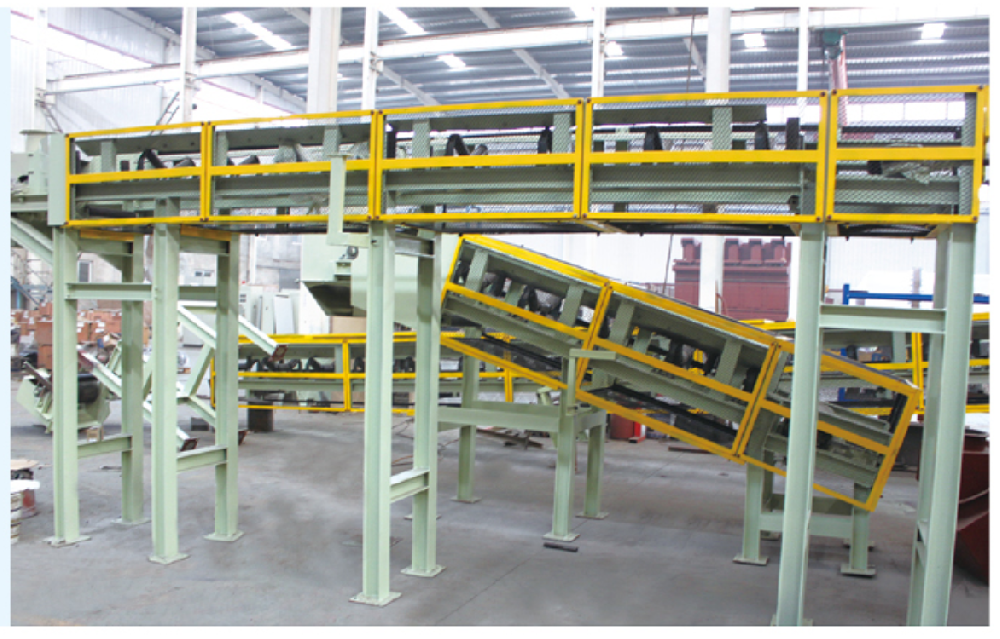
Simply put, industrial conveyor systems are mechanical devices that transport materials from one location to another within factories, warehouses, and other industrial settings. They range from classic belt conveyors to more complex chain, roller, or screw conveyors — each customized for specific cargo like bulk materials or packaged goods.
Their connection to modern industry is almost symbiotic. Without these systems, you’d see slower workflows, higher costs, and significant ergonomic risks for workers. In humanitarian contexts, conveyors streamline relief supply movements in remote or disaster-affected zones, improving efficiency and saving crucial time.
Understanding what industrial conveyor systems are helps you appreciate their vital role in shaping how goods flow smoothly across industries and crises alike.
Whether exposed to abrasive minerals in mining or wet environments in food processing, conveyors must be built tough. Stainless steel, reinforced rollers, and heat-resistant belts are common materials that ensure longevity.
Factories evolve, markets shift. A conveyor system’s modular design allows expansion or reconfiguration without the headache of complete replacements — a feature increasingly important for high-growth sectors.
Upfront investment versus long-term savings is always a balancing act. Modern conveyor systems reduce manual labor costs, cut risks for injuries, and save time — all adding up to serious returns on investment.
The future is smart. Embedded sensors, IoT connectivity, and AI-driven controls enable real-time monitoring and predictive maintenance, avoiding costly downtime.
From food-grade conveyors needing sanitary designs to heavy-duty systems for automotive parts, customization adapts conveyors to specific industry needs.
| Specification | Typical Range | Example Features |
|---|---|---|
| Belt Width | 200mm – 2000mm | Adjustable widths for various products |
| Load Capacity | Up to 3000 kg/meter | Heavy-duty rollers and frames |
| Speed | 0.1 – 3 m/s | Variable speed control |
| Drive Types | Electric, hydraulic, pneumatic | Energy-efficient motors |
| Control Systems | PLC-based, IoT enabled | Remote monitoring and automation |
Their footprint spans continents. In Asia-Pacific, booming e-commerce giants depend on conveyor systems to sort millions of packages daily. Europe’s automotive manufacturers implement highly automated conveyor lines to maintain strict quality and delivery standards. Meanwhile, in Africa, mining operations leverage rugged conveyors to move ore, helping local economies.
Oddly enough, humanitarian agencies have started using modular conveyor units during disaster relief. In scenarios like post-flood rebuilding, conveyors aid in fast unloading of supplies — speeding up response times and improving logistics in chaotic conditions.
industrial conveyor systems truly prove their versatility and importance across varied, sometimes unexpected, domains.
There’s an emotional angle here as well — when workers feel safer and processes run smoothly, company culture and trust often improve. Long-term, it’s a win all around.
Digital transformation is reshaping conveyor technology. You’ll find AI-powered predictive maintenance preventing costly breakdowns, and IoT sensors monitoring everything from belt tension to energy consumption. Meanwhile, green energy initiatives are pushing manufacturers to design conveyors with lower carbon footprints.
Material advances like lightweight composites and antimicrobial surfaces are becoming more common, especially in food or pharmaceutical industries where hygiene is critical.
It’s an exciting field — engineers are even experimenting with robotic conveyors and flexible, plug-and-play modules that can be reconfigured overnight.
Of course, challenges remain. Maintenance costs can still add up, especially with older systems. Also, integrating new tech into existing plants is sometimes tricky and disruptive.
To overcome these, experts recommend embracing modularity upfront and investing in staff training alongside technology upgrades. Remote diagnostics tools now reduce on-site intervention. Plus, some vendors offer leasing or as-a-service models to ease financial pressures.
| Vendor | Specialty | Technology Focus | Regional Reach |
|---|---|---|---|
| Yonghong BQ | Modular systems, rapid deployment | Smart IoT integration, energy-saving motors | Asia-Pacific, Global exports |
| FlexConvey | Flexible layouts, robotics-ready | AI-powered control systems | Europe, North America |
| EcoMove | Sustainable materials, renewable energy powered | Green tech innovations, low power drives | Global |
Industries like manufacturing, food processing, mining, packaging, and logistics rely heavily on conveyors to streamline workflows, enhance safety, and reduce production costs.
By automating heavy lifting and repetitive tasks, conveyors reduce worker fatigue and accidents. Advanced systems include sensors that stop belts immediately if obstructions or hazards are detected.
Absolutely. From sanitary designs for pharmaceuticals to heavy-duty conveyors for automotive parts, customization ensures the system meets industry-specific requirements and standards.
Embedding IoT sensors and AI algorithms allows real-time monitoring, predictive maintenance, and automated adjustments, which reduce downtime and optimize energy consumption.
Regular inspections, lubrication, belt alignment, and prompt repairs keep systems running smoothly. Many companies now use remote diagnostics tools to anticipate failures before they happen.
Looking at the broader picture, industrial conveyor systems are much more than simple belts or rollers. They represent efficiency gains, sustainability, worker safety, and innovation — all wrapped into one essential industrial solution. If you’re considering upgrading or investing, it’s worth exploring the latest modular, automated systems from trusted vendors.
Interested in how these robust systems could transform your operations? Visit https://www.yonghongbq.com to discover more about cutting-edge industrial conveyor systems designed for the demands of today and tomorrow.
Industrial conveyor systems aren’t just equipment — they’re the arteries through which modern industry thrives, adapts, and grows.
References: