Yonghong Horizontal Parting Molding Line Price and TCO Analysis
Evaluating automated foundry investments through initial purchase price alone skews capital allocation across industrial sectors.
Total Cost of Ownership governs actual plant profitability when deploying automated molding infrastructure, particularly when foundry plant directors and procurement managers compare automated molding options.
Explicit financial planning frames capital expenditure against ongoing operational economics without assuming unverified price tiers. Foundry directors and financial controllers must analyze operational dynamics alongside CapEx figures to ensure long-term viability.
Sand preparation, utility consumption, and maintenance schedules directly dictate the long-term financial health of every production line.
Operational efficiency metrics ultimately determine whether automated molding systems deliver targeted return on investment across varying production volumes.
Core Specifications of Yonghong Horizontal Parting Molding Line Models
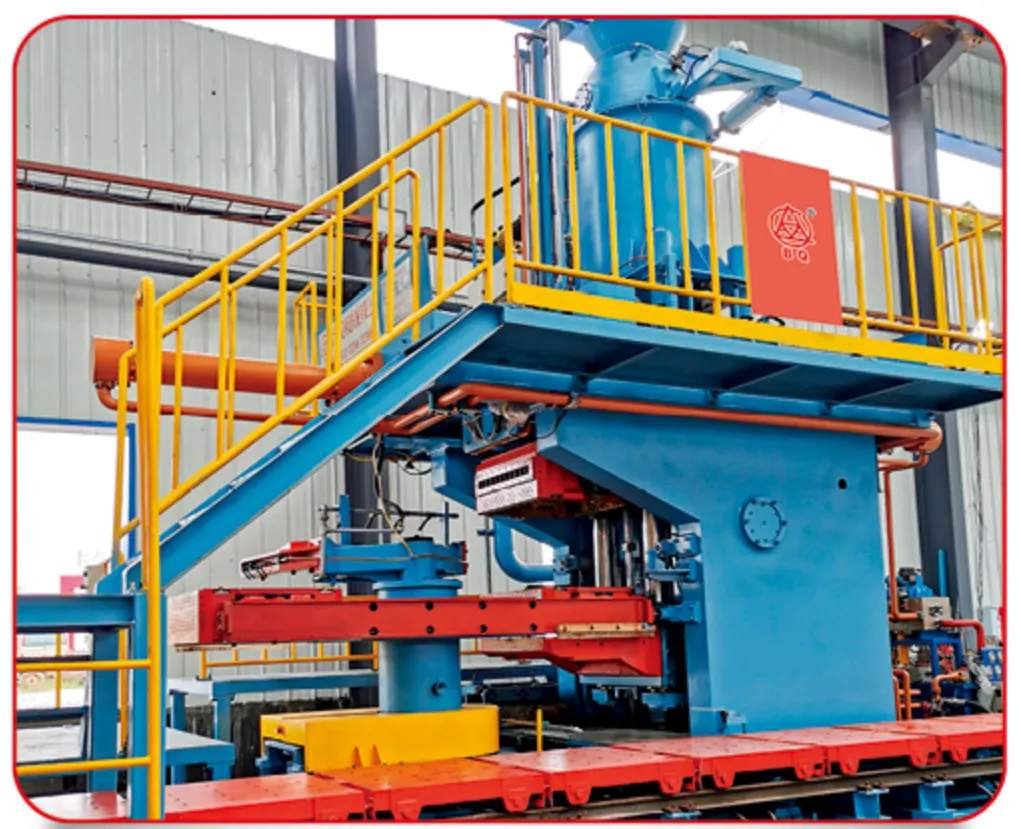
The machinery lineup encompasses variants such as YHH176, YHH288, and JQ10, designed to accommodate distinct industrial casting requirements. Foundry engineering teams evaluating structural layouts must assess both physical footprints and output metrics against facility constraints, ensuring proper integration with existing sand preparation loops.
Flask Envelopes and Dimensions
Available flask envelope configurations span 700 X 600/180-250 (mm) and 800 X 800/180-250 (mm). Plant designers align these dimensional tiers with matching matchplate tooling and pattern plates before final installation, maintaining necessary tolerances across automated transfer mechanisms.

Operational Output Metrics
Production rates span from 100 mold/h up to more than 150 molds per hour depending on sand consistency and pattern complexity. Exact cycle durations and component wear thresholds are governed by facility operational parameters and require direct verification during procurement planning.
| model | size | capacity | application |
|---|---|---|---|
| YHH176, YHH288, JQ10 | 700 X 600/180-250 (mm) or 800 X 800/180-250 (mm) | 100 mold/h or more than 150 molds per hour | general machinery, pipe fittings, automobiles, machine tools, railways, electric power, hydraulic machinery, sewing machines, and engineering machinery |
Structuring Procurement Budgets Beyond Initial Purchase Price
Upfront Financial Exposure Versus Lifecycle Realities
Procuring heavy foundry machinery requires a holistic capital allocation strategy that balances immediate acquisition outlays against multi-year facility operating expenses. Equipment buyers who anchor budgets solely on the initial invoice often face unexpected cost overruns once daily production cycles commence.
Sand conditioning overhead fluctuates continuously based on local binder pricing, moisture levels, and the ratio of recycled to raw aggregate. Automated recycling loops directly influence these recurring material outlays by minimizing waste volumes across high-capacity shifts.
Utility Consumption Profiles and Long-Term Profitability
Electrical loads required for heavy compaction mechanisms and compressed air volumes utilized in stripping cycles dictate monthly utility overhead. Facility managers must project energy consumption across peak operational throughput to protect long-term profit margins.
Energy tariffs and peak-load pricing structures vary by geographic region, making power efficiency a primary determinant of recurring operating expenses.
Incorporating Maintenance Reserves into Capital Frameworks
Scheduled servicing intervals, component wear limits, and tooling replacement cycles must be integrated directly into preliminary financial models before final equipment purchase orders are signed. Proactive maintenance budgeting mitigates the risk of catastrophic line stoppages and preserves the asset value of the production line.
Application Compatibility Across Industrial Sectors and Tooling Amortization
Tooling Amortization Across Sectoral Applications
Mold pattern retention directly dictates tooling amortization rates across high-throughput production cycles, shifting financial burdens away from frequent tooling replacements. Production integration scales smoothly when matching equipment envelopes to distinct sectoral requirements.
General machinery, pipe fittings, automobiles, and machine tools rely on consistent parting lines to maintain dimensional accuracy across varying batch volumes.
Extreme Load Demands in Heavy and Precision Industries
Heavy industry segments—specifically railways, electric power, and hydraulic machinery—demand robust mold consolidation to withstand high pouring pressures without pattern degradation. Specialized manufacturing environments including sewing machines and engineering machinery benefit from precise flask alignment, which minimizes flash formation and reduces secondary finishing labor.
Tooling amortization depends heavily on annual production volume, alloy pouring temperatures, and pattern plate material selection. When processing high-wear geometries in specialized engineering machinery sectors, tooling lifespan is determined by thermal fatigue limits and clamping frequency rather than calendar time, with exact replacement thresholds varying by alloy hardness and destination port customs clearance schedules.
Total Cost of Ownership Calculations Versus Manual and Vertical Alternatives
Comparative Economics of Labor Displacement and Floor Space Utilization
Labor displacement ratios shift dramatically when foundry facilities transition from manual molding floors to automated horizontal parting systems, directly reducing headcount requirements per shift while elevating hourly output consistency. Automated core setting and automatic pattern stripping minimize operator fatigue, translating into fewer casting defects caused by manual handling inconsistencies across high-volume production schedules.
Evaluating vertical parting methodologies against horizontal stripping setups reveals distinct trade-offs in tooling compatibility and floor space utilization, depending on local labor costs and plant layout constraints. Horizontal parting lines accommodate heavier flask envelopes like the 800 X 800/180-250 (mm) and 700 X 600/180-250 (mm) dimensions found across the YHH176, YHH288, and JQ10 lineup, making them superior for complex geometries that demand rigid core placement and extensive mold cavity depth.
Manufacturing Yield and Maintenance Impact on Plant Productivity
Unplanned maintenance downtime directly compromises manufacturing yield, while poor pattern plate compatibility accelerates tooling wear during daily plant operations. Financial models must incorporate scheduled component replacements and pattern alignment checks to prevent micro-stoppages that erode the financial advantages of high-speed output capacities exceeding 150 molds per hour.
Asset longevity directly depends on systematic lubrication routines and preventive component inspections during scheduled shifts, ensuring that heavy foundry equipment maintains tight dimensional tolerances across years of continuous operation. Plant controllers balance these ongoing upkeep investments against the cost of sudden line stoppages, using historical wear patterns to schedule part swaps during planned non-production windows.
Operational Economics of Sand Preparation and Utility Consumption
Sand Conditioning and Recycling Efficiencies
Automated sand preparation systems regulate moisture distribution and binder dispersion, which directly suppresses mold defect rates and reduces scrap volumes across high-speed casting cycles.
Continuous reclamation circuits lower raw material overhead by reclaiming spent foundry sand more uniformly than intermittent batch alternatives, provided that throughput demands match the selected machinery tier.
Energy Profiles Across Peak Cycles
Compressed air delivery and hydraulic drive demands fluctuate depending on mold box dimensions within the active working envelopes.
Electrical power scaling during heavy clamping and stripping phases requires active load monitoring to prevent localized voltage drops and subsequent thermal surges within the drive assemblies.
Utility Optimization Strategies
Plant engineers control operational expenses by scheduling sand cooling cycles during off-peak power tariff windows and maintaining strict seals on pneumatic supply lines.
Systemic energy efficiency ultimately depends on regional utility pricing structures and the specific alloy melting schedules maintained by the facility.
Mitigating Maintenance Downtime and Maximizing Asset Lifespan
Systematic Servicing Intervals for Foundry Equipment
Proactive maintenance scheduling prevents catastrophic mechanical failures across heavy-duty casting lines. Facilities that implement systematic greasing, hydraulic fluid analysis, and thermal imaging detect component fatigue before unexpected production halts occur.
Predictable servicing safeguards profit margins by keeping equipment operating within designed thermal and mechanical parameters.
Wear Thresholds and Asset Lifecycle Extension
Operating longevity depends directly on adhering to component replacement thresholds tied to local abrasive sand loads and shift intensity. Plant operators track cycle counts and mechanical tolerances to determine precise refurbishment windows.
Protecting capital investments over years of continuous operation requires rigorous adherence to documented maintenance manuals rather than reactive repairs. Comprehensive asset management ensures that heavy machinery maintains maximum uptime across demanding foundry environments.
Frequently Asked Questions
Procuring heavy foundry machinery requires evaluating initial capital expenditure alongside recurring operational expenses. Plant directors must weigh equipment invoices against long-term maintenance overhead and aggregate consumption variables.
The manufacturing lineup accommodates flask sizes measuring 700 X 600/180-250 (mm) and 800 X 800/180-250 (mm). Plant engineers align these dimensional tiers with matching matchplate tooling before final installation.
Automated casting equipment serves diverse heavy manufacturing sectors including pipe fittings, automotive components, and railway hardware. Facilities operating within electric power and hydraulic machinery sectors also utilize these production lines.
Sand conditioning costs fluctuate continuously based on local binder pricing and moisture levels. Automated systems influence binder consistency and reduce aggregate waste across production cycles.
Unscheduled servicing interrupts continuous output and drives up per-unit operational costs. Systematic maintenance intervals safeguard against unexpected production stoppages over years of operation.
Conclusion
Procurement directors and financial controllers examining long-term foundry economics must initiate formal reviews to secure precise financial projections. Customized economic modeling relies on parameters determined by annual output volumes, local utility tariffs, and scrap rate variations.
Detailed technical dossiers covering YHH176, YHH288, and JQ10 specifications are accessible directly through manufacturer communication channels. Submitting specific facility layout dimensions enables engineering teams to generate tailored equipment payback schedules.