Release Time:2025-12-02
The sand muller machine might not be the headline on any industrial innovation list, but its significance quietly reverberates through many modern manufacturing and construction processes worldwide. This versatile equipment shapes raw materials into workable mixtures, enabling countless industries to flourish—from ceramics to metallurgy. Learning about its benefits and applications isn’t just academic; it’s a window into how foundational technologies can boost productivity, sustainability, and global development at once.
In a world increasingly focused on resource optimization and environmental responsibility, the sand muller machine’s role is more pivotal than ever. According to the International Organization for Standardization (ISO), refining raw material consistency is key to creating durable goods with minimal waste. Roughly 65% of ceramics manufacturing in Asia relies on sand muller equipment for batch preparation, while the construction sector in Africa is gradually adopting them to standardize mortar mixes. All this points to a growing challenge: how to produce quality materials on scale, efficiently and sustainably. Sand muller machines are part of that answer.
Globally, with construction booming in developing economies and ceramic exports increasing, the demand for efficient equipment like sand mullers has risen by an estimated 8% annually over the past five years. Naturally, industries are eager to solve problems related to inconsistent raw mixes, slow production lines, and excess energy consumption.
Mini takeaway: The sand muller machine addresses a core need in modern material preparation—balancing quality, cost, and scale amidst global industrial expansion.
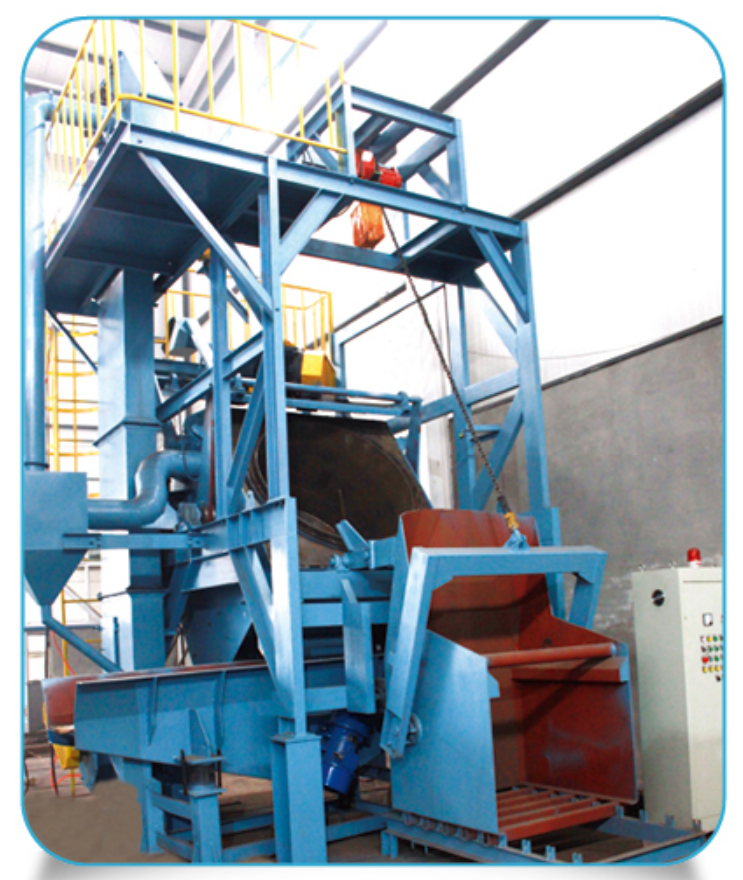
In simplest terms, a sand muller machine is a mixing device designed for blending sand and other components (clay, water, pigments) into a uniform paste or mortar. Think of it as the industrial cousin to your kitchen mixer, but geared towards much denser, abrasively textured materials.
More specifically, it consists of a rotating wheel or paddles within a horizontal pan where the raw ingredients are kneaded together thoroughly. This smooth, homogeneous mixture is crucial for industries dependent on excellent material consistency, such as ceramics, refractory manufacturing, and construction. Without it, the quality and durability of final products could be markedly compromised.
It’s also worth noting that in humanitarian construction projects, such as rapid housing post-natural disasters, sand muller machines enable quicker preparation of durable building materials—a sort of unsung hero quietly enabling resilience and recovery.
Mini takeaway: The sand muller machine is essentially a heavy-duty mixer that perfects the blend of raw materials to meet modern manufacturing demands.
Whether mixing sharp sand or sticky clay, the internal parts face continuous friction. Most devices feature hardened steel wheels and thick pans to resist wear — after all, downtime for maintenance isn’t just frustrating; it can cost thousands. A robust build ensures longer operational life and consistent output quality.
Sand muller machines come in various capacities—from modest models for artisan potters to massive units installed in industrial complexes. This scalability is crucial; it means the technology isn’t locked behind expensive, large-scale operations alone.
Anyone who’s dealt with manual mixing knows the fatigue and time drain involved. These machines drastically cut preparation time—often by a factor of three or more—and reduce human labor costs. Plus, their design maximizes mixing efficiency with low energy consumption relative to output.
Modern sand muller machines may include programmable controls for mix timing, speed, and even integrated cooling systems to prevent overheating—particularly important in continuous production facilities.
Simple disassembly options and anti-corrosive coatings make daily cleaning manageable, which keeps the equipment hygienic and functioning optimally.
| Specification | Example Model XYZ-200 | Units |
|---|---|---|
| Mixing Capacity | 200 | kg/batch |
| Motor Power | 7.5 | kW |
| Mixing Time | 20–30 | minutes |
| Machine Weight | 1200 | kg |
| Dimensions (L×W×H) | 1800×1200×1150 | mm |
It’s one thing to talk specs; it’s another to see how these machines fit into global workflows. Oddly enough, the sand muller machine isn’t solely the realm of industrial giants. In post-disaster reconstruction zones—think Southeast Asia after typhoons or parts of Central America—portable sand mullers enable rapid mixing of plaster and mortar, accelerating rebuilding.
In developed countries, ceramics manufacturers have long relied on these machines to create consistent clay bodies for everything from tiles to fine porcelain. Meanwhile, emerging economies use them more proudly, adopting local version adaptations to boost small- and medium-scale production.
Furthermore, many NGOs insist on using these machines when building durable shelters or community infrastructures because the mix quality ensures longevity and safety.
| Vendor | Capacity (kg) | Motor Power (kW) | Price Range (USD) | Notable Feature |
|---|---|---|---|---|
| Yonghong | 150-300 | 5.5 - 11 | 6,000 - 10,000 | Customizable automation controls |
| MullerTech | 100-250 | 4 - 7.5 | 5,000 - 8,000 | Compact design for small spaces |
| MixPro | 200-400 | 7.5 - 15 | 8,000 - 12,000 | High durability steel components |
The benefits stretch far beyond simple mixing efficiency. Cost-wise, the reduction in wasted materials and faster turnaround times can quickly offset purchase costs. Sustainability improves because you are standardizing raw input, cutting rejects, and reducing energy use. From a social perspective, the reliability of materials ensures safer buildings and longer-lasting products, indirectly supporting dignity and trust in communities, especially those rebuilding after crises.
On a more personal note, many operators tell me that the ease of use and less physical labor means less fatigue, better morale, and a sharper attention to detail in production. It’s human and machine working hand in hand.
Digital transformation is reaching sand muller machines as well. Manufacturers are integrating IoT sensors to remotely monitor wear parts and optimize mixing parameters in real-time. Others experiment with eco-friendly materials for paddles or pans to reduce manufacturing carbon footprints. Automation is also trending, allowing seamless integration with conveyor systems and batching controls.
Looking ahead, green energy-powered units and AI-assisted industrial mixing are not far off, aiming to further reduce environmental impact and boost output precision.
Sure, no system is perfect. Dust control can be a hassle, and some older machines struggle with uniformity for special mixes. But newer models come with dust enclosures and modular attachments to handle diverse materials. Maintenance remains a concern but is manageable through regular schedules and training.
Expert engineers often highlight the importance of proper calibration and operator training to get the most out of a sand muller machine. After all, an expensive machine is no good if used incorrectly.
Long-term, the sand muller machine underpins a vital but often overlooked stage of manufacturing and construction. Its blend of efficiency, reliability, and adaptability ensures it’ll continue to serve industries and humanitarian efforts alike. Ready to boost your workflow with a trusted solution? Visit our website for expert advice and quality products that fit your needs.
— Written with insights from industry veterans and the latest global industrial trends