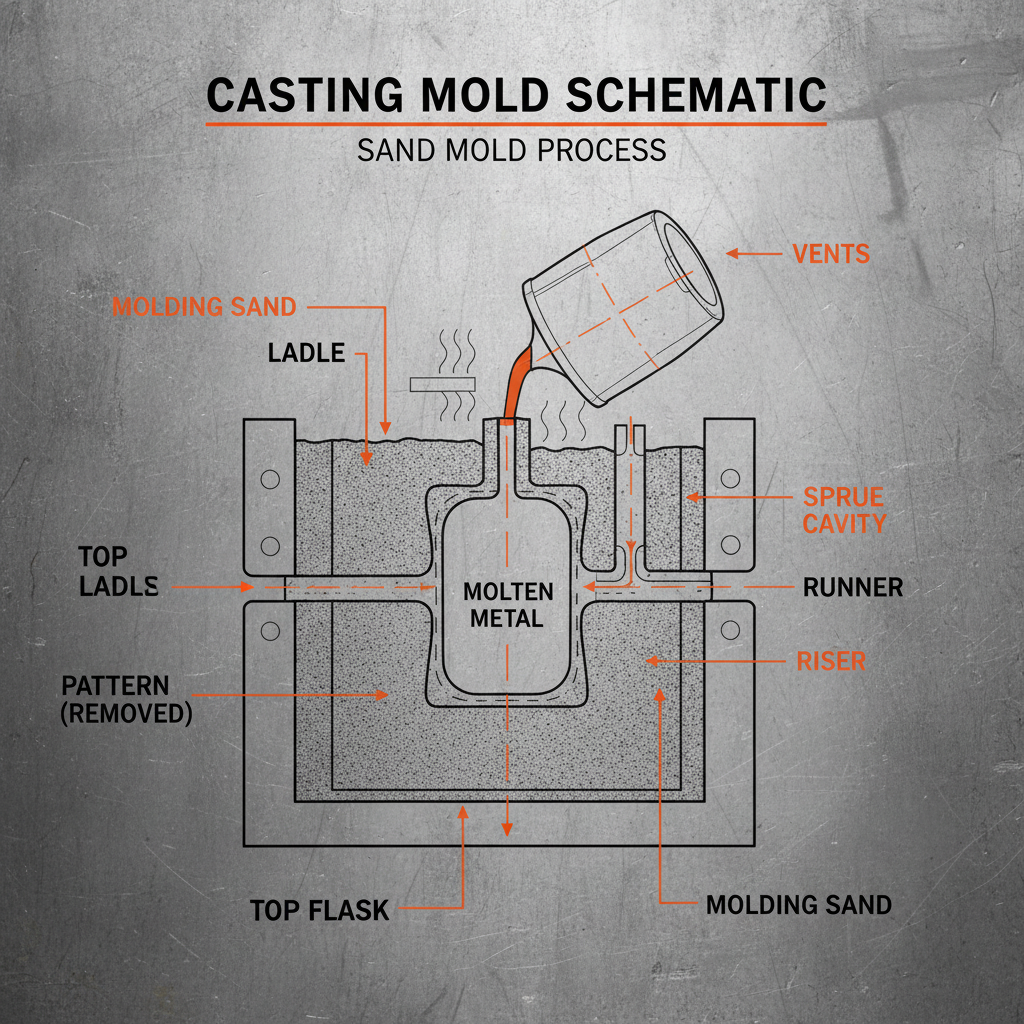
China casting equipment refers to a comprehensive range of industrial machinery designed for the precise shaping of molten metal into specific forms, spanning from traditional sand casting to advanced automated molding lines. These systems are integral to the global manufacturing supply chain, providing the foundational components for automotive, aerospace, and heavy machinery sectors.
For many foundry operators, the primary challenge lies in balancing throughput with material consistency. Inefficient material handling and outdated vibration technologies often lead to sand degradation and inconsistent mold density, which directly increase scrap rates and operational costs in the casting process.
This technical analysis explores the operational advantages of modern casting solutions, focusing on how adjustable excitation and rugged structural designs improve foundry efficiency. Readers will gain insights into equipment selection, performance metrics, and the practical implementation of material handling systems.


At the core of the casting industry, the ability to move bulk materials like coke, limestone, and recycled sand efficiently is paramount. Modern china casting equipment focuses on reducing the manual labor involved in material transport while ensuring that the physical properties of the sand are maintained throughout the reclamation cycle.
Systems such as the YONGHONG vibrating conveyor series utilize synchronous motor exciters to generate a controlled oscillation. This movement overcomes the internal friction of tough foundry materials, allowing for a steady feed rate into molding lines or storage bins.
By integrating these systems, foundries can transform a fragmented manual process into a streamlined industrial flow, reducing the risk of contamination and ensuring a consistent supply of raw materials to the production line.
The efficiency of a vibrating conveyor is largely dependent on its excitation force. Advanced systems employ two motor exciters rotating in opposite directions, which minimizes the horizontal shift of the equipment while maximizing the vertical lift required to move abrasive materials.
Durability is another critical factor. Because casting environments are characterized by high heat and abrasive dust, the use of high-strength structural steel is essential. This prevents premature fatigue and deformation under the constant stress of continuous vibration.
Furthermore, the simplicity of the drive mechanism reduces power consumption. By focusing on mechanical resonance and optimized trough geometry, these machines achieve high throughput without requiring excessive electrical input.
In a typical foundry, material handling is divided into raw material intake and sand reclamation. Raw materials such as coke and limestone are transported from arrival bays to storage bins, where they are blended. Vibrating conveyors are preferred here due to their ability to handle irregular particle sizes without clogging.
During the reclamation stage, hot sand must be moved between crushing and cooling stations. The rugged design of these conveyors allows them to withstand the thermal stress and impact of recycled sand, which often contains metallic remnants or hardened clusters.
Additionally, these systems are used in the post-processing phase to move castings toward shake-out tables, ensuring that the transition from the mold to the finishing area is automated and safe for operators.
Evaluating the performance of china casting equipment requires looking at handling capacity relative to trough width. For instance, models like the Y344, Y346, and Y348 offer increasing capacities from 10m³/h to 30m³/h, corresponding to trough widths of 400mm to 800mm.
The correlation between trough length and transport time is linear, but the efficiency of the move is determined by the excitation force. Optimized systems show a marked increase in material flow consistency compared to standard belt conveyors when handling abrasive foundry sands.
As shown in the data, the integration of adjustable excitation forces allows for a more precise match between supply and demand, reducing the idle time of molding machines and improving the overall OEE (Overall Equipment Effectiveness) of the foundry.
Selecting the right conveyor requires a detailed analysis of the plant layout and material characteristics. The first step is determining the required throughput (m³/h), which dictates the necessary trough width and motor power. A mismatch here can lead to either bottlenecks or energy waste.
Compatibility with existing molding lines is also vital. Procurement teams should evaluate whether the equipment supports factory-direct customization for trough widths and mounting options to fit the specific spatial constraints of the workshop.
Finally, maintenance accessibility should be a priority. Systems with simple drive mechanisms and easy access to eccentric blocks reduce the Mean Time to Repair (MTTR), which is critical for foundries operating on 24/7 production schedules.
The casting industry is moving toward "Intelligent Warehousing" and cloud-integrated monitoring. By adding sensors to vibrating conveyors, foundries can now monitor material flow in real-time, allowing for automatic adjustments to excitation forces based on downstream demand.
Environmental protection is another driving force. Modern equipment is being designed to minimize dust emissions during transport, incorporating better seals and integrated dust removal systems to comply with stricter global emissions standards.
The integration of AI-driven predictive maintenance is also emerging, where vibration patterns are analyzed to detect bearing wear or structural cracks before they lead to unplanned downtime, ensuring a more resilient production chain.
When deciding between different transport methods, foundry managers must weigh the advantages of vibrating conveyors against traditional belt or screw conveyors. While belt conveyors are faster for long distances, they often fail when exposed to the abrasive and hot nature of foundry sand.
Vibrating conveyors offer superior durability and easier cleaning, making them the optimal choice for raw material handling and sand reclamation phases where material toughness is a primary concern.
| Equipment Type | Material Suitability | Maintenance Level | Durability in Heat |
|---|---|---|---|
| Vibrating Conveyor | Abrasive/Bulk Sand | Low | High |
| Belt Conveyor | Light/Dry Materials | High | Low |
| Screw Conveyor | Fine Powders | Medium | Medium |
| Pneumatic System | Very Fine Particles | High | Medium |
| Bucket Elevator | Vertical Transport | Medium | Medium |
| Gravity Chutes | Simple Flow | Very Low | Very High |
Based on this comparison, for the specific needs of a heavy-duty foundry, the vibrating conveyor provides the best balance of longevity and operational reliability, particularly when customized for specific plant layouts.
Investing in high-performance china casting equipment is essential for any foundry aiming to increase efficiency and reduce material waste. By leveraging adjustable excitation forces and rugged structural designs, operators can ensure a reliable flow of materials, which is the backbone of a successful casting operation.
For those evaluating the most suitable material handling solutions for their plant layout, detailed product specifications and customization options can be reviewed at www.yonghongbq.com to ensure optimal integration into the production line.