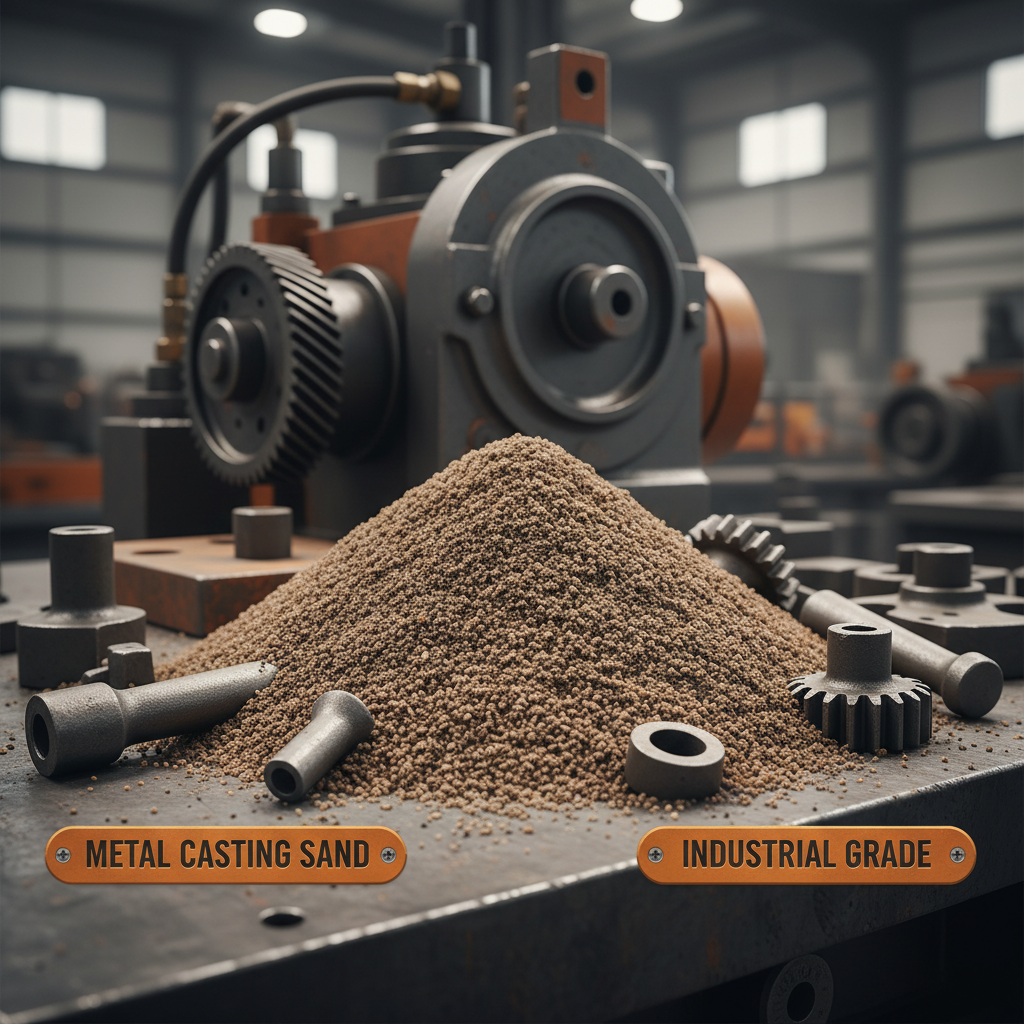
Modern foundry operations rely heavily on the efficiency of sand preparation and recovery. A china sand moulding machine system often requires integrated sand treatment solutions to maintain the quality of the casting medium. This article explores the technical requirements for sand block crushing and primary regeneration, focusing on how automated equipment optimizes the lifecycle of molding sand to reduce waste and improve casting precision.
In the context of heavy industry, the ability to break down solidified sand blocks and remove contaminants is critical. Without effective regeneration, the buildup of impurities can lead to casting defects such as gas holes or surface roughness. Understanding the mechanical principles of suspension vibration and screening allows foundry managers to choose equipment that aligns with their specific production volume and material characteristics, ensuring a consistent flow of usable sand.
Readers will gain insights into the operational differences between various crusher series, the impact of vibration excitation on sand grain integrity, and the strategic integration of these units into a full molding line. By analyzing technical specifications and procurement criteria, this guide provides a roadmap for improving foundry productivity through professional china sand moulding machine accessories and primary treatment systems.
Technical Foundation of Sand Casting Automation
Sand casting remains a cornerstone of metal manufacturing due to its versatility and cost-effectiveness. However, the manual handling of sand and the inefficiency of traditional recovery methods often create bottlenecks. The shift toward automation involves integrating sophisticated molding lines—such as box-less injection vertical lines or horizontal parting lines—with dedicated sand processing equipment. The primary goal is to create a closed-loop system where sand is molded, cast, reclaimed, and regenerated with minimal human intervention. Technical success in this area depends on the synergy between the molding pressure, the chemical properties of the resin sand, and the mechanical capability of the regeneration equipment. For instance, the use of suspension vibration technology allows for the breakdown of sand blocks without destroying the original grain structure, which is essential for maintaining the permeability and strength of the mold. By optimizing these technical parameters, foundries can significantly lower their raw material costs while increasing the throughput of their casting operations.
Operational Analysis and Selection Guide
Selecting the right sand treatment equipment requires a deep understanding of the physical forces involved in crushing and the specific requirements of the casting process. The following analysis breaks down the core components of effective sand recovery systems.
Vibration Crushing Mechanism
The core principle of modern block crushers is suspension vibration. By utilizing a vibration motor to generate a consistent excitation force, the machine causes sand blocks to collide with each other and the internal grid basket. This repeated friction and impact break the bonds of the solidified sand. Unlike high-impact crushers, this method is more controlled, ensuring that the sand is broken down to a usable size without generating excessive fines that could compromise the mold quality.
| Analysis Factor | Vibration Principle | Operational Impact | Buyer Check |
|---|---|---|---|
| Crushing Force | Excitation vibration | Low grain damage | Motor power rating |
| Material Flow | Suspension movement | Consistent throughput | Grid basket mesh size |
| Impurity Removal | Screening action | Cleaner sand output | Screening efficiency |
| Energy Use | Dynamic oscillation | Moderate consumption | Vibration frequency |
| Noise Level | Mechanical vibration | Requires dampening | Foundation requirements |
| Maintenance | Wear-part focused | Long intervals | Liner replacement ease |
S56 vs S52 Series Comparison
Depending on the scale of the foundry, different equipment series are necessary. The S56 and S52 series offer varying capacities and processing speeds. The S56 is typically designed for higher volume operations where the throughput of sand blocks is substantial, whereas the S52 is optimized for mid-sized facilities. The primary difference lies in the vibration amplitude and the volume of the crushing chamber, allowing users to match the machine's capacity to their molding line's output to avoid bottlenecks in the sand recovery cycle.
Sand Regeneration Efficiency
Primary regeneration refers to the initial stage of making used sand usable again. Efficiency is measured by the ratio of reclaimed sand to the total amount of waste. By combining crushing and screening in one unit, the process eliminates the need for multiple transport steps. This integrated approach reduces the risk of contamination and ensures that the sand is ready for secondary treatment or immediate reuse in resin-based systems, effectively lowering the cost per casting.
Impurity Removal Standards
Contaminants such as metal fragments, burnt resin, and foreign debris can ruin a casting. The screening function within the crusher acts as a critical quality gate. By utilizing a grid basket, the machine filters out oversized particles and debris during the crushing process. A buyer should evaluate the mesh size of the screening system to ensure it aligns with the grain size specifications of their specific molding sand, ensuring only pure sand proceeds to the next stage.
Integration with Molding Lines
A sand crusher should not operate in isolation. For maximum efficiency, it must be integrated with the broader casting equipment ecosystem, including pouring machines and dust removal systems. Yonghong's expertise in providing full-line solutions—ranging from box-less injection molding to intelligent warehousing—allows for a seamless transition of material from the shake-out area to the regeneration unit, reducing manual labor and increasing overall plant safety.
Wear Resistance Considerations
Due to the abrasive nature of casting sand, equipment longevity depends on the materials used for the internal liners and the grid basket. High-grade wear-resistant parts are essential to prevent premature failure of the crushing chamber. When evaluating suppliers, it is important to check the specifications of the metal abrasives and the alloy compositions used in the contact zones, as this directly affects the total cost of ownership and downtime for repairs.
Industrial Application Scenarios
These systems are indispensable in foundries producing complex automotive components, industrial machinery housings, and heavy equipment parts. In environments where resin sand is used, the ability to break down blocks is mandatory. Whether the foundry is exporting to markets in the US, Japan, or Vietnam, the requirement for high-quality, consistent sand remains the same. Implementing a systematic crushing and screening process ensures that the foundry can maintain high precision regardless of the production scale.
FAQ
What is the main purpose of a sand block crusher in a foundry?
The main purpose is to break down solidified lumps of used molding sand into smaller, uniform grains. This process, combined with screening, removes impurities and prepares the sand for regeneration. This allows the foundry to reuse the sand, which significantly reduces the cost of raw materials and minimizes the environmental impact of sand disposal.
How does the suspension vibration principle work?
Suspension vibration uses a vibration motor to create an excitation force. This causes the sand blocks to collide with each other and the walls of the grid basket. The resulting friction and impact break the bonds of the sand block. Unlike grinding, this method preserves the sand grain shape, which is vital for maintaining the physical properties of the mold.
How do I choose between the S56 and S52 series?
The choice depends primarily on your production volume. The S56 series is designed for higher throughput and larger volumes of sand blocks, making it suitable for large-scale industrial molding lines. The S52 series is more compact and optimized for medium-sized operations. You should evaluate your hourly sand recovery needs to ensure the machine can keep up with the molding line's pace.
Can these machines remove all impurities from the sand?
These machines perform primary regeneration, meaning they remove oversized impurities and debris through screening. While they are highly effective at removing bulk contaminants, chemical impurities or very fine burnt resin may require secondary regeneration processes. However, for most foundries, the crushing and screening stage is the most critical step in ensuring sand quality.
What maintenance is required for vibration crushers?
Maintenance primarily focuses on the wear-resistant liners and the grid basket, as sand is highly abrasive. Regular inspections of the vibration motor's bearings and the structural integrity of the suspension system are also necessary. Using high-quality wear-resistant parts can extend the intervals between replacements and reduce overall operational downtime.
Is it possible to integrate this into an existing molding line?
Yes, these units are designed to be integrated. They typically sit between the shake-out station and the sand mixer. To ensure a smooth integration, you should consider the material handling equipment (like conveyors) and the dust removal systems to keep the work environment clean and the sand flow automated.
References and further reading
- Industrial Sand Casting and Recovery Standards - Foundry Engineering Handbook.
- Principles of Vibration Excitation in Material Processing - Mechanical Engineering Journal.
- Guide to Resin-Coated Sand Management in Modern Foundries.
Related Articles