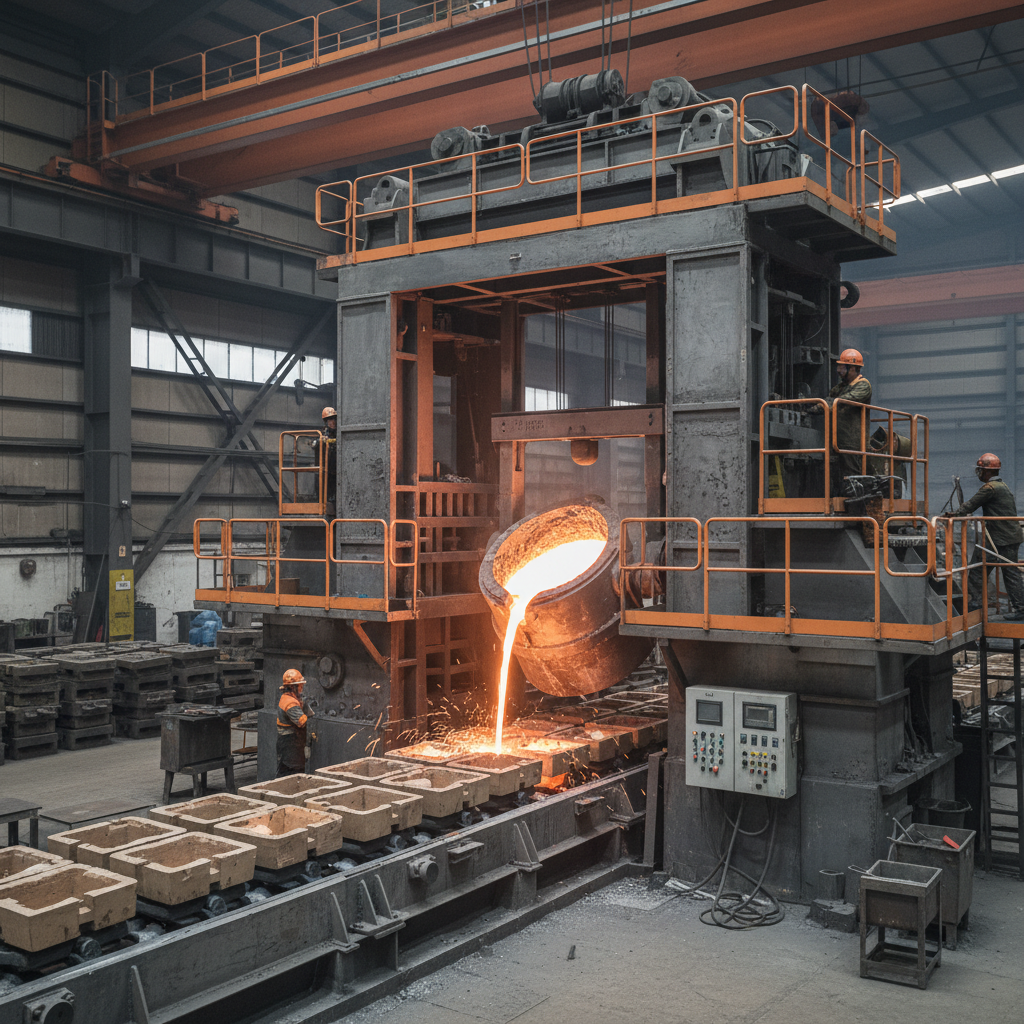
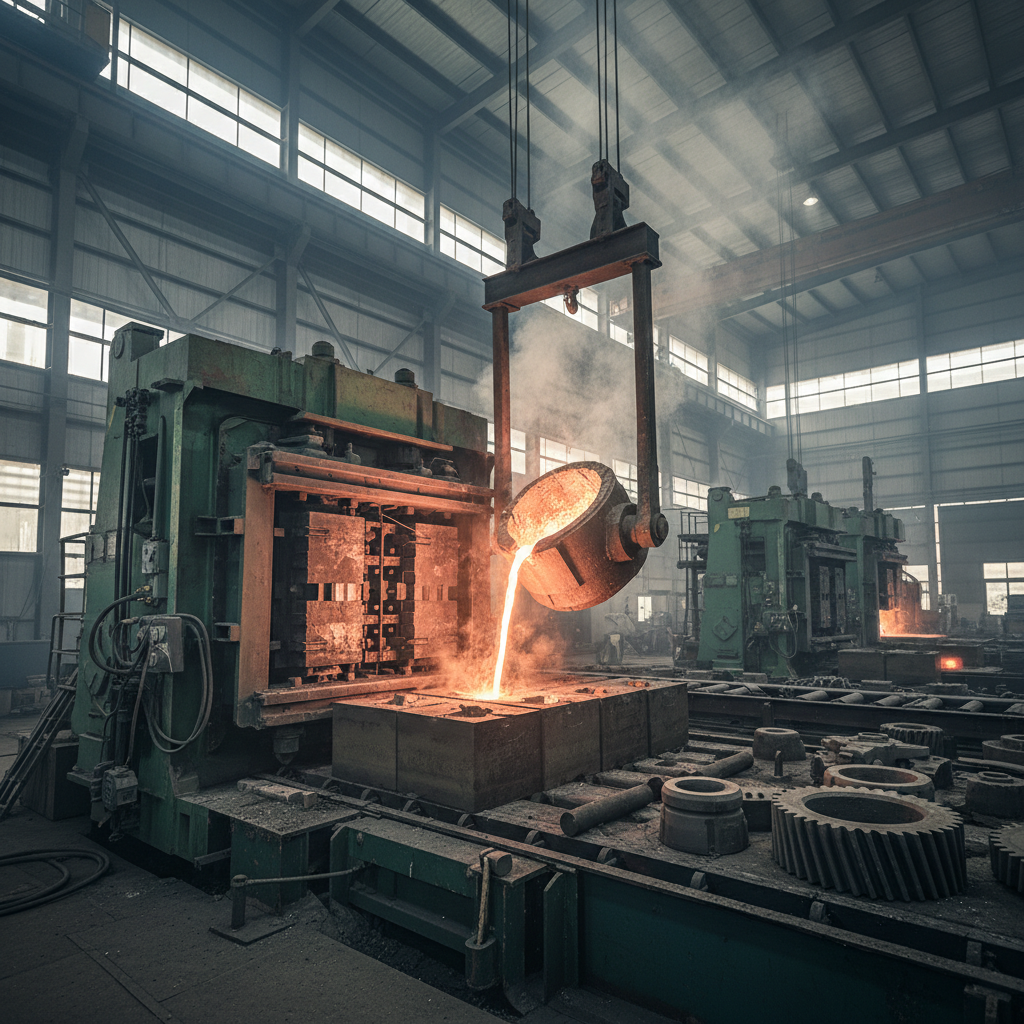
Achieving precise material separation in heavy industrial casting requires more than just a vibrating surface; it demands a calculated synchronization of frequency, amplitude, and structural integrity. When the consistency of sand treatment or the purity of raw materials fluctuates, the entire downstream molding process is compromised, leading to increased defect rates in final castings.
In the specialized field of ferrous metal casting machinery, the role of screening is often overlooked until a bottleneck occurs. The shift toward automated production lines has heightened the need for equipment that can handle high throughput without sacrificing the accuracy of particle size distribution, a challenge that traditional manual or low-precision screens cannot meet.
Selecting a reliable linear vibrating screen manufacturer involves analyzing the intersection of mechanical durability and screening efficiency. This guide examines the technical parameters and operational logic necessary to optimize material flow within a modern foundry environment.


Linear vibrating screens differ from circular or gyratory screens by producing a straight-line motion. This is typically achieved through dual eccentric motors or specialized vibrators that cancel out lateral forces, pushing the material forward in a consistent direction across the screen deck.
For a foundry, this linearity is crucial. Whether processing resin sand or cleaning recovered casting sand, the objective is to maintain a uniform bed depth. This prevents "blinding" (clogging of the mesh) and ensures that every particle has an equal opportunity to pass through the aperture, directly impacting the precision of the sand mold.
The efficiency of a screening system is governed by the relationship between vibration frequency and stroke length. A high-frequency, short-stroke configuration is generally preferred for fine powder separation, whereas lower frequencies with longer strokes are utilized for heavier, coarser aggregates. Miscalculating this balance leads to either material stagnation or insufficient dwell time on the screen.
Structural rigidity is the second pillar of design. In the context of black metal casting machinery, screens must withstand constant cyclic loading. The use of reinforced alloys and precision-welded frames prevents structural fatigue and maintains the parallelism of the screen bed, which is essential for preventing material "pooling" in specific areas of the machine.
Lastly, the choice of screen media—ranging from stainless steel wire mesh to polyurethane panels—must be matched to the abrasiveness of the material. In resin sand processing, wear resistance is paramount to avoid frequent downtime and to maintain consistent aperture sizes over thousands of operational hours.
Vibration stability is not merely about keeping the machine in place; it is about the purity of the linear vector. Any deviation into elliptical or random motion introduces turbulence into the material flow, which can lead to uneven screening and the carry-over of oversized contaminants into the molding stage.
In automated casting lines, the precision of sand treatment is a prerequisite for mold accuracy. If a linear vibrating screen fails to maintain a consistent grain size distribution, the resulting sand mold may exhibit localized density variations, leading to casting defects such as blowholes or surface irregularities.
This is why professional equipment focuses on damping systems and precision mounting. By isolating the vibration of the screen from the rest of the molding line—such as the horizontal parting stripping molding machines—manufacturers can ensure that the high-speed operation of one unit does not introduce harmonic interference into another.
Different materials in the foundry process react differently to linear vibration. For instance, dry silica sand flows freely and responds well to standard frequencies, whereas resin-coated sands possess a degree of tackiness that requires higher acceleration to prevent agglomeration on the screen surface.
The following analysis provides a relative efficiency index based on material characteristics. This index evaluates how effectively a standard linear vibrating screen handles various inputs, where a higher value indicates a more seamless flow and higher separation accuracy.
The linear vibrating screen does not operate in isolation; it is a critical node in the sand treatment loop. In a fully automated line, it bridges the gap between the aftertreatment series and the molding machine. For example, in a setup utilizing a YHH288 double-station horizontal parting molding line, the screen ensures that the sand being fed into the system is free of clumps and oversized debris, which would otherwise cause clamping errors or mold instability.
Operational synergy is achieved when the screen's throughput matches the molding rate. If a molding machine operates at 150 molds per hour, the sand treatment system must provide a corresponding volume of processed sand. This synchronization prevents production idling and ensures that the high precision—often with clamping errors under 0.3mm—is maintained across the entire batch.
The industry is moving away from "set-and-forget" vibration settings toward adaptive systems. Intelligent warehousing and cloud platform integrations are now allowing foundry managers to monitor screen performance in real-time. By analyzing vibration data and motor load, the system can predict mesh failure or material clogging before it halts production.
Furthermore, the integration of variable frequency drives (VFDs) allows for the adjustment of screening intensity based on the specific grade of resin sand being used. This flexibility reduces energy consumption and extends the lifespan of the screen media by avoiding unnecessary over-vibration during light-load cycles.
The ultimate goal is a closed-loop system where the quality of the final casting—monitored during the aftertreatment phase—feeds back into the sand treatment parameters, automatically adjusting the linear vibrating screen to optimize the grain distribution for the next production run.
Choosing a linear vibrating screen manufacturer requires a move beyond simple price comparisons. The true cost of ownership is found in the balance between initial capital expenditure and the long-term operational efficiency, specifically regarding maintenance intervals and energy usage.
Technical evaluators should prioritize the "Linearity Deviation" and "Aperture Consistency" of the equipment. A screen that delivers high throughput but allows 2% of oversized material through is a failure in a high-precision foundry, as those few particles can cause significant defects in small and medium-sized castings for automobiles or hydraulic machinery.
The following table provides a decision-making framework for different foundry requirements, contrasting standard setups with high-precision automated requirements.
| Requirement Level | Primary Goal | Recommended Spec | Critical Consideration |
|---|---|---|---|
| Basic Foundry | Bulk Separation | Fixed Frequency | Initial Cost |
| Mid-Scale Auto | Consistency | VFD Control | Wear Resistance |
| Precision Engineering | Zero Contamination | Dual-Stage Linear | Aperture Tolerance |
| High-Volume Auto | Max Throughput | High-Amp/Long-Stroke | Structural Rigidity |
| Resin Sand Specialist | Anti-Agglomeration | High Acceleration | Mesh Material |
| Integrated Smart Line | Process Synergy | Cloud-Linked/IoT | Data Integration |
The primary difference is the motion path. While circular or gyratory screens move material in a spiraling or rotating fashion, a linear screen utilizes synchronized vibrators to move material in a straight line. This makes it significantly more effective for transporting materials over longer distances across the screen deck while maintaining a uniform layer depth, which is critical for consistent separation in foundry sand treatment.
Blinding occurs when particles lodge in the mesh. To prevent this, optimize the vibration frequency and amplitude to ensure the material "jumps" slightly rather than sliding. Additionally, selecting the correct screen media—such as polyurethane or self-cleaning wire mesh—and implementing a consistent feed rate to avoid overloading the bed can significantly reduce clogging.
Focus on three core metrics: vibration linearity (how straight the motion actually is), structural fatigue rating (the quality of welds and materials used to prevent cracks), and the ability to customize mesh sizes. A manufacturer that provides a comprehensive evaluation of your specific material—such as the difference between dry silica and resin sand—is more likely to provide a system that avoids production bottlenecks.
Yes, and they should be. Integration involves matching the screen's throughput to the molding machine's cycle time. In advanced setups, linear screens are connected to a central control system that monitors motor health and material flow, ensuring that the sand treatment phase does not become a limiting factor for the molding and pouring machines downstream.
High frequency typically improves the separation rate of fine particles by increasing the number of times a particle hits the mesh. However, a longer stroke is necessary to move heavier or stickier materials forward. The trade-off is that excessive stroke length can increase structural stress and noise, while too high a frequency may cause material to "bounce" too high, reducing the effective screening time.
Poor screening leads to inconsistent sand grain size. This causes uneven packing in the mold, which can result in dimensional inaccuracies or internal voids in the casting. By ensuring a precise particle distribution through high-quality linear screening, the mold maintains uniform strength and permeability, which directly improves the surface finish and structural integrity of the final metal part.
The transition from manual casting to automated, high-precision production necessitates a fundamental shift in how sand treatment is approached. A linear vibrating screen is not just a filter, but a precision instrument that dictates the quality of the molding medium. By focusing on vibration stability, material-specific design, and system integration, foundries can significantly reduce defect rates and increase overall throughput.
As the industry moves toward intelligent manufacturing, the synergy between mechanical reliability and digital monitoring will define the next generation of casting efficiency. Investing in equipment that balances high configuration with operational precision is the only way to meet the increasing accuracy requirements of global industrial markets.