The precision of internal cavities in modern metallurgy depends heavily on the reliability of core production. In the current landscape of the ferrous metal casting industry, the integration of a high-performance china sand core machine has become a critical factor for foundries aiming to reduce scrap rates and improve dimensional accuracy.
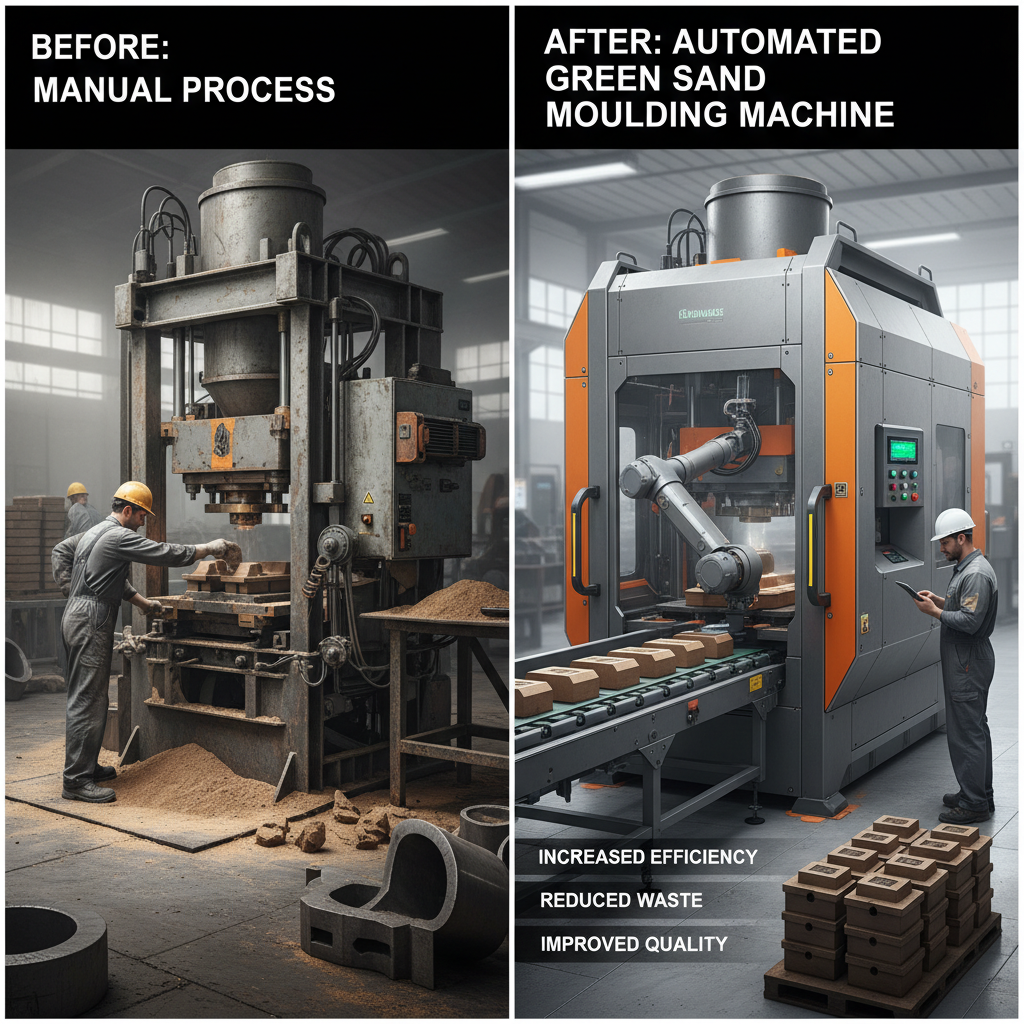
As casting geometries become increasingly complex for automotive and industrial components, the demand for consistent sand bonding and precise core ejection has surged. The industry is shifting away from manual processes toward automated systems that can handle resin-coated sands with minimal deformation, addressing a long-standing bottleneck in production throughput.
This analysis explores the technical architecture of modern sand core systems, evaluates the critical performance metrics that influence casting quality, and provides a framework for selecting equipment that aligns with specific industrial output requirements.


The operational logic of a modern core-making system centers on the controlled compaction of sand mixed with chemical binders. The process begins with precise metering of the resin sand, followed by high-pressure injection or blowing into a core box to create the negative space required for the casting's internal channels.
To maintain structural integrity, the system must balance compaction pressure with air evacuation. If air is trapped during the filling phase, it results in porosity, which directly compromises the mechanical strength of the final cast iron or steel component.
Achieving a stable core requires a deep understanding of the relationship between sand grain size and binder distribution. In a professional setup, the compaction density is not a static value but a variable that must be adjusted based on the core's volume and the complexity of the geometry.
Pressure regulation is perhaps the most critical parameter. Excessive pressure can lead to "over-compaction," which reduces the permeability of the core, trapping gases during the pouring process and causing blowholes. Conversely, insufficient pressure results in cores that are too fragile to withstand the turbulence of molten metal.
Furthermore, the curing cycle—whether thermal or chemical—must be strictly timed. The transition from a plastic state to a rigid structure determines the core's ability to maintain its shape during the assembly of the mold, directly impacting the final wall thickness of the casting.
One of the primary engineering hurdles in foundry operations is the "collapsibility" of the core. A core must be strong enough to resist the heat and pressure of molten metal, yet fragile enough to crumble after the metal has solidified to allow for easy removal.
Failure to manage gas evolution often leads to surface defects. When the organic binders decompose under extreme heat, they release gases that must escape through the sand's pores. If the permeability is too low, these gases are forced into the molten metal, creating internal voids that can lead to catastrophic failure in high-stress industrial parts.
When evaluating different core-making technologies, foundries typically use a normalized scoring system to compare stability, permeability, and production speed. This allows engineers to determine which configuration is most suitable for their specific alloy and part size.
The following data represents a relative engineering assessment across different common configuration profiles, highlighting the balance between precision and throughput.
In a typical deployment scenario, the core production line is integrated with a broader molding system. For instance, in the manufacturing of engine blocks or hydraulic manifolds, the core-making process must be perfectly synchronized with the outer mold production to ensure that core placement is accurate to within fractions of a millimeter.
Beyond the initial formation, the integration of post-treatment equipment is essential. Systems that provide a uniform sand casting surface finish and consistent cast iron finishing are often utilized to remove residual sand and flash from the final part, ensuring that the internal cavities created by the core are clean and unobstructed.
The industry is currently moving toward "closed-loop" control systems. Instead of relying on manual sampling and laboratory testing of sand strength, new systems integrate real-time sensors to monitor sand moisture, temperature, and binder viscosity during the mixing process.
This transition allows for autonomous adjustments to the injection pressure and curing time, effectively eliminating human error. By leveraging data-driven insights, foundries can reduce the variance between batches, leading to a significant decrease in casting defects and raw material waste.
Future developments are expected to focus on the integration of cloud-based monitoring, where equipment performance can be tracked across multiple facilities to optimize the overall supply chain for casting components.
Selecting the right equipment requires a balance between the required production volume and the precision of the internal geometries. For small-batch, high-complexity parts, a precision-focused configuration is paramount, whereas high-volume automotive parts demand a high-duty, automated system.
Buyers should evaluate the total cost of ownership, which includes not only the initial investment but also the cost of binders, sand treatment, and the durability of wear parts such as blast wheels and protection plates in the finishing stage.
The following matrix provides a comparative framework for different configuration profiles based on industry baselines.
| Configuration Profile | Dimensional Precision | Cycle Time | Recommended Application |
|---|---|---|---|
| Basic Configuration | Standard | Moderate | General Foundry Parts |
| Standard Configuration | High | Fast | Mid-range Industrial Casts |
| High-Duty Configuration | Moderate | Very Fast | Large Scale Heavy Machinery |
| Precision Configuration | Ultra-High | Slow | Complex Hydraulic Valves |
| Automated Configuration | High | Instant | High-Volume Auto Parts |
| Industry Baseline | Moderate | Moderate | General Benchmarking |
The chemical properties of the resin sand determine the smoothness and reaction of the casting surface. High-quality binders ensure a uniform sand-to-metal interface, which reduces the occurrence of "burn-on" defects. The grain size also plays a role; finer sand typically produces a smoother surface finish but may reduce the permeability of the core, requiring a more precise balance in the equipment settings.
Core breakage usually stems from either insufficient curing time or improper compaction density. If the resin has not fully polymerized, the core lacks the tensile strength to withstand handling. Additionally, if the core is over-compacted, it may become too brittle. Ensuring a consistent curing cycle and monitoring the pressure of the china sand core machine are the primary ways to prevent these failures.
Reducing porosity requires optimizing the permeability of the core. This can be achieved by selecting a coarser sand grain or reducing the binder percentage to the minimum required for strength. Furthermore, ensuring that the core-making equipment allows for proper venting of air during the filling process prevents trapped pockets of gas from remaining in the core structure.
Maintenance focuses on the wear components and the dust collection systems. Since resin sand is abrasive, the injection nozzles and core boxes must be inspected for wear. Additionally, high-performance pulse jet dust collectors must be serviced regularly to ensure a clean working environment and to prevent binder dust from contaminating other areas of the foundry.
Yes, modern core systems are designed for modular integration. The key is to align the cycle time of the core production with the outer mold production. Many foundries implement a buffer system where cores are produced in advance and stored in a temperature-controlled environment to maintain binder stability before they are inserted into the final mold assembly.
Reliability should be evaluated based on the supplier's ability to provide consistent spare parts, such as precision-engineered blast wheels and protection plates for the finishing process. Buyers should look for manufacturers who offer comprehensive technical documentation, a proven track record in the ferrous metal casting sector, and the capacity to provide equipment upgrading services as production needs evolve.
The optimization of core production is not merely a matter of hardware acquisition but a systemic alignment of material science and mechanical precision. The finding that permeability and collapsibility are the primary drivers of quality suggests that foundries must prioritize equipment that offers granular control over compaction and curing variables.
As the industry moves toward smarter, more automated workflows, the integration of a high-performance china sand core machine will remain central to achieving a competitive edge in casting accuracy and production efficiency.