Your casting is getting easier!
link
Telephone:0312-7027666

Advanced Intelligent Warehousing Solutions for Singapore's Heavy Casting Industry

Integrating high-precision black metal casting machinery with Industry 4.0 digital ecosystems to optimize production efficiency in Asia's premier industrial hub.

Advanced Intelligent Warehousing Solutions for Singapore's Heavy Casting Industry

We provide a comprehensive ecosystem for black metal casting, blending heavy-duty machinery with smart logistics to ensure seamless throughput and precision engineering.

The State of Black Metal Casting in Singapore

Navigating the challenges of high operational costs and stringent environmental regulations in a tropical urban economy.

Singapore's casting sector operates within a unique constraint: extremely limited land availability combined with a high-cost labor market. This has forced local foundries to shift from labor-intensive processes to highly automated systems. The adoption of cloud management platforms has become essential for synchronizing supply chains and reducing the physical footprint of administrative overhead.

The humid tropical climate of Singapore poses significant challenges for material stability, particularly for sand-based molding. This has led to a surge in demand for high-performance resin coated sand, which offers superior moisture resistance and consistency, ensuring that complex black metal components maintain dimensional accuracy despite environmental fluctuations.

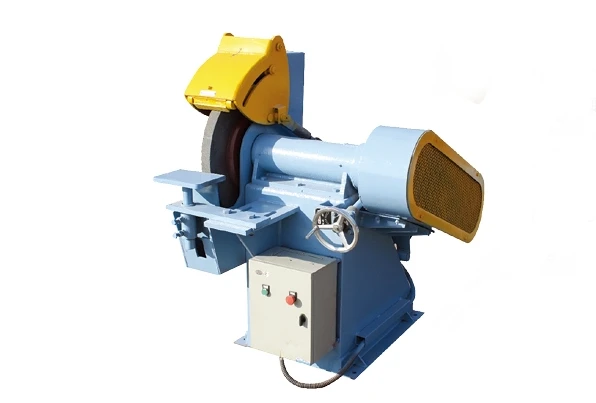
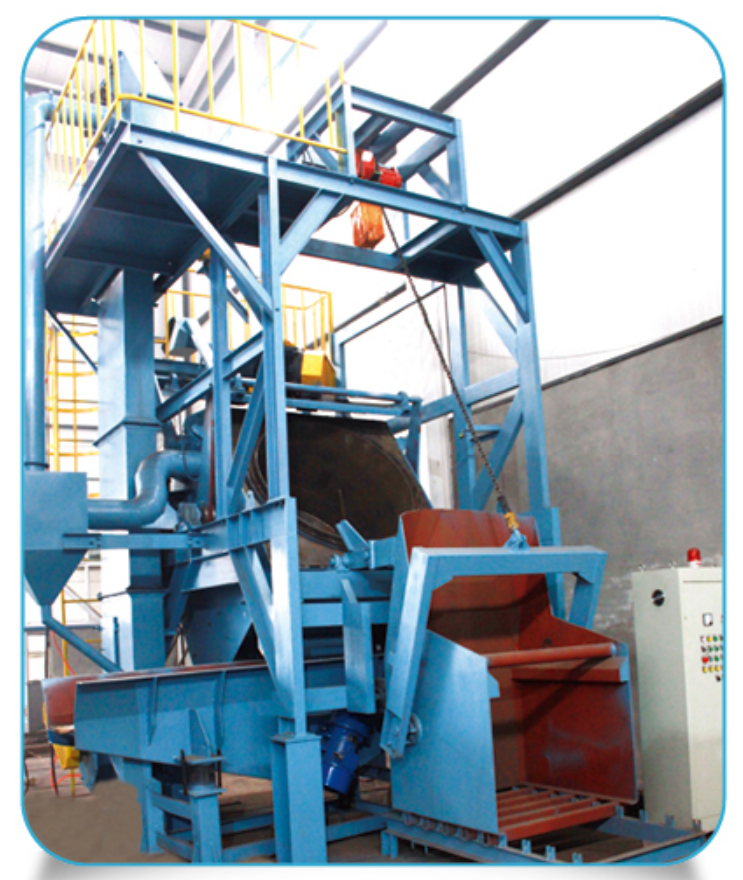
Furthermore, the shift toward "Green Manufacturing" in Asia has pushed Singaporean firms to optimize their cast iron finishing stages. By implementing precision robotic grinding and automated shot blasting, local manufacturers are reducing waste and energy consumption, aligning with the Singapore Green Plan 2030.
Technological Evolution and Industrial Trajectory

From traditional sand casting to the era of autonomous foundry management.

Market Development History

Between 1990 and 2010, the Singaporean casting industry relied heavily on traditional manual molding and basic mechanical conveyors. Production was characterized by high scrap rates and a reliance on generic mold materials, with the thrust bar components being manufactured via rudimentary forging and casting methods with minimal quality control.

From 2011 to 2020, the industry entered a "Digital Transition" phase. The introduction of CNC-controlled casting machinery and the early adoption of automated warehouse systems began to replace manual handling. During this period, the shift toward specialized chemical binders improved the stability of the casting process, paving the way for modern high-strength alloys.

Since 2021, the focus has shifted to "Hyper-Automation." The integration of IoT sensors and AI-driven analytics allows for real-time monitoring of the entire casting cycle, from the melting furnace to the final finishing line, creating a fully transparent production loop.

Future Development Trends

AI-Driven Predictive Maintenance

Future systems will utilize deep learning to predict wear and tear on casting molds and machinery, reducing unplanned downtime by up to 30%.

Additive Manufacturing Integration

The hybrid approach—combining 3D printed sand molds with traditional black metal pouring—will allow for complex geometries that were previously impossible.

Zero-Emission Foundry Models

Transitioning to hydrogen-powered furnaces and closed-loop sand recycling to eliminate the carbon footprint of heavy metal manufacturing.

Industry Trends and Future Outlook

Strategic directions for the next 3-5 years in the Asia-Pacific casting market.

Cloud-Native Foundry Control
Migration of all shop-floor data to unified cloud platforms for remote synchronization across Asia.
Robotic Precision Finishing
Replacing manual grinding with multi-axis robots to achieve micron-level tolerances in cast parts.
Eco-Sand Circularity
Implementation of advanced regeneration systems to reuse sand materials indefinitely.
IoT Integrated Logistics
Connecting the foundry floor to the shipping port via autonomous guided vehicles (AGVs).

Industry Outlook

The trajectory for Singapore's casting industry is moving toward "Micro-Foundries"—small, highly efficient, and fully automated units that can produce custom high-value parts on demand. This minimizes the need for massive land footprints and reduces the logistic costs associated with importing heavy castings.

Google search trends indicate a sharp rise in queries for "sustainable metallurgy" and "smart factory integration" within the ASEAN region. This suggests that the market is no longer prioritizing volume, but rather the precision and environmental compliance of the manufacturing process.

Localized Application Scenarios in Singapore

Real-world deployment of casting machinery and smart systems in the Singaporean industrial landscape.

01. Marine Engine Component Casting

Utilizing resin coated sand to produce high-pressure valve bodies for the Jurong Port maritime sector, ensuring zero porosity and high thermal resistance.

02. Automated Logistics for Heavy Casts

Integrating intelligent warehousing in Tuas industrial estates to manage the movement of heavy black metal molds using AGVs and AI scheduling.

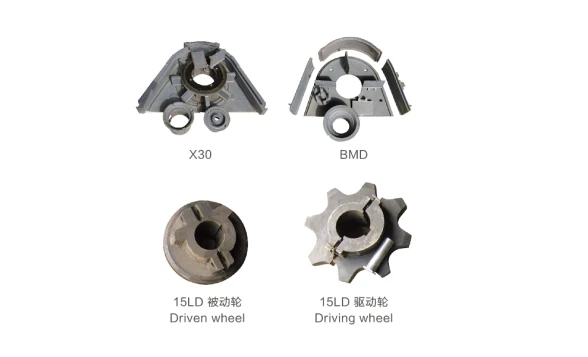
03. Precision Engineering of Thrust Bars

Applying advanced casting and machining for the production of high-load thrust bar assemblies used in regional infrastructure and heavy machinery.

04. Smart Foundry Management Systems

Deploying cloud management platforms to synchronize production data between Singaporean design centers and regional manufacturing plants.

05. High-Efficiency Surface Treatment

Implementing automated cast iron finishing lines to meet the strict aerospace and automotive surface quality standards required by Singaporean exporters.

Brand Story

Global Development History of Yonghong Baoding Casting Machinery Co., Ltd.

Foundation & Core Engineering

Established with a mission to solve the fundamental inefficiencies in black metal casting, we began by perfecting the stability of heavy-duty molding machinery.

Technological Breakthroughs

We revolutionized the industry by integrating precision control systems into traditional casting lines, reducing waste and increasing throughput.

Global Market Expansion

Expanding our footprint into Asia, including the Singaporean market, by providing localized technical support and customized machinery solutions.

Industry 4.0 Integration

Developing a suite of smart tools that connect physical machinery with digital intelligence, bridging the gap between casting and data science.

Vision for Sustainable Casting

Our current mission is to lead the global transition toward carbon-neutral casting through innovative machinery and eco-friendly material processes.

Integrated Casting Solutions for the Singapore Market

A full-spectrum portfolio of machinery and digital tools designed for high-efficiency black metal production.

Singapore Casting Industry FAQ

Technical answers to the most common challenges in the local casting sector.

How can cloud management platforms reduce operational costs in Singapore foundries?

By centralizing data, foundries can optimize energy use, monitor machine health remotely, and reduce the need for on-site administrative staff, which is critical given Singapore's high labor costs.

What are the advantages of resin coated sand for tropical climates?

Resin coated sand provides superior moisture resistance, preventing mold degradation in Singapore's high-humidity environment and ensuring consistent casting quality.

Can intelligent warehousing be integrated into existing small-scale casting plants?

Yes, our modular warehousing solutions are designed to fit into compact footprints, utilizing vertical storage and AGVs to maximize space efficiency in urban industrial zones.

What is the best method for cast iron finishing to meet aerospace standards?

The most effective method is a combination of automated robotic grinding and precision shot blasting, which ensures uniform surface roughness and dimensional accuracy.

How do I ensure the structural integrity of a cast thrust bar?

Structural integrity is ensured through precise temperature control during pouring and the use of high-strength binders, followed by rigorous X-ray and ultrasonic testing.

What is the typical ROI for upgrading to smart casting machinery in Asia?

Most Singaporean firms see a full return on investment within 18 to 36 months through reduced scrap rates, lower energy consumption, and decreased labor dependency.

Consult Our Engineering Experts

Ready to modernize your foundry operations in Singapore? Our team provides full-lifecycle support from equipment selection to digital integration.

Contact Us Now

If you are interested in our products, you can choose to leave your information here, and we will be in touch with you shortly.